An e-bike flies perfectly well. Its battery does not get on the plane. This is not about finding a helpful airline or getting lucky at the check-in desk: it is a dangerous goods rule, and it is not negotiable.
Here is what is allowed, what is not, and how we get your e-bike to Morocco anyway.
The rule, in one line
Lithium-ion batteries are classed as dangerous goods, and the limit is set in watt-hours: up to 100 Wh in the cabin with no paperwork, 100 to 160 Wh with the airline's prior approval, and above 160 Wh the answer is no. No in the cabin, no in the hold, no on a passenger flight, whichever airline you ask.
An e-bike battery sits somewhere between 500 and 900 Wh. That is not slightly over the limit, it is three to nine times over it. Which is why no form, no packaging and no argument gets an e-bike battery onto a scheduled flight.
What is actually allowed in the cabin
The rules worth knowing before you reach the desk:
- A spare battery, meaning any battery detached from the bike: carry-on only, never in the hold.
- 100 Wh and under: goes through with no formality. That is a light battery, an action camera or a GPS watch.
- 101 to 160 Wh: prior approval from the airline, two spares maximum. That is a large power bank or a professional camera battery, not an e-bike.
- Over 160 Wh: not permitted on passenger flights. Full stop.
The motor is not a problem at all. It contains nothing hazardous and travels like any other bike part.
The bike itself travels very well
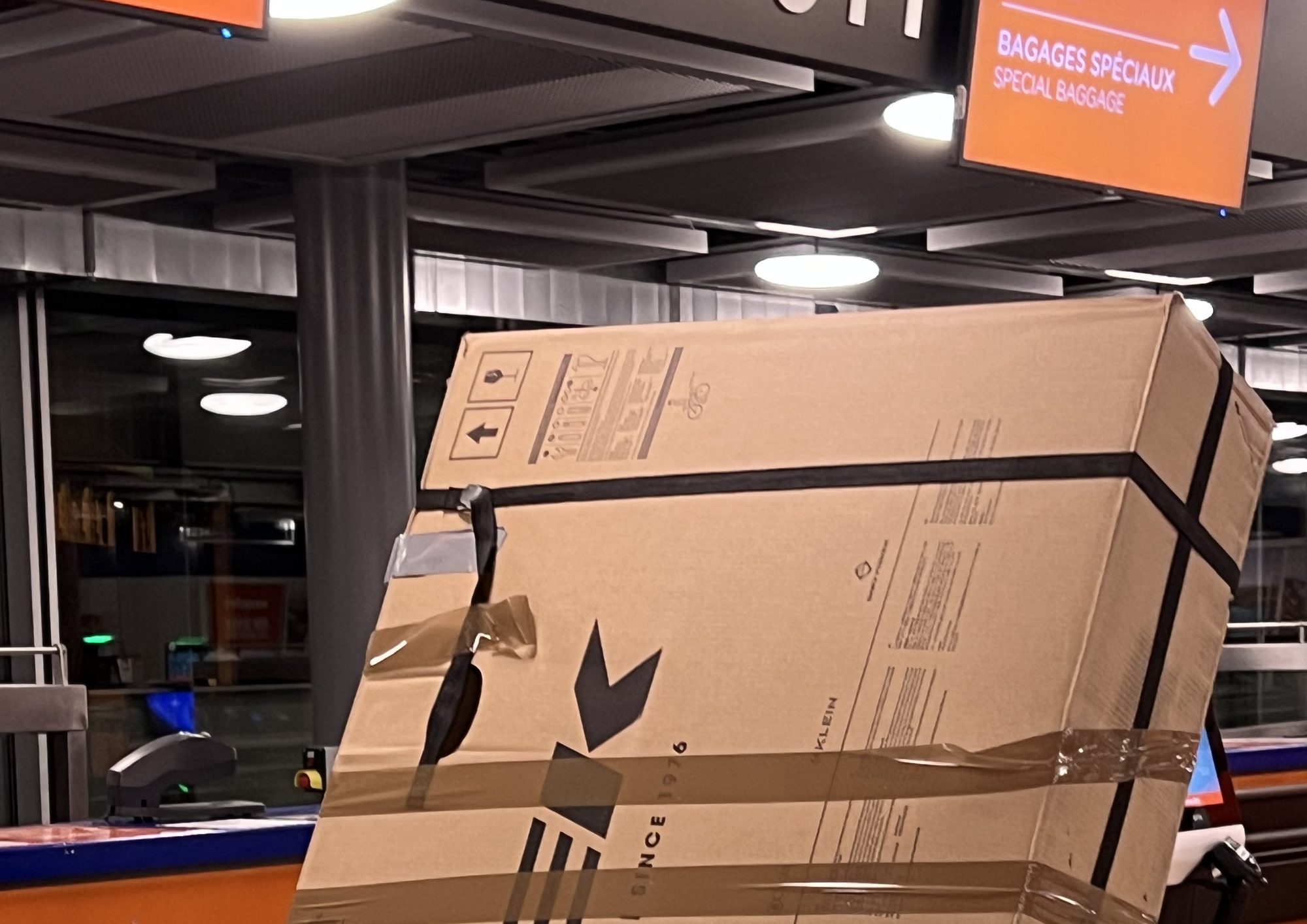
With the battery out, an e-bike is simply a heavy bike, and airlines treat it like any other mountain bike: sports luggage, in a hard travel case or a bike bag, with a fee and with weight and size limits that vary from one airline to the next. Check that before you book the flight, not the night before you leave.
Plan the mechanical side too: pedals off, front wheel out, bars loosened, derailleur protected. Nothing complicated, but it is a job for a calm evening at home rather than for the check-in hall.


What about sending it by courier?
That is the next question, and the answer usually disappoints. A lithium-ion battery shipped on its own is class 9 dangerous goods. Most consumer parcel services refuse it, and the ones that accept it require certified packaging, labelling and a declaration. Between the cost, the lead time and the risk of it sitting in customs, it is neither simple nor cheap.
Our answer: it goes down by road
We drive to Morocco with our bus. We can take your battery, or your complete e-bike, by road from Switzerland and hand it back to you on site at the start of the trip. You travel light, your bike is waiting for you.
Two ways to do it:
- The whole bike: nothing to dismantle, no sports luggage fee, nothing to rebuild on arrival.
- The battery only: you fly with your bike like any normal mountain bike, and find your battery in Morocco.
It depends on the dates and on the space left in the bus, so it is arranged in advance, at registration rather than at the last minute. It is open to riders on our mountain bike and e-bike trips in Morocco.
The other option: rent on site
If you would rather deal with no case, no battery and no dismantling at all, we have recent e-bikes for hire on site. The rental is a tick box in the registration form, and the whole transport question disappears.
In practice
If you are coming to Morocco with us, write to us with your dates and the make of your battery and we will tell you straight away whether it can go down in the bus. For the rest of the planning, the flights, the budget, what to pack and the cold mornings at altitude, it is all in the practical article about the trip.
Chris