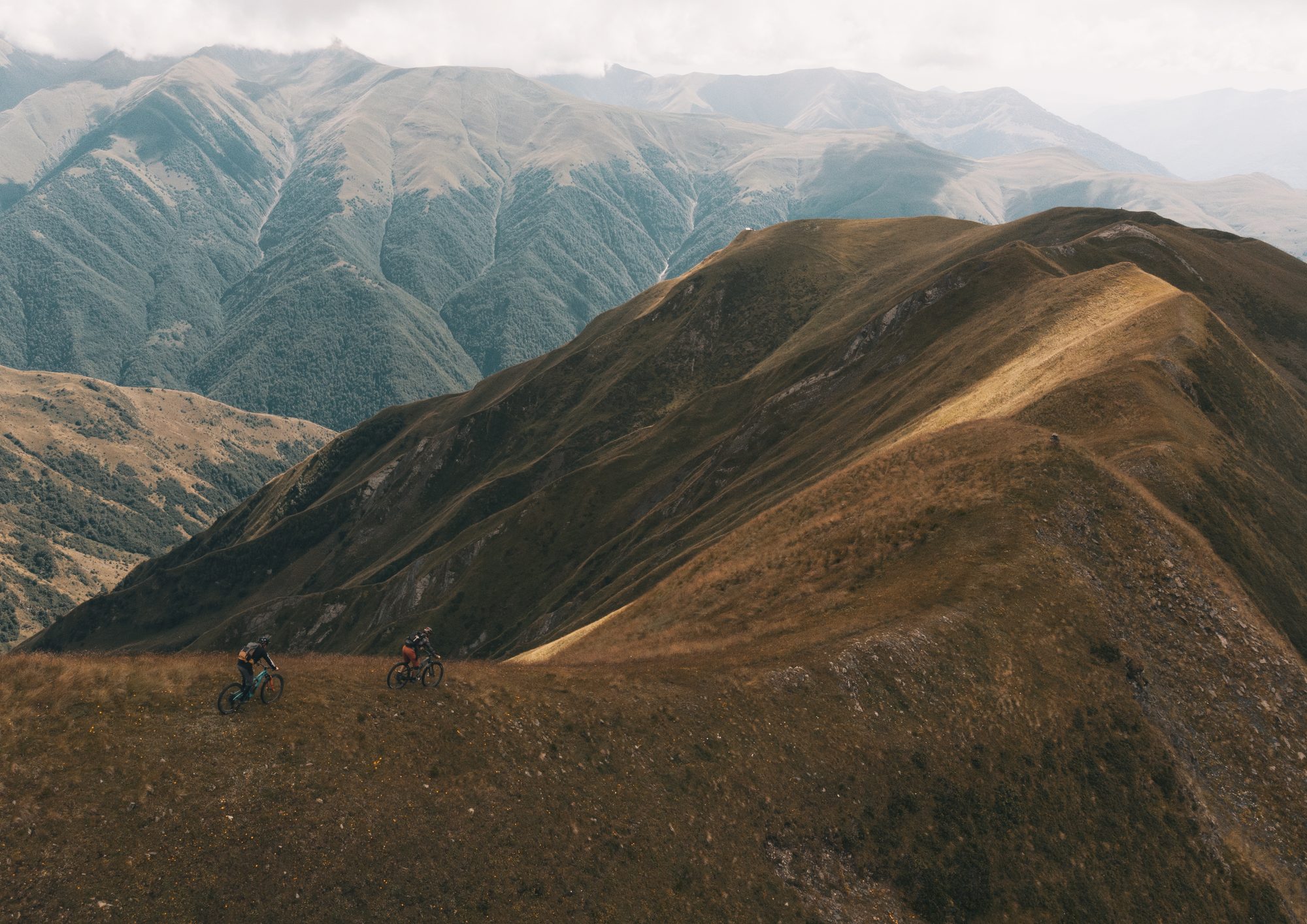
Getting ready is the best way to enjoy your MTB trip, from the first day to the last. Not to impress the group: to still have a smile, fresh legs and a clear head on the fourth morning, when the best trail of the week is waiting for you.
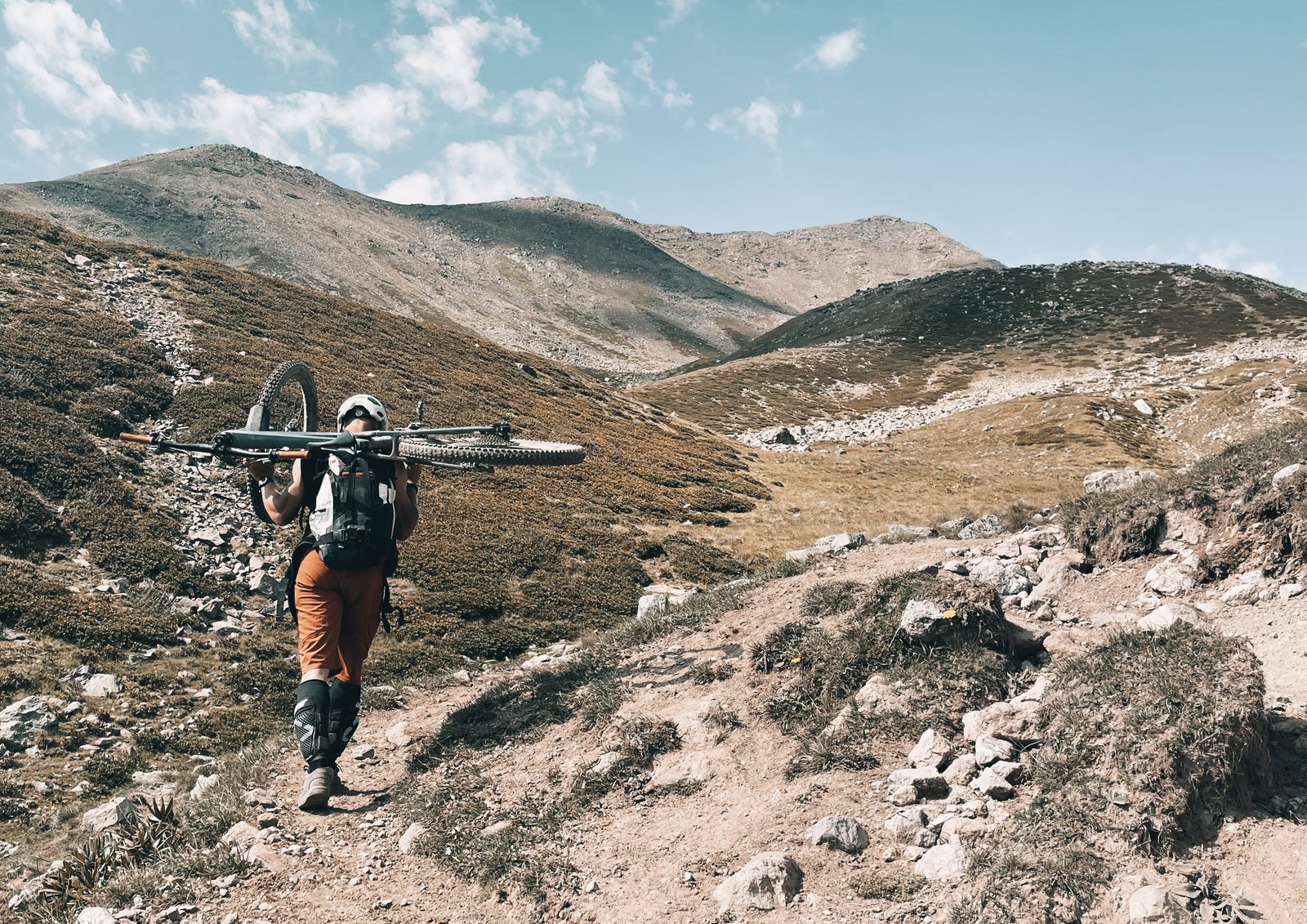
A trip is not your Sunday ride six times over. You ride every day. You climb, you traverse, you link descents together, and on some routes you push or carry your bike for a few minutes to get over a pass. You discover ground you have never ridden before. And several of our trips go above 3,000 m. Nothing insurmountable, as long as you arrive ready on four fronts: technique, fitness, altitude and your own pace.
Heading to Morocco this winter, with Zagoride on 6 February or Endu'Rock the Casbah on 13 or 20 February? Or to Tuscany for Camp'n'Ride on 8 March? You have just enough time for the 12-week plan below.
What really awaits you: riding every day
On a trip, what wears you out is almost never a single day. It's the accumulation. On day one, everyone is fresh. On day three, the small mistakes of the day before catch up with you: a climb taken too fast, a bottle too small, a badly adjusted pack. By day five, those who prepared enjoy every minute, and the others grit their teeth.
Riding on a trip mixes everything: climbs to pedal, traverses on balcony trails, great descents, technical sections, flowing tracks, sometimes a bit of hike-a-bike. Even with 4x4 shuttles or lifts, the day is long: hours on the bike, standing on the pedals, reading the terrain. It's not an ordeal, it's a journey. But a journey you enjoy far more with a little preparation.
Technique, to ride with confidence on new terrain
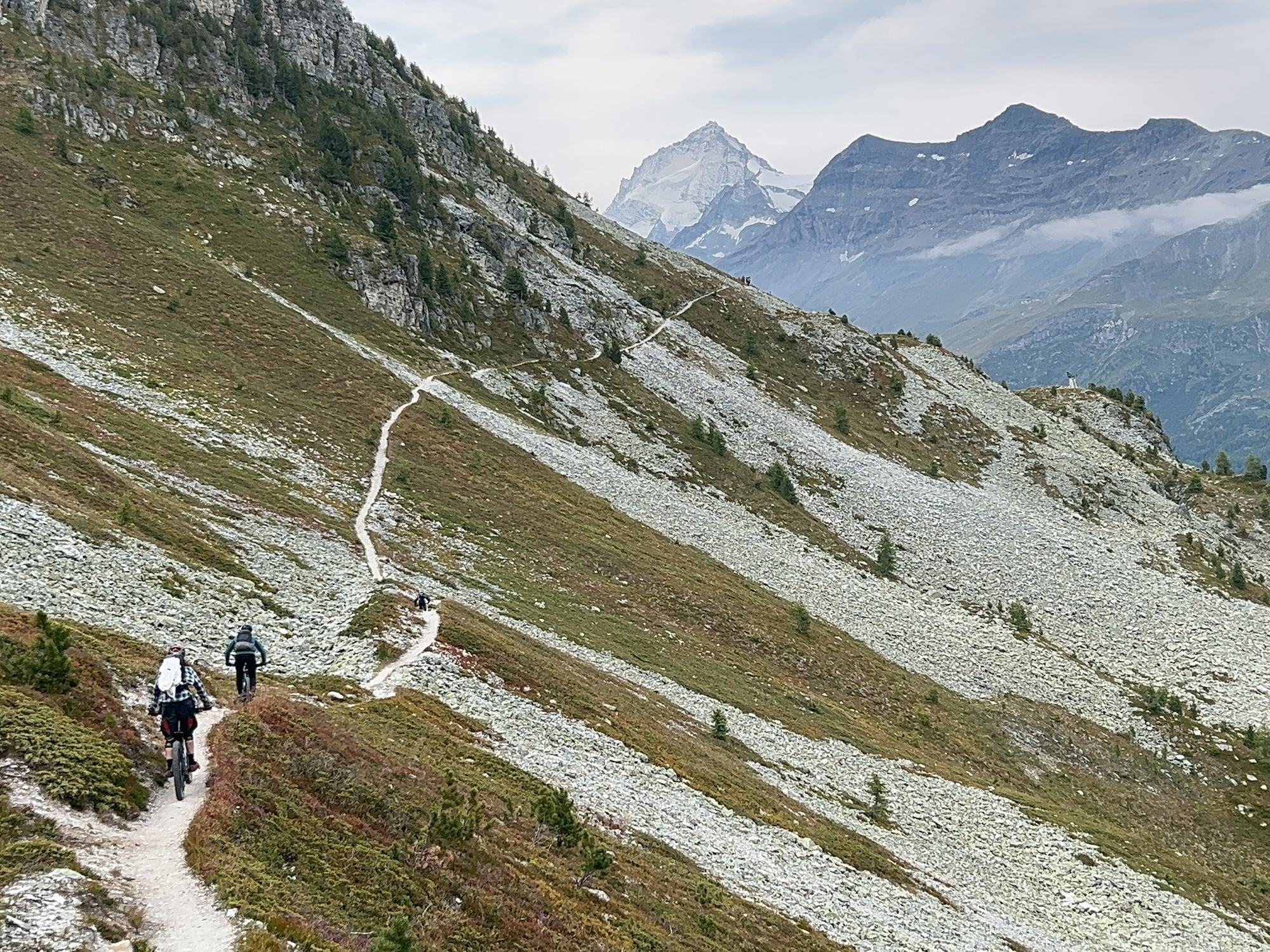
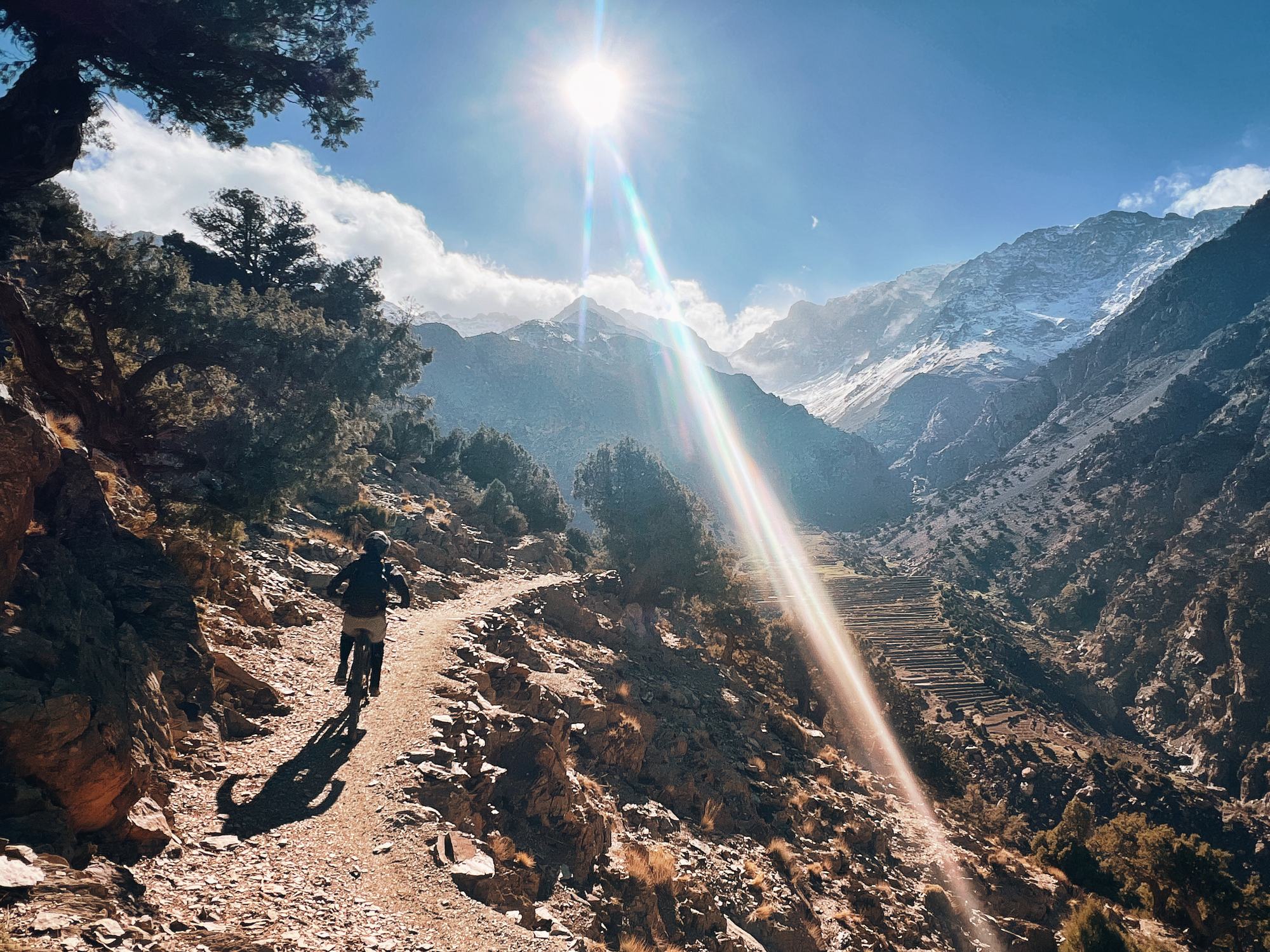
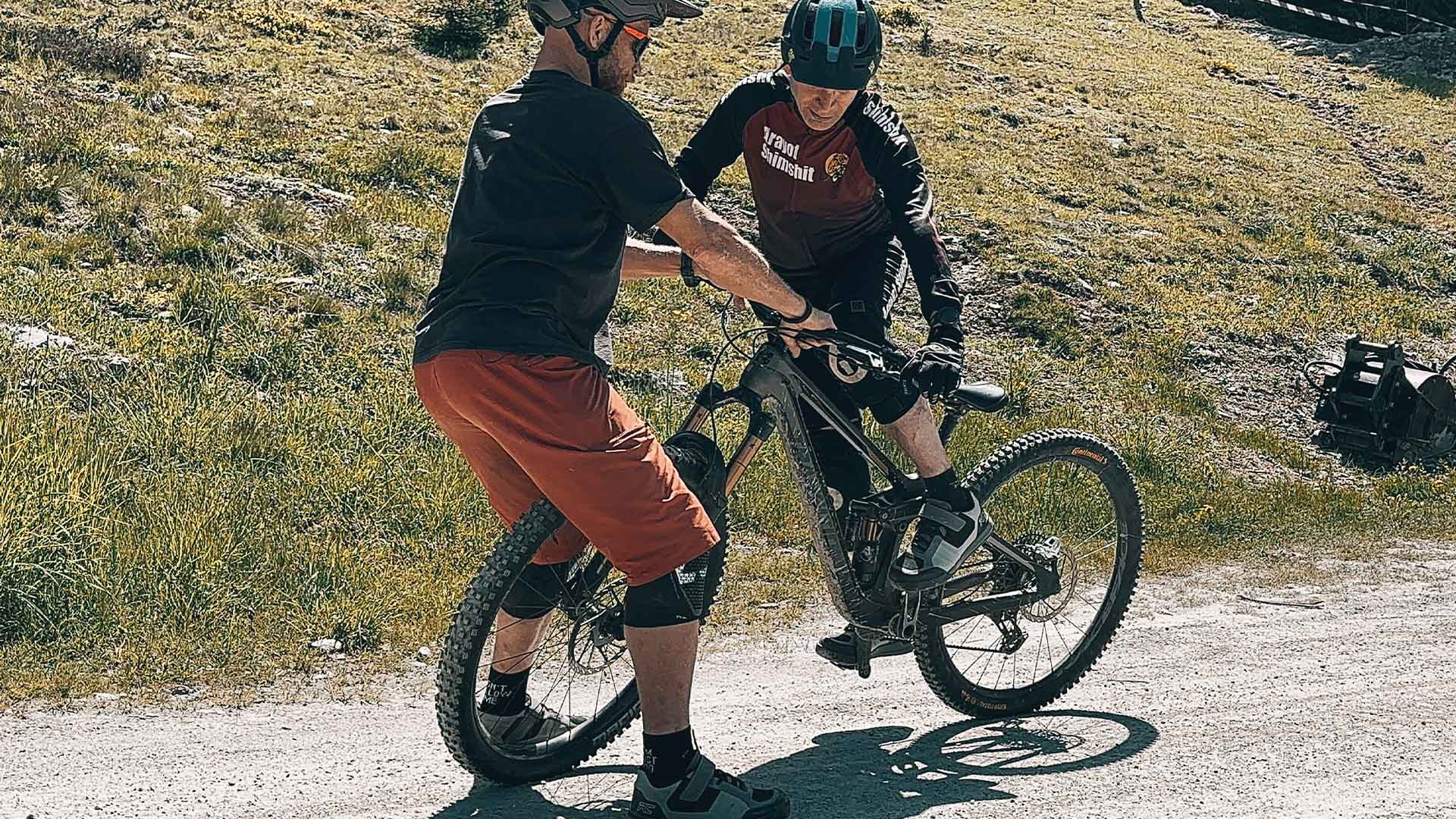
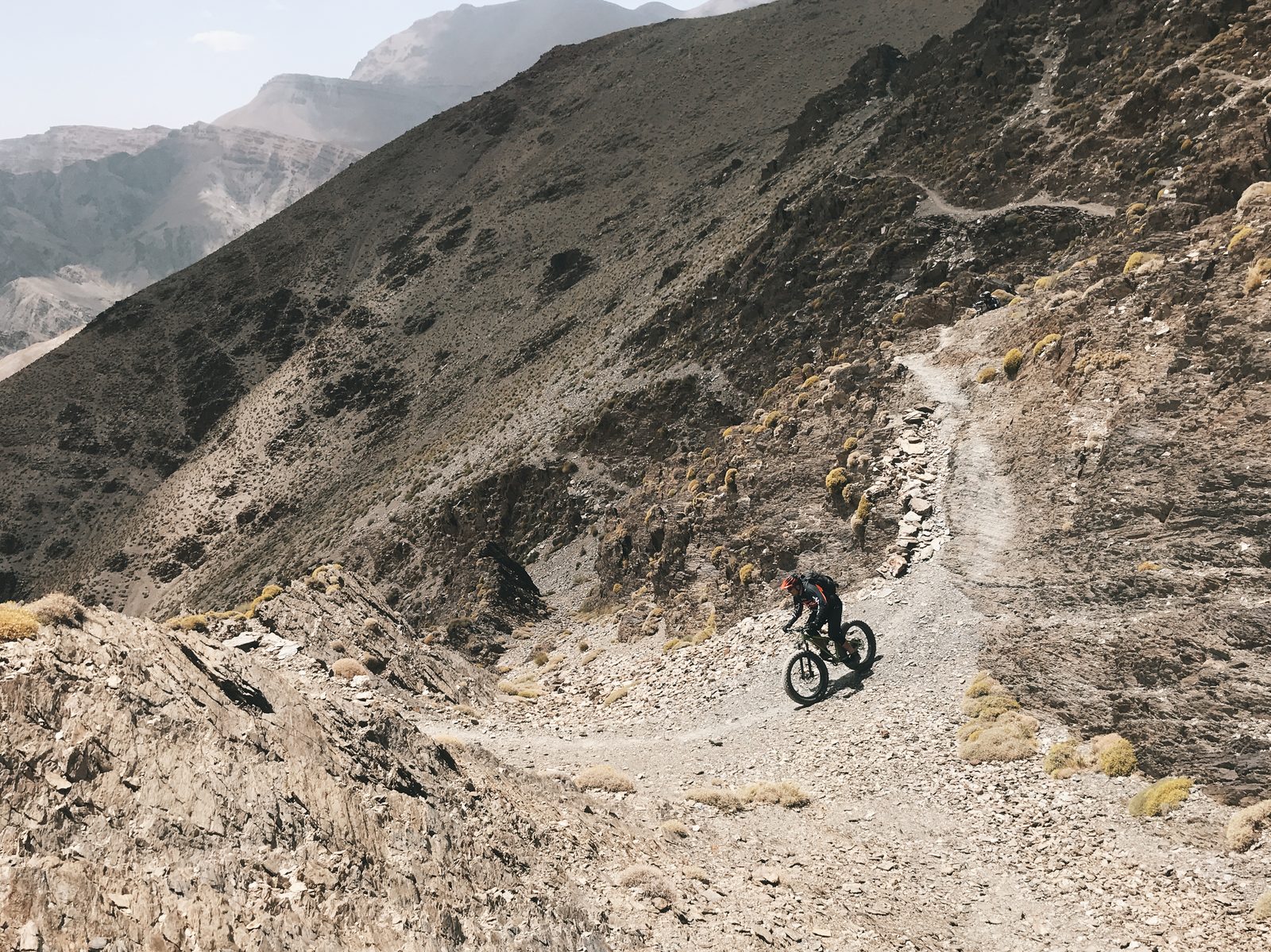
Every destination has its own ground. The shale and rolling stones of the High Atlas, the flowing tracks of southern Morocco, the shepherds' trails of the Caucasus, the balcony traverses of the Alps. Where you have no reference points, on a descent as much as on a technical climb, technique is what gives you confidence.
And confidence saves energy. A tense rider gets tired much faster, from the forearms to the shoulders, and enjoys the scenery less. A relaxed rider lets the bike work underneath, looks far ahead and keeps something in reserve for the next day. Technique isn't only for those who want to go fast: first and foremost, it's for those who want to ride relaxed.
To work on it before you leave:
- Video coaching, all year round and wherever you ride. You film a section that gives you trouble, send it with your question, and I reply with the corrections to make and exercises to practise on your own. From CHF 49.
- Coaching days in Valais, starting Monday 1 March 2027 for the beginner course. Exactly one week before Camp'n'Ride in Tuscany.
- Shuttle days, scheduled in December, January and February when conditions allow, to get back the feel of guided riding.
If you wonder what a day with a coach really changes, we told the story here. And the five most common blocks are broken down in another article.
Fitness, to ride day after day
Riding regularly is the foundation, and nothing replaces it. Two or three rides a week, including a longer one, are worth more than one big ride a month. In winter, the indoor trainer, cross-country skiing, hiking or running keep the engine going between rides.
The real bonus is daily strength work. Ten to fifteen minutes a day are enough to prepare what mountain biking asks of you most:
- core work, to hold your position and take the load off your lower back;
- legs and glutes, to pedal and absorb the terrain;
- upper body and grip, to steer, and to carry your bike when you have to;
- hip and shoulder mobility, to move freely on the bike.
For exercises designed for mountain biking, we recommend following @physio.riders on Instagram. Charly, a sports physiotherapist and rider, shares plenty of valuable tips there to strengthen your body and avoid aches and pains. And if you are getting back into sport after a long break, or if a pain won't go away, check with a health professional before increasing the load.
What about an E-Bike? The motor helps you climb, but it doesn't ride the bike for you. An E-Bike weighs more than 20 kg: it takes core strength in technical sections, and strength if you have to push or carry it. The preparation is the same. To choose between the two, read E-bike or classic mountain bike.
Altitude, the factor people forget
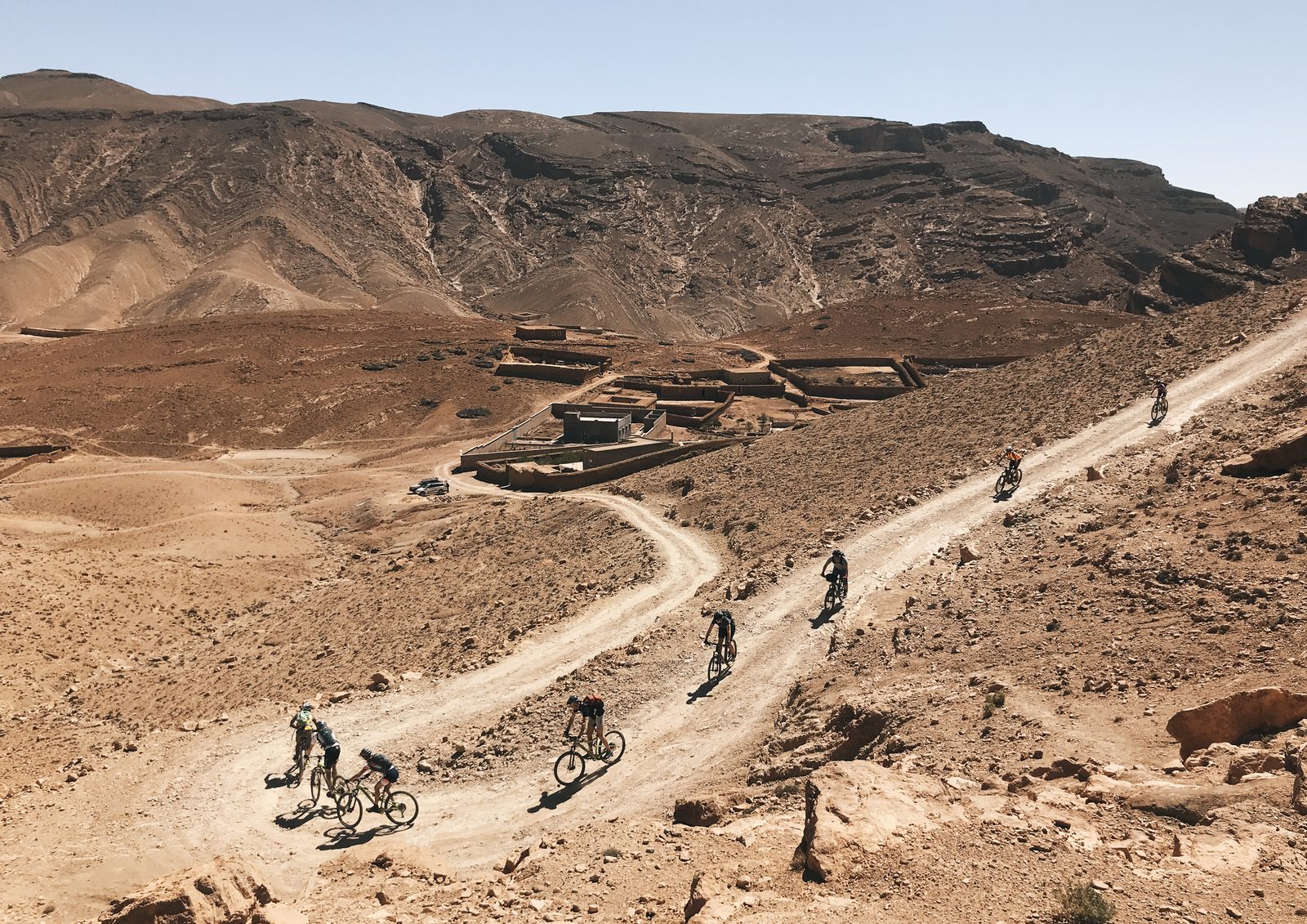
Several of our trips go high. Starts at 3,400 m on the Zermatt weekend, passes at 3,000 m on the Transalp, ridges above 3,000 m and passes at 3,500 m in the Caucasus, a 4,000 m summit on the Mgoun in Morocco, and more than 5,000 m in Iran.
Up there, oxygen gets scarce. The same effort costs more, your breathing shortens, recovery takes longer. Everyone reacts differently, and the fittest rider isn't always the one who copes best.
The best preparation is riding at altitude before the trip. It's the simplest way to gauge yourself: you feel how your body reacts and what pace you can hold up there. In Valais, from June to October, high-altitude tours are perfect for this. In winter, a day of ski touring or snowshoeing at altitude already tells you a lot.
On the trip, drink often, before you're thirsty, climb at your own pace, and tell the guide straight away about a headache, nausea or unusual breathlessness.
Your pace: don't burn out on the first climb
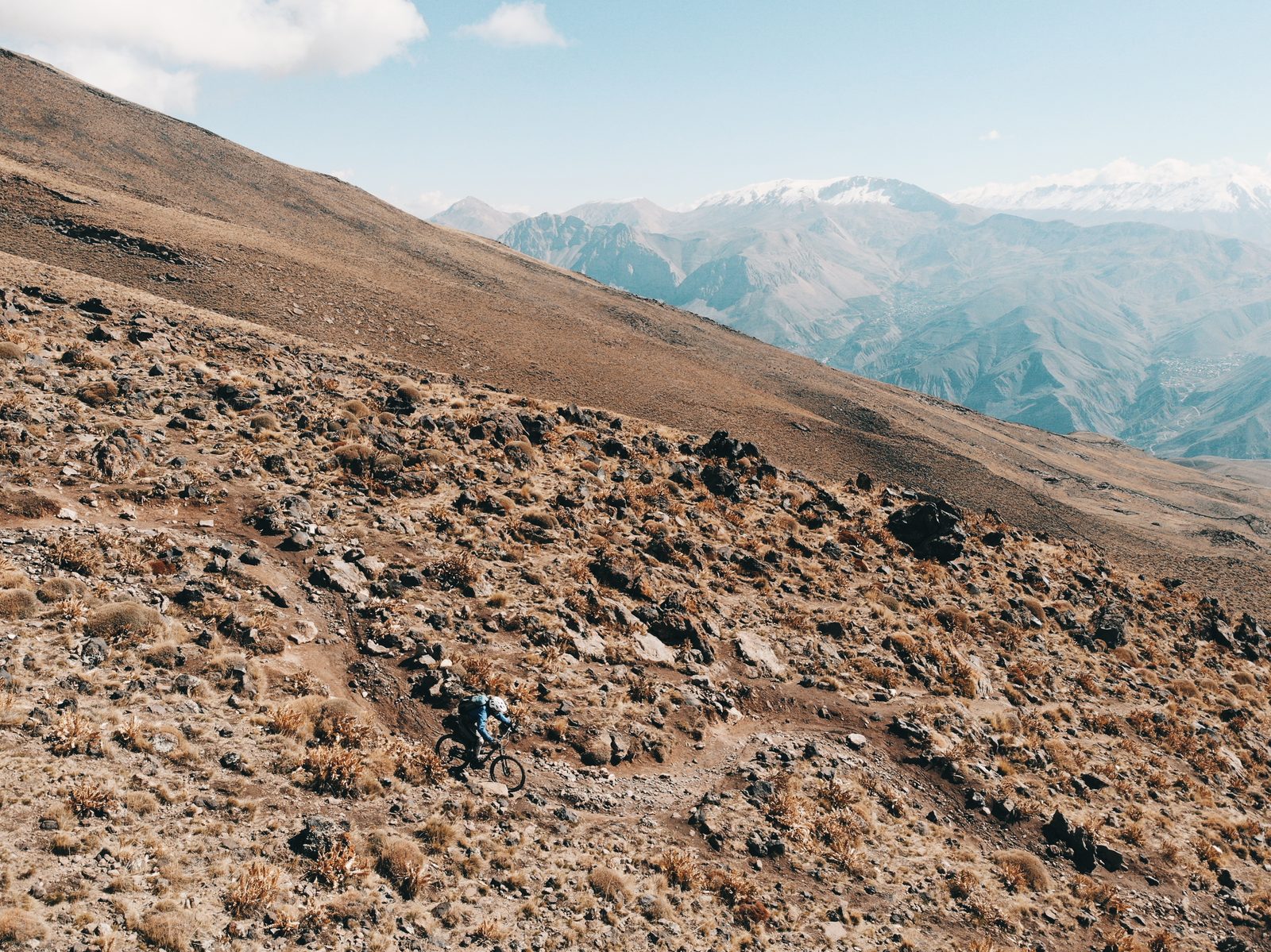
Getting ready also means understanding your own pace in the effort. Every season we see the same scene: a rider matches their pace to riders who are more at ease on the climbs. They hold on for ten minutes, go into the red, and pay for it for the rest of the day, sometimes the next day too.
During your preparation, learn to recognise your pace: the one where you can still talk while pedalling, the one you could hold for an hour without thinking about it. That's the one you take with you on the trip.
And remember this: there is no shame in reaching the top a few minutes after the first riders. We regroup at the top, and riders are always kind to one another. The last one to reach the pass is often the one with the most legs left for the descent that follows.
The 12-week plan
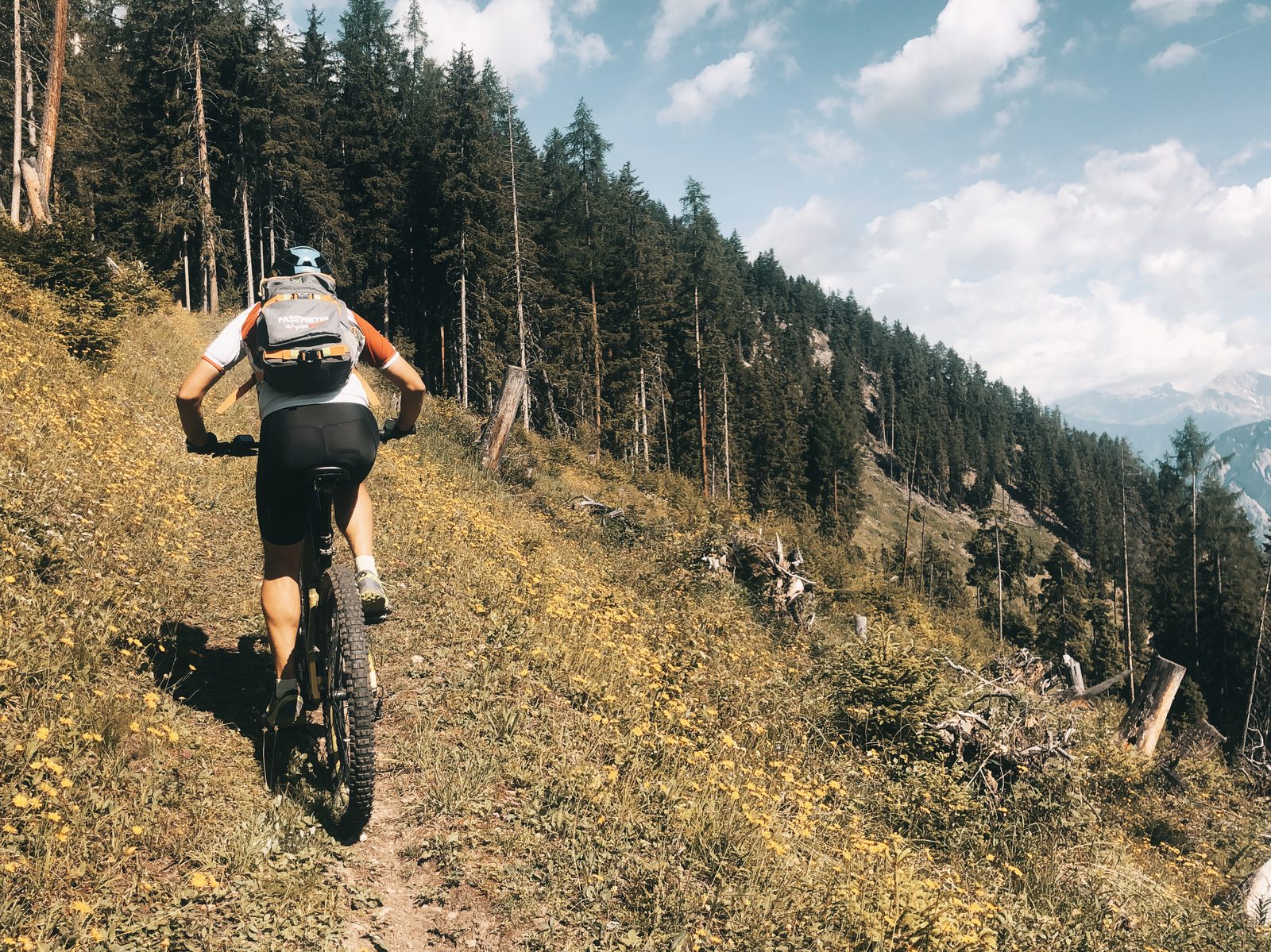
Twelve weeks is the right lead time to arrive in shape without putting pressure on yourself. Leaving on 13 February? Start in mid-November. Less time? Even six weeks of regular riding change a lot.
Weeks 1 to 4: consistency
- Two or three rides a week, on the bike, or an endurance sport if the weather doesn't play along.
- Ten to fifteen minutes of strength work almost every day.
- Find your pace, the one where you can still talk.
Weeks 5 to 8: volume and technique
- One long ride a week, gradually extending the duration.
- Every other weekend, two days of riding in a row.
- One technique session: video coaching, a coaching day, or bike-handling drills in a car park.
- A ride at altitude if the season allows.
Weeks 9 to 12: just like the trip
- Two or three weekends of two back-to-back days, with the pack, kit and bike you will use on the trip.
- Your bike serviced at least two weeks before departure, so you have time to test it.
- In the last week, ease off: a few short rides, plenty of sleep, and nothing new.
The last days before you leave
Your bike is serviced, adjusted and tested on a real ride. No new saddle and no new shoes: a trip is not the time to discover them. If you are flying, our guide to preparing and packing your bike will save you an evening.
In your pack, the basic kit: multitool, puncture repair kit, spare tube and quick link. It's also a gift to the group: nobody likes waiting by the trail while someone digs for their quick link at the bottom of their suitcase. If small repairs still make you hesitate, the mechanics workshop teaches you the basics on your own bike.
And the night before you leave, sleep. It counts for more than one last ride.
Afraid of being "the one who holds everyone back"?
It's a worry we sometimes hear before someone signs up, and we understand it. The trip dates you see in our calendar are open departures: solo riders or small groups sign up for them, often without knowing each other. And some hesitate to take the plunge, afraid of not being at the same level as the others.
Rest assured. Our open departures respect everyone's abilities. It's not the fastest rider who sets the pace: everyone climbs at their own speed, and we regroup at the top. And riders are always kind to one another. On a trip, we cheer for the rider reaching the pass, we don't time them.
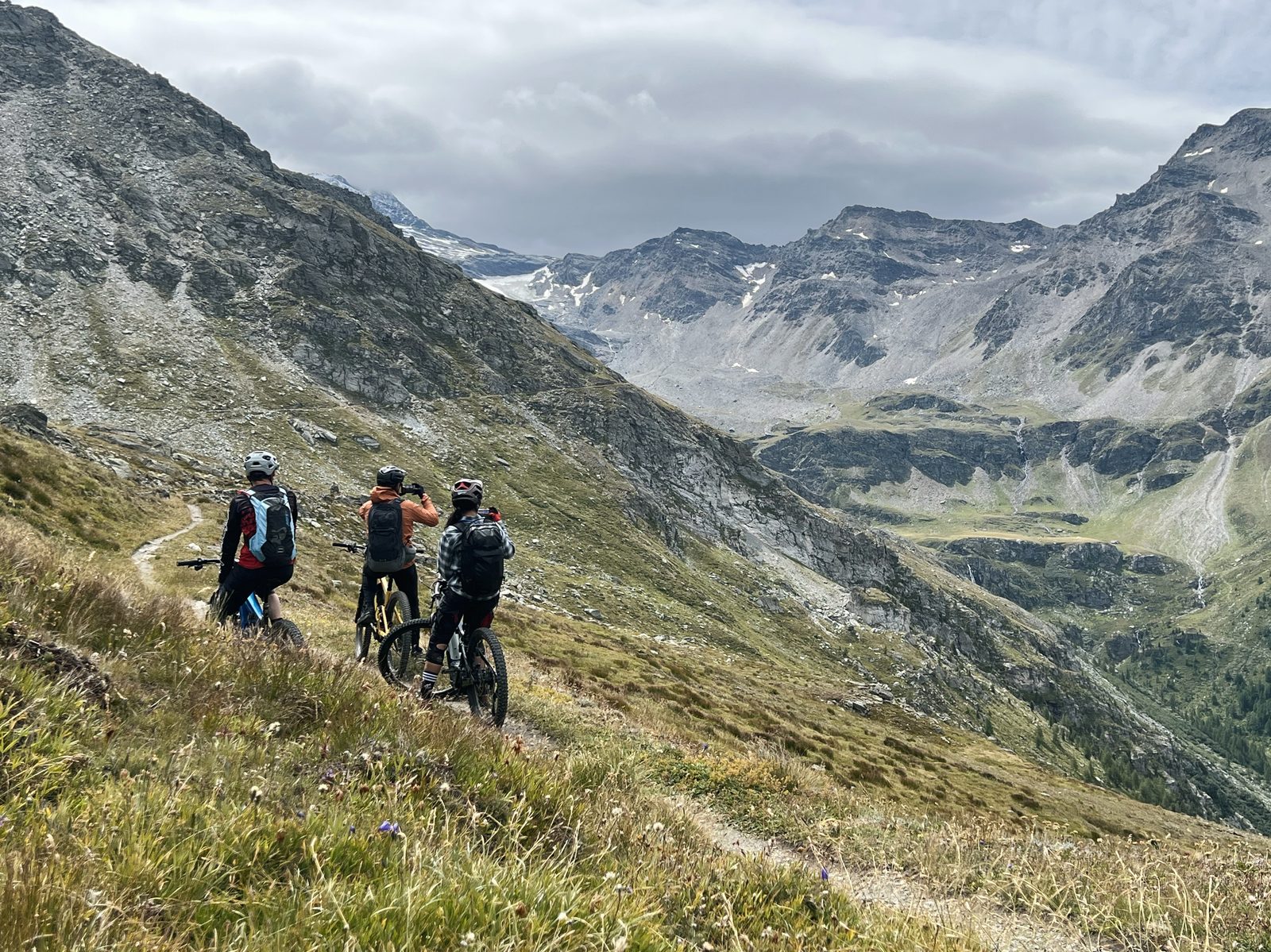
To set off with peace of mind, start with our level questionnaire, which takes two minutes, and read the guide What is your MTB level?, which explains our technical and fitness levels.
Then choose the trip that suits you. Zagoride, on the flowing tracks of southern Morocco, is open to all. On Endu'Rock the Casbah, technical level 3 only applies to some sections, not the whole week. And if the effort makes you hesitate, a rental E-Bike smooths out the climbs.
The simplest thing is to write to us: we'll tell you honestly whether the trip is right for you, and how to prepare for it.
Frequently asked questions
How long before an MTB trip should I start preparing?
Ideally twelve weeks. Six weeks of regular riding already make a real difference. What matters is riding often, not riding hard.
Do I need to be very fit to go on an MTB trip?
No. Above all, you need to ride regularly and choose a trip that matches your technical and fitness level. Our level questionnaire helps you see clearly.
Do I need to prepare for an E-Bike trip too?
Yes. The motor helps you climb, but handling, the weight of the bike and riding day after day call for the same preparation.
How do I prepare for altitude?
Ride at altitude before you leave to gauge yourself. On the trip, climb at your own pace, drink regularly and tell the guide if you feel unwell.
I'm afraid of being the slowest in the group. Should I still sign up?
Yes. Our open departures respect everyone's abilities: everyone climbs at their own pace, we regroup at the top, and riders are always kind to one another. Reaching the top a few minutes after the first riders is normal, and far smarter than going into the red. To check that the trip matches your level, take our questionnaire or write to us.
What strength exercises should I do for mountain biking?
Core work, exercises for the legs and glutes, the upper body and mobility, ten to fifteen minutes a day. For exercises designed for mountain biking, follow @physio.riders on Instagram.
Get ready, then enjoy it
Preparation isn't about being the fastest in the group. It's about enjoying it all: the scenery, the trail, the evenings, and every morning you get back on your bike, keen to ride. Pick your next departure in the calendar, and we'll take care of the rest.