Morocco is not a desert country with a few mountains. It is a mountain country with a bit of desert. The Atlas crosses it diagonally, from the Atlantic to the Algerian border, with summits over 4'000 m. That relief is what makes it one of the finest MTB destinations, just a few hours' flight from Switzerland.
We have been riding here for more than fifteen years, and the question we hear most often is not "is it beautiful?". It is "where, exactly, and when?". Here is the answer, region by region, with what you actually ride there.
Mountain biking in Morocco at a glance
| Region | The terrain | When to ride | Who it suits |
|---|---|---|---|
| High Atlas, around Toubkal | Red-earth and schist singletracks, mule trails between villages | October to early April | Riders at ease on singletracks (3/4 for technique) |
| The south, from the Dadès to Zagora | Wide, rolling tracks, volcanic rock of the Saghro, palm groves | October to early April | Everyone, on an MTB, E-Bike or gravel bike (1.5/4) |
| Central High Atlas, the M'goun | High mountains, high-altitude trails, climbs on foot | Mid-May to mid-September | Technical riders with good fitness (3/4) |
| Middle Atlas | Forest tracks among the cedars | Spring to autumn | MTB tourers, on their own |
| Anti-Atlas | Tracks and trails in the granite, oases | Autumn to spring | MTB tourers, on their own |
The first three regions are the ones we take you to. We still tell you about the other two: a guide who only talks about his own trips is not a guide.
The High Atlas around Toubkal: enduro country
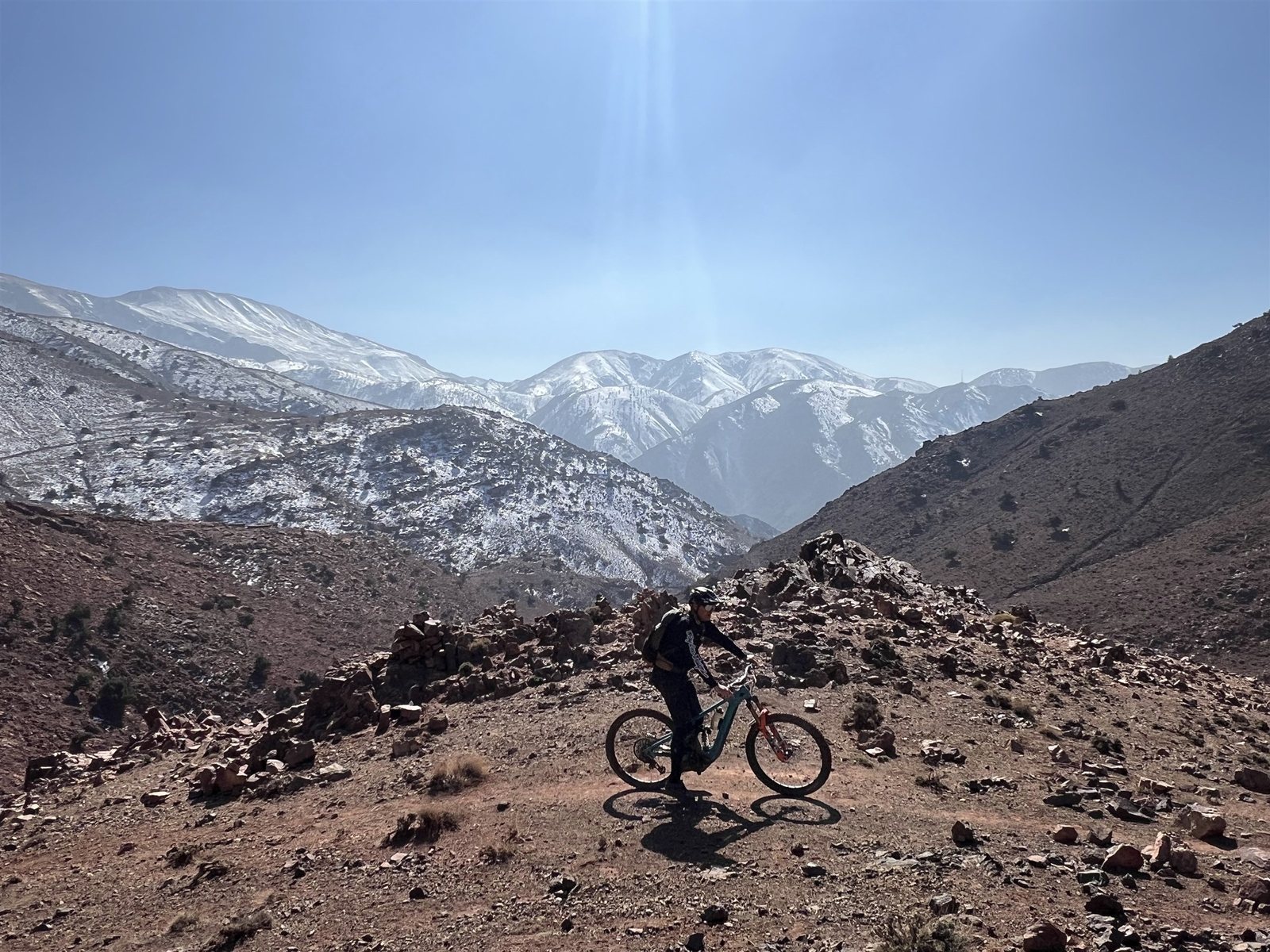
An hour or two from Marrakech, the Berber valleys of Amizmiz, Ouirgane, Asni and the Ourika stretch out at the foot of Toubkal, the highest summit in North Africa, at 4'167 m. The summit itself is climbed on foot. On an MTB, you play in everything around it.
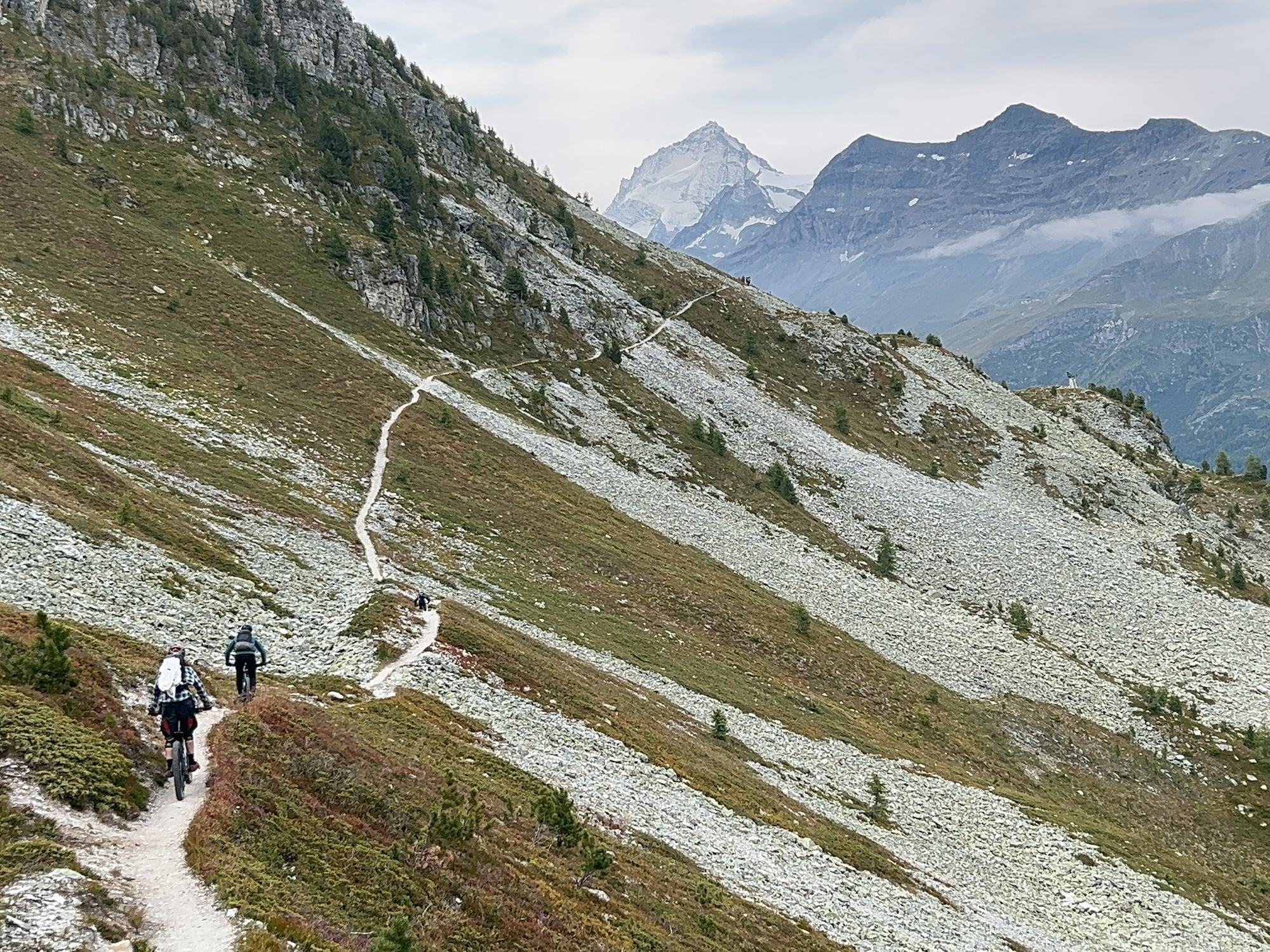
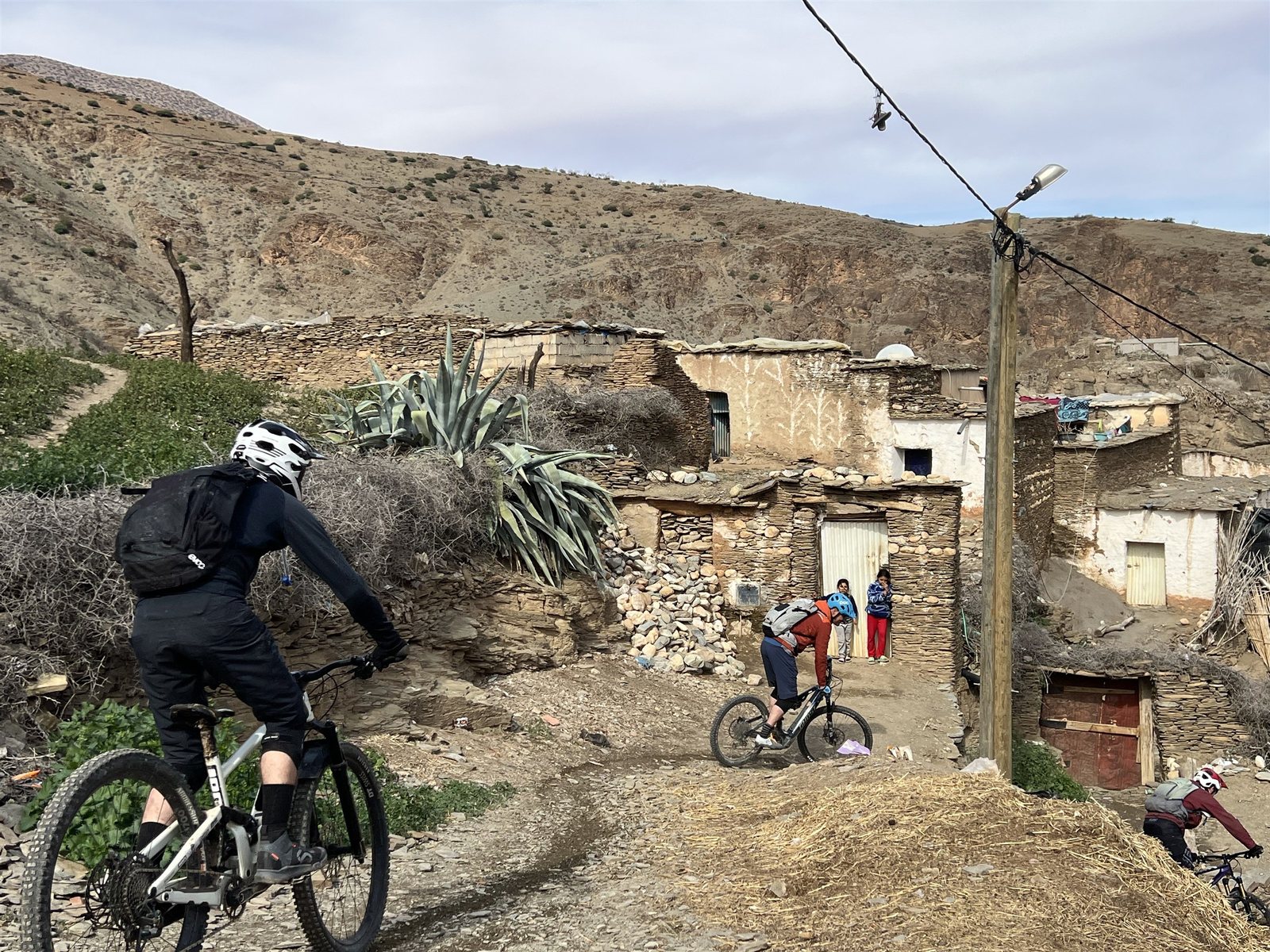
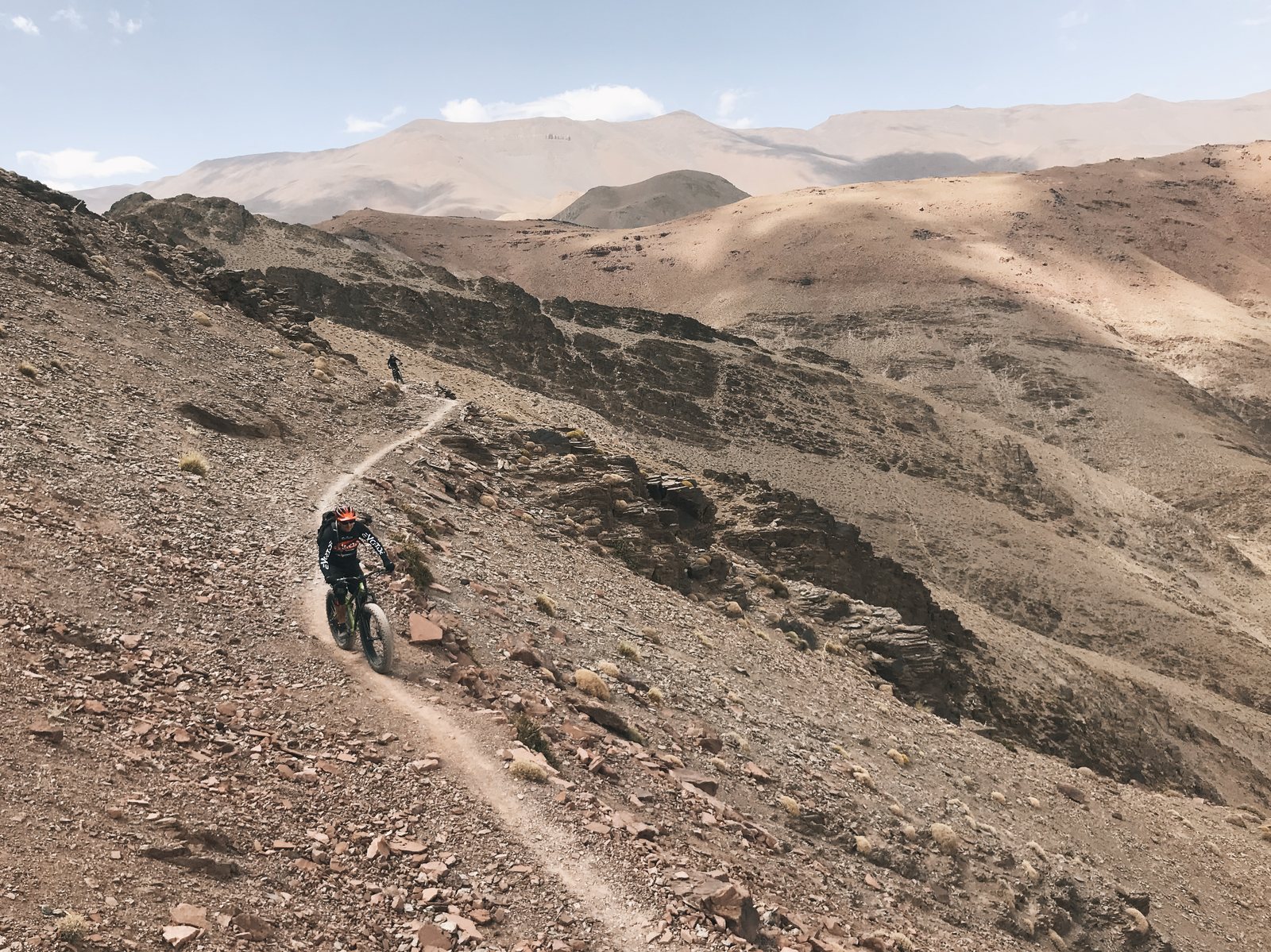
The terrain is an enduro rider's dream: red earth, schist you ski more than you ride, and above all century-old mule trails linking the villages. These are not bike park trails: they are the paths of the people who live there, shared with mules, shepherds and children walking home from school. You slow down, say hello, and ride on.
To get back up, the logistics do the work: 4x4s on the tracks, mules where the track ends. A few pedal strokes remain, just enough to take in the view. In winter the summits are white, but the valleys stay dry and rideable, and you climb as high as 2'600 m at Oukaïmeden, the highest ski resort in Africa.
This is the playground of Endu'Rock the Casbah, our winter enduro week. You need to be at ease on singletracks (3/4 for technique, 2/4 for fitness), with a full-suspension bike of 140 to 170 mm, regular or electric. The technical passages are only on some sections: no stress.
The south, from the Dadès to Zagora: track country
Once you cross the High Atlas over the Tizi n'Tichka pass, the scenery changes completely. Mud-brick kasbahs, the red cliffs of the Dadès, then the Jebel Saghro, a massif of jagged volcanic rock in nomad country. Further south, the Draa valley, its fortified ksour and its palm grove, all the way to Zagora, the gateway to the desert.
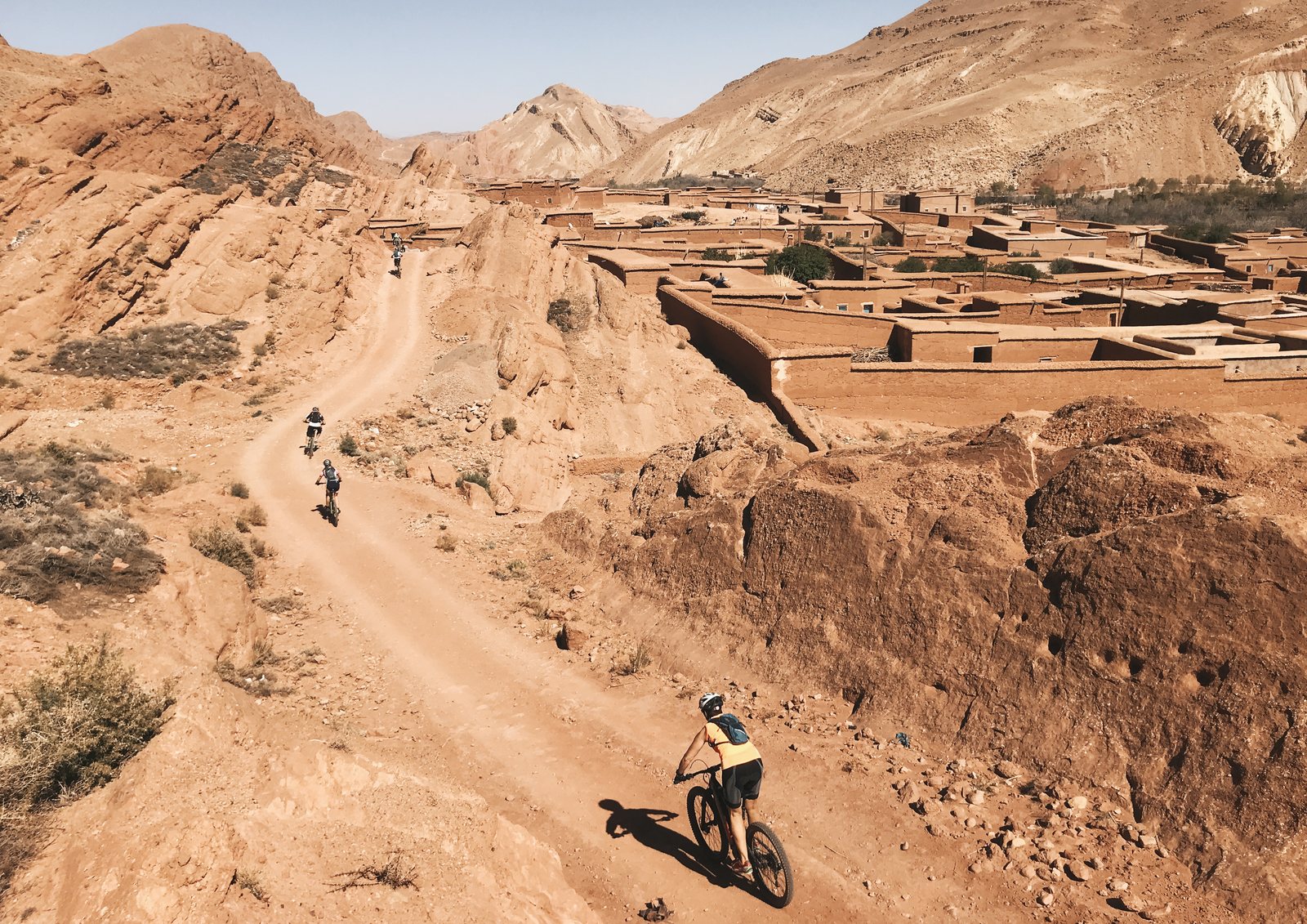
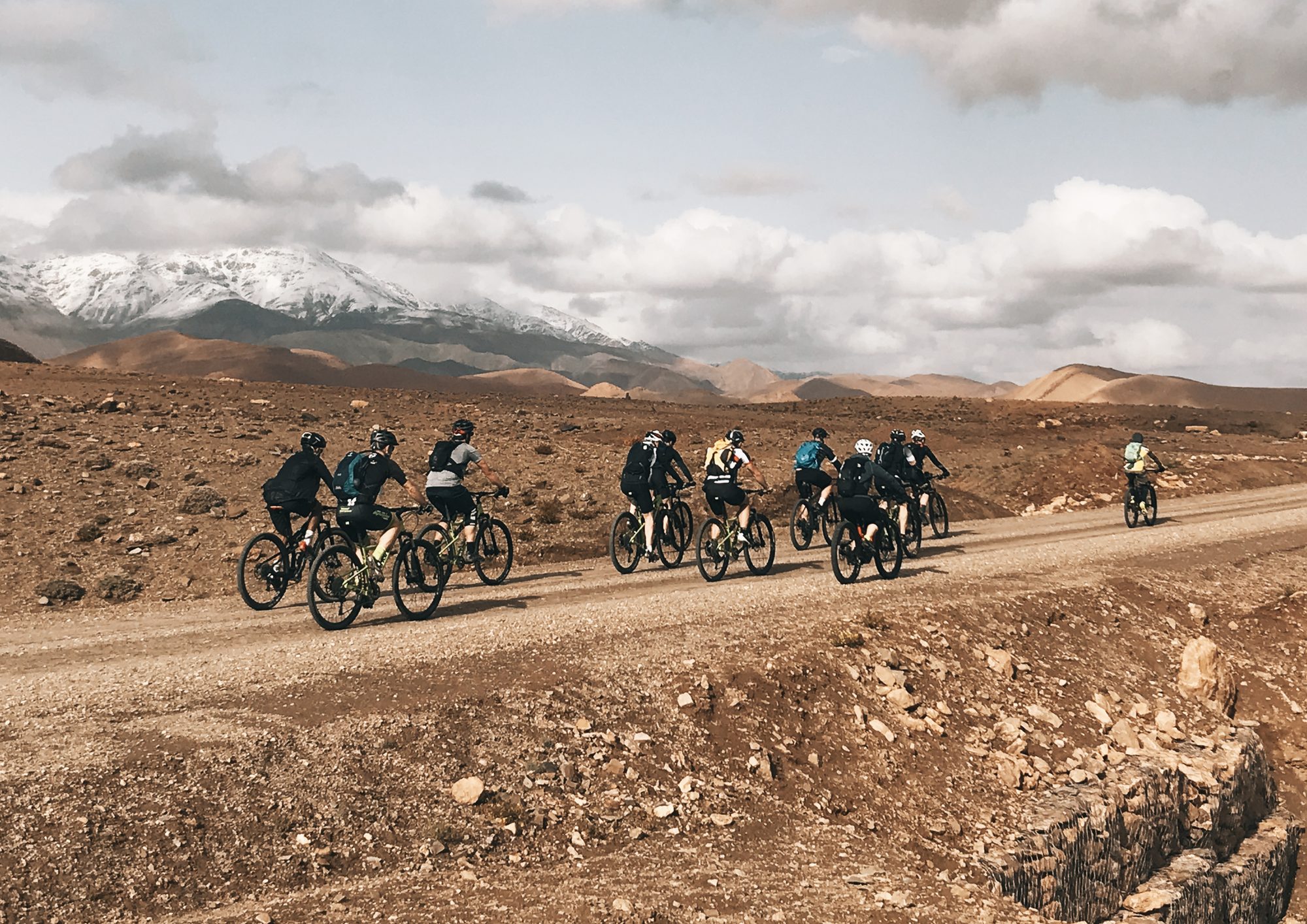
Here, you are not looking for technical singletrack. You ride wide tracks that stretch as far as the eye can see, with a few rocky sections in the Saghro that you take at your own pace. The south is ridden between 800 and 1'500 m, with one pass at 2'000 m: in winter, the days are mild and dry. In summer, forget it: in Zagora, the average daily high tops 40 °C in July.
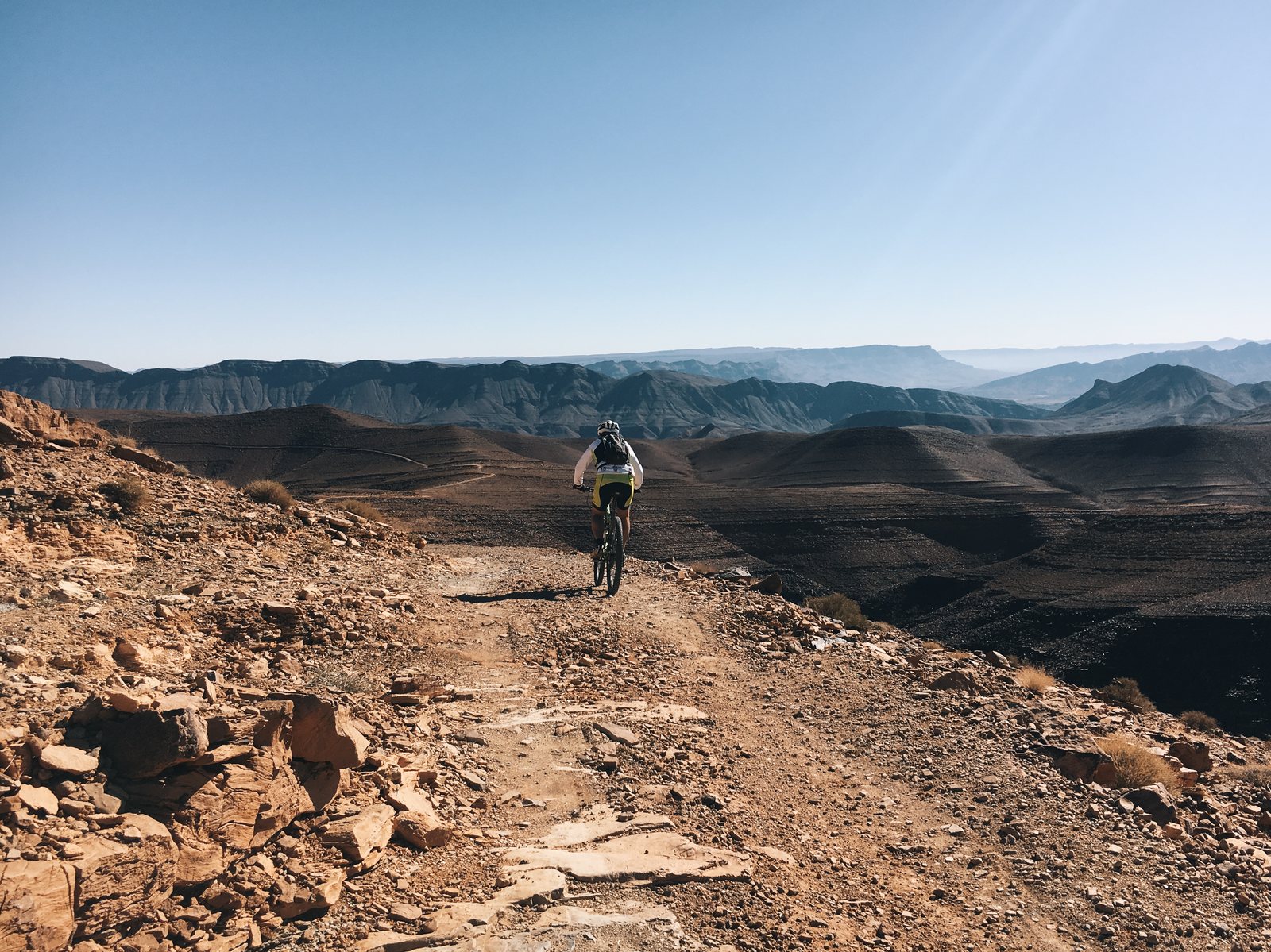
It is the most accessible region in the country. An MTB with 100 to 150 mm of travel is enough, the E-Bike evens out differences in level, and a gravel bike is at home on these tracks, with slightly wider tyres for the sand of the palm grove. This is the crossing of Zagoride, from Ouarzazate to Zagora: our article on Zagoride tells you everything.
The Central High Atlas and the M'goun: high mountains, in summer
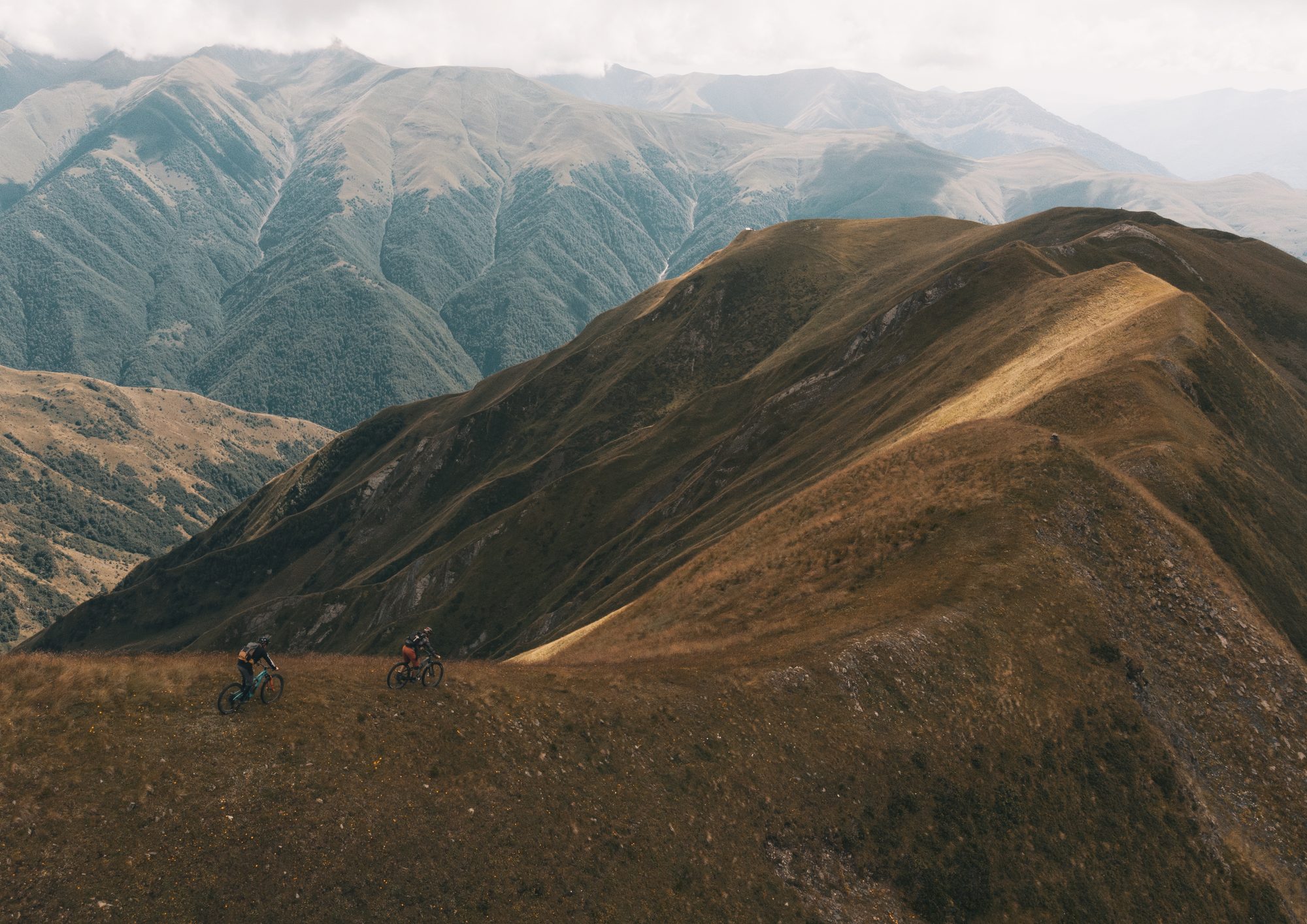
Further east, the Central High Atlas peaks at the M'goun, at 4'071 m. In winter, it is under snow. From mid-May to mid-September, it becomes the playground of another Morocco: high mountains, shepherds at their summer pastures and green valleys in the middle of the rock.
Here, you earn your ride. The mules carry the bikes while you hike up the Tassaout valley to a remote refuge, the last possible stop before the summit. Then comes the reward: a lunar trail, singles nobody rides, and a final day down to the Happy Valley.
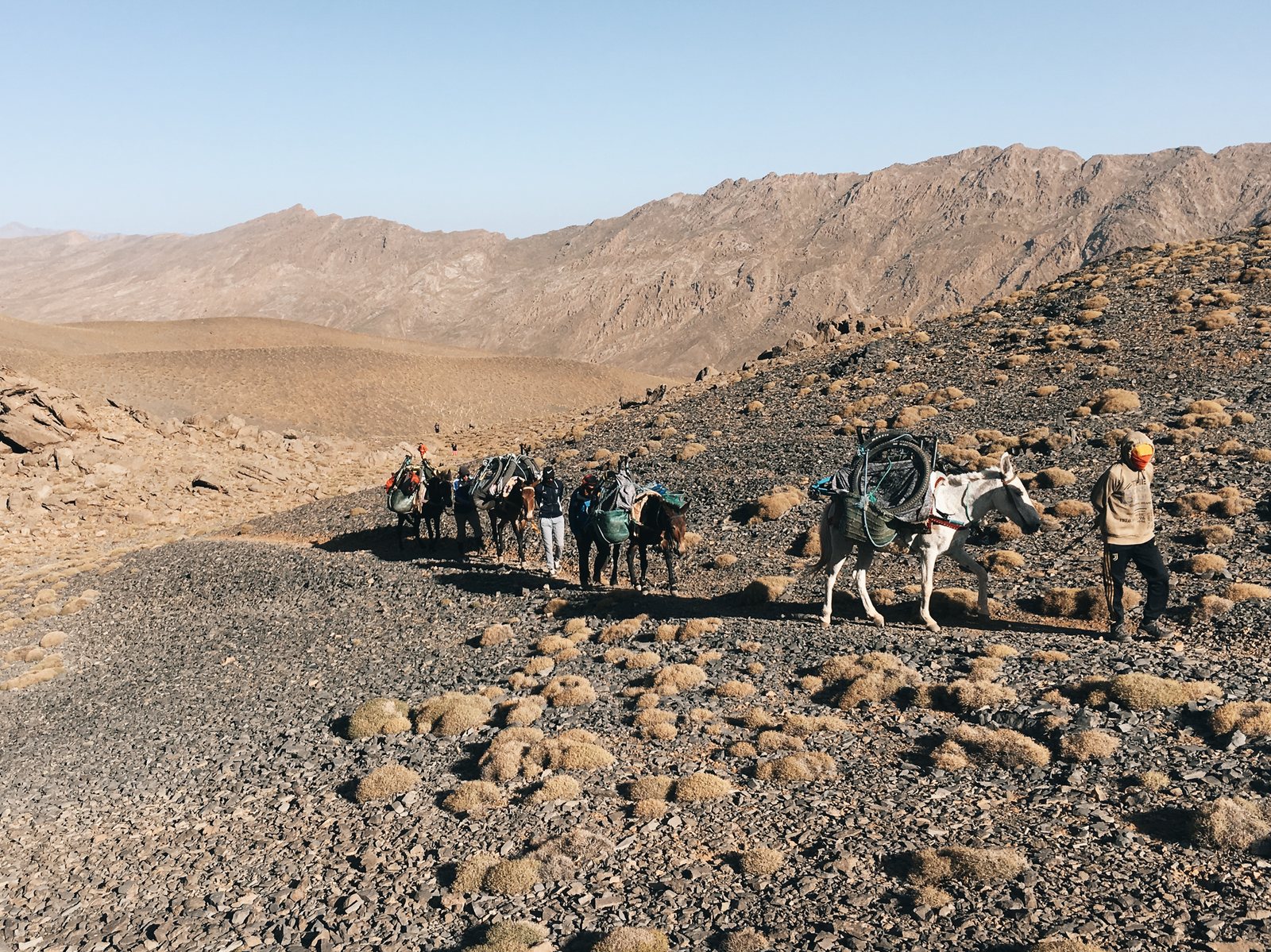
This is M'goun Hike & Ride, nine days for technical riders (3/4) with good fitness. Above 3'000 m, altitude counts as much as your legs: our guide to preparing for your trip explains how to get ready.
What about elsewhere? The Middle Atlas and the Anti-Atlas
The Middle Atlas. Around Ifrane, nicknamed the Switzerland of Morocco, and Azrou: vast cedar forests and plateaus around 1'700 m. You mostly ride forest tracks, in a setting closer to the Jura than to the Sahara. Snow falls every winter: it is a region for late spring to autumn.
The Anti-Atlas. South-east of Agadir, around Tafraout: jumbles of pink granite, hilltop villages and oases such as the Ammeln valley. Tracks and old mule trails, in dry country. It is a region for autumn, winter and spring.
We do not run trips there: we prefer to ride where we know every village and every family who welcomes us. If you go on your own, go well prepared: plenty of water, a repair kit, and someone who knows where you are.
When to go: the MTB calendar in Morocco
- October and November are one of the best windows: it is still mild in the mountains, and the light is superb on the Atlas and in the south.
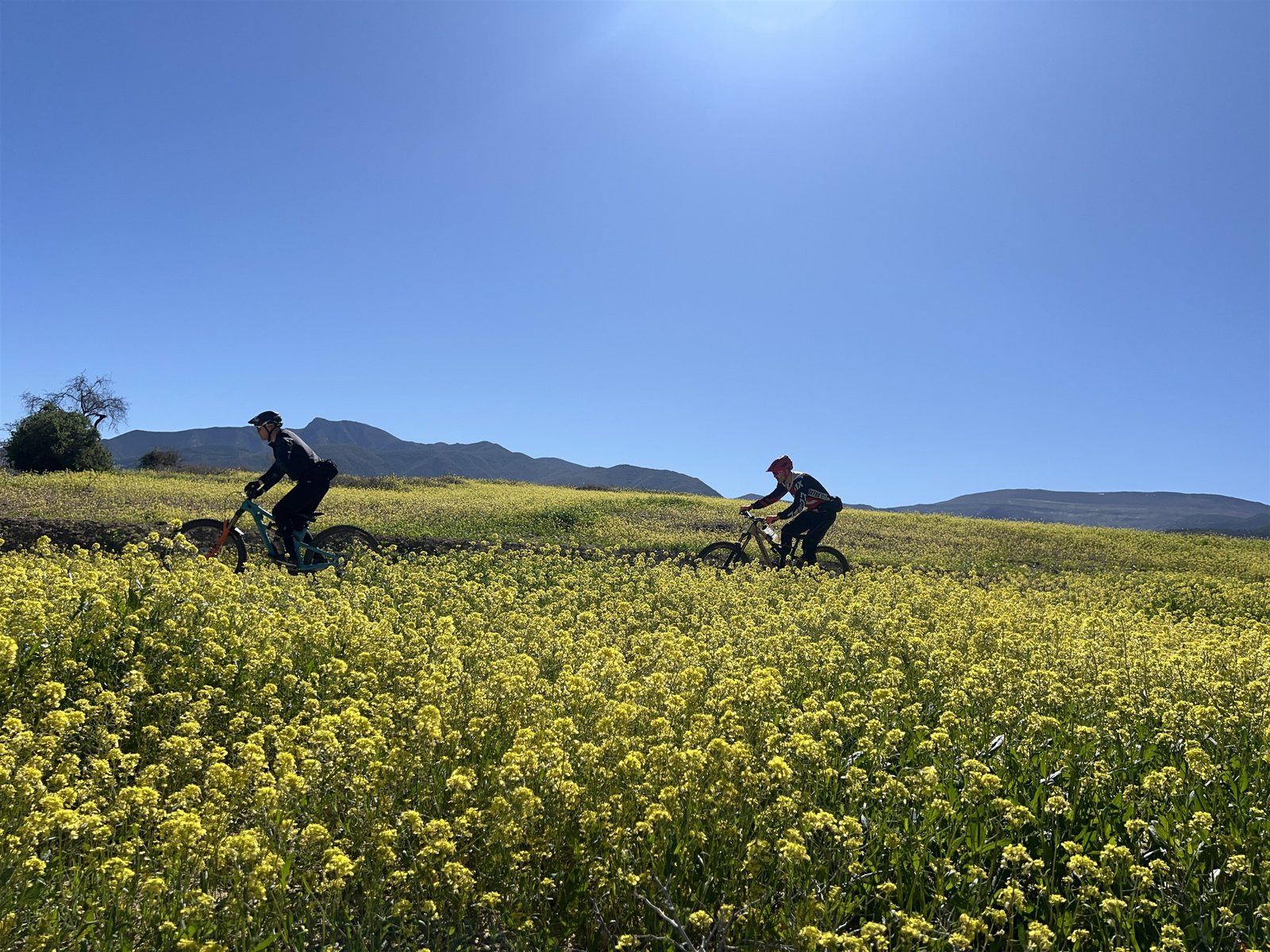
- From December to February, the sky is dry and sunny, mornings are cool and the summits are snow-capped. The High Atlas is ridden in its valleys, the south is at its best, and from February the first fields come into bloom. And yes, it can be cold in the evening: here is how to prepare for it.
- From March to early April, it is spring: the fields turn green under the palm trees of the Draa, and the winter season draws to a close.
- From mid-May to mid-September, the south and the low valleys get too hot. It is time for the high mountains, in the M'goun.
In short: winter in the south and the High Atlas, summer in the M'goun. That calendar is why we have spent our winters in Morocco for so many years, while the Alps sleep under the snow.
Riding on your own or with a guide?
The big tracks of the south are perfectly rideable on your own, if you can handle water, mechanics and navigation. The singletracks of the High Atlas are another story. The trails are not waymarked and change after every storm. Because few people use them, their line is not always clear: without a guide to follow, some trails are almost impossible to ride.
Riding with a guide means, first of all, more time on the bike: the 4x4 and mule uplifts are organised, your suitcase travels by car and the support vehicle follows. It also means stepping into homes and sharing tea and tagine with the families who have welcomed us for years. And when it comes to trails, it is simple: the best ones are found with the people who live there.
If you want to ride with us, you will find our mountain bike tours in Morocco, departing from Marrakech, with guaranteed departures all winter, and in summer for the M'goun. Torn between enduro and the crossing? Our Endu'Rock or Zagoride comparison will help you choose. And from six people, we organise your trip on the date of your choice.
Frequently asked questions
Where can I go mountain biking near Marrakech?
In the High Atlas, one or two hours' drive away: the Ourika, Asni, Ouirgane and Amizmiz valleys, at the foot of Toubkal. The south, from Ouarzazate to Zagora, means crossing the Atlas: allow half a day's drive.
When is the best time to go mountain biking in Morocco?
October to early April for the High Atlas and the south. Mid-May to mid-September for the high mountains of the M'goun. In summer, the south is too hot to ride.
Can you ride up Toubkal on an MTB?
The summit, at 4'167 m, is climbed on foot. On an MTB, you ride the valleys and the mule trails around it, and that is where the best trails are.
Can you ride an E-Bike in Morocco?
Yes. For our winter trips, we rent E-Bikes on site for 390 CHF a week. If you want to bring your own, the battery cannot go on the plane: here is how to handle it.
What level do I need to mountain bike in Morocco?
It depends on the region. The south is open to all, from 1.5/4 for technique. The High Atlas around Toubkal calls for 3/4, on some sections only. The M'goun calls for 3/4 and good fitness. To find your level, check our level scale or take the quiz.
Which bike should I bring?
For the High Atlas, a full-suspension bike of 140 to 170 mm, fully serviced. For the south, an MTB with 100 to 150 mm of travel, an E-Bike or a gravel bike with slightly wider tyres. For the journey, our guide to flying with your MTB tells you everything.
See you in the Atlas, or at the gateway to the desert.
Chris