The Valais is open to riders, and open is not the same thing as free of rules. Most of what gets bikes banned from a path happens in the first week of the season, on a wet trail, past a herd, or across a bisse footpath at speed.
If you are coming to ride here on your own, this is the part that does not appear on any trail app.
The rules are local, and the signs win
Switzerland gives broad access to forest and pasture, but what is allowed on any given path is decided locally and can change from one commune, or one season, to the next. There is no single map of it.
So the practical rule is simple: the signage on the ground beats whatever your app told you at the car park. A path marked as closed to bikes is closed, including when it is the obvious link between two good descents.
The paths are shared, and you are the fast one on them
Almost every trail here is also a walking path. Walkers have right of way, and more usefully, they have the right not to be surprised.
- Slow down early, well before you reach them, not two metres away.
- Say something. A voice from behind a blind corner is what turns a pleasant encounter into a complaint to the commune.
- Thank people. It costs nothing and it is the entire reason access survives in some valleys and not in others.
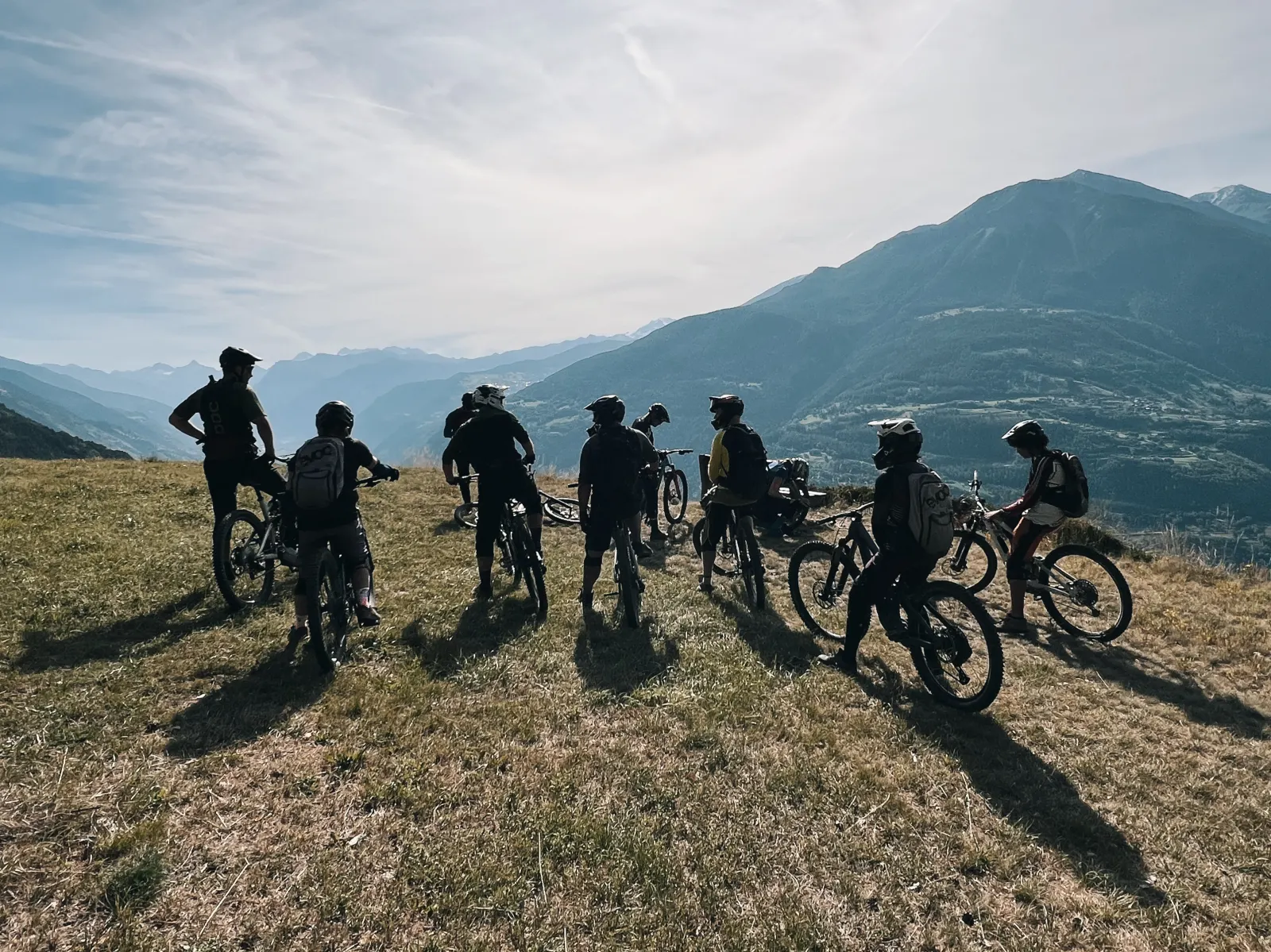
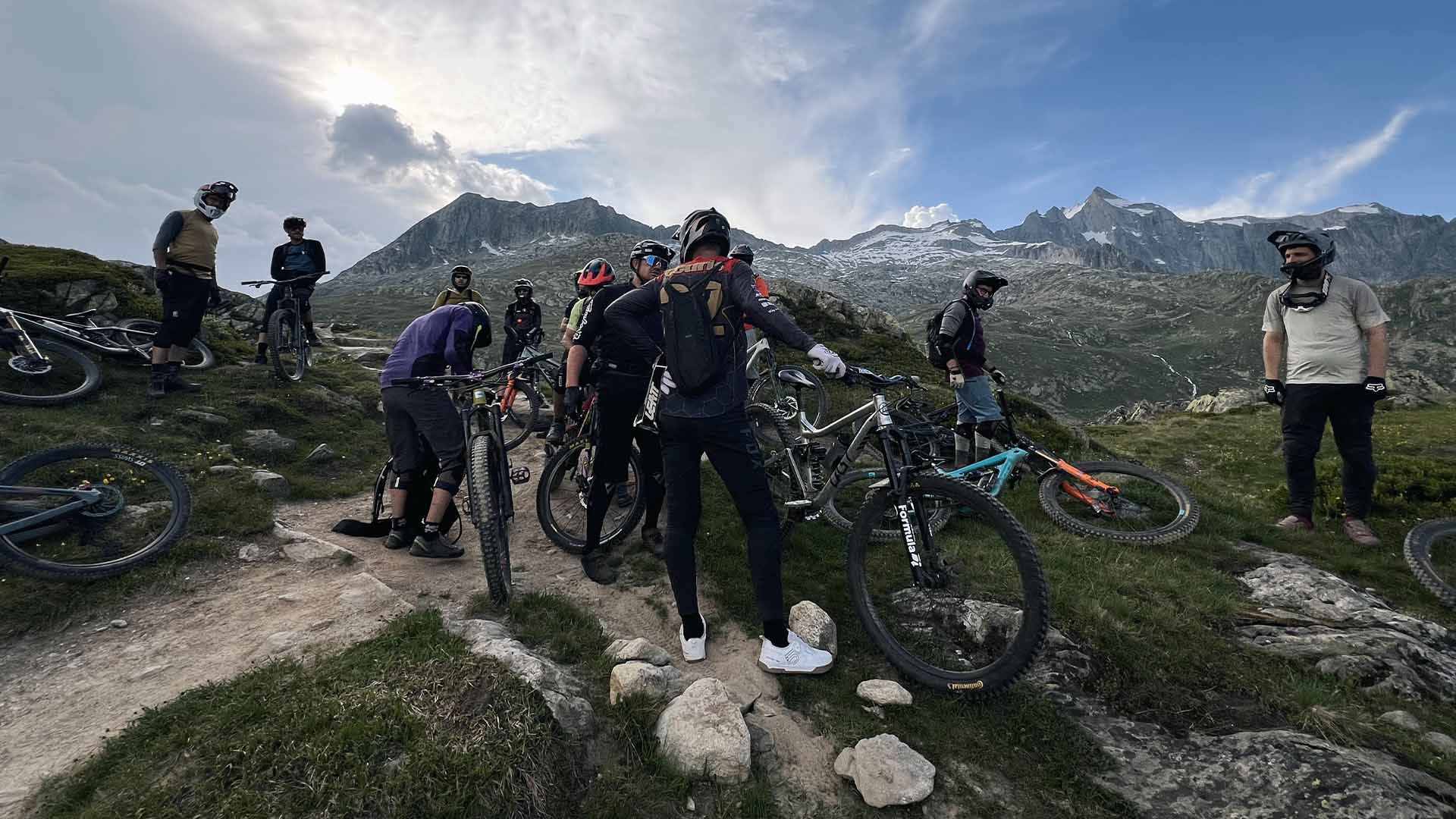
Groups are the sensitive case. One rider is a passer-by, eight riders in a line is an event, and it is remembered.
The bisses are a special case
The old irrigation channels and their towpaths are among the most popular walks in the canton. They are narrow, often with a drop on one side, and busy with families. Several are explicitly closed to bikes, and where they are not, they are rarely a good idea in the middle of the day.
They are also the place where an incident does the most damage to everyone else's access, so they are worth checking rather than assuming.




Seasonal restrictions and protected areas
Parts of the canton are wildlife reserves or wintering areas where access is restricted at certain times of year, and some sectors close for forestry work with very little warning. Both are signposted, and neither is optional.
Dawn and dusk are the sensitive hours for wildlife everywhere, not only inside marked zones. A descent at first light is a lovely idea and it is also exactly when you disturb the most.
The ground: most of the damage happens in two weeks a year
Saturated soil does not recover, it records. Every tyre cuts a channel, the channel becomes the water's route, and the surface is gone by August. Those two weeks are the thaw in spring and the days after heavy rain.
Ride through the puddle rather than around it, do not skid to test the grip, and if you are leaving a continuous groove behind you, that is the trail telling you to come back in a week.
Alpine pastures, herds and guardian dogs
From early summer the high pastures are working farmland. Gates get closed behind you, cattle get a wide berth, and livestock guardian dogs are taken seriously: slow to walking pace, get off the bike, keep the bike between you and the dog, speak calmly and keep moving away. Do not sprint, and do not ride through the middle of a herd because the trail happens to go there.
Parking, and not being resented
Village parking is for the people who live there. Blocking a farm track or a turning area at seven in the morning is remembered long after you have gone home, and it is the kind of thing that ends with a barrier and a sign.
And if you would rather not work all this out
None of the above is complicated, it is just local, and it takes a couple of seasons to absorb. That is most of what you pay a guide for: not secret trails, but knowing which sector is open this week, which path is closed to bikes, and which valley has a herd on it right now.
If you want the shortcut, the shuttle days or a guided week do that work for you. And if you are riding here alone anyway, that is fine too. Just ride like you want to come back.
Chris