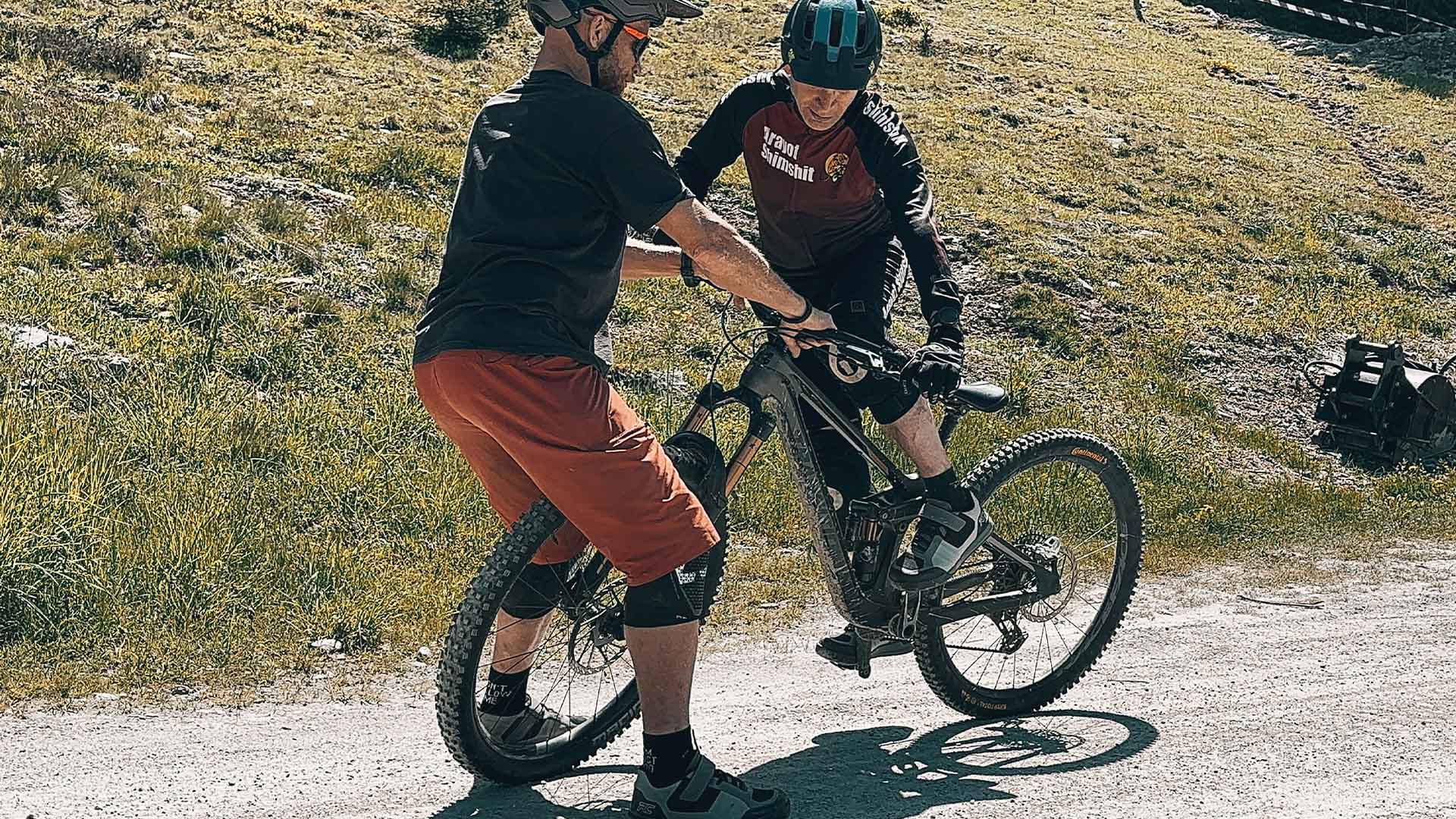
After fifteen years of watching people ride, the same five things come up again and again. None of them is exotic, and none of them is about being brave. Most riders who feel stuck are stuck on one or two of these, and they usually fix faster than anyone expects.
Here they are, in the order we see them.
1. You are looking at your front wheel
This is the one that fixes the most for the least effort. Under pressure the eyes drop, and once you are looking a metre and a half ahead the bike goes exactly where you are looking, which is into the thing you were worried about.
The fix is not "look further ahead", which nobody manages when it matters. It is to pick a specific point, the exit of the corner or a tree past the rock, and hold it. Deliberately, out loud if necessary, until it becomes the default. Everything else on this list gets easier once this one moves.
2. Straight arms and a high chest
Standing tall with locked elbows sends every impact into your shoulders and your hands, and leaves you nothing to absorb with.
What you want is the hinge: bend at the hips rather than the waist, chest lower, elbows out and bent, knees soft, and weight through the pedals rather than through the bars. It feels exaggerated for ten minutes and then it feels like the only sensible way to stand on a bike.
3. You brake in the corner
Braking and turning ask the tyre for the same grip, and there is only so much of it. Braking mid-corner is how the front tucks, and it is also why the corner never feels finished.
Brake before, off the brakes as you turn in, back on the power on the way out. Slower in, faster out, and the whole corner becomes calmer at the same speed.
4. Switchbacks defeat you
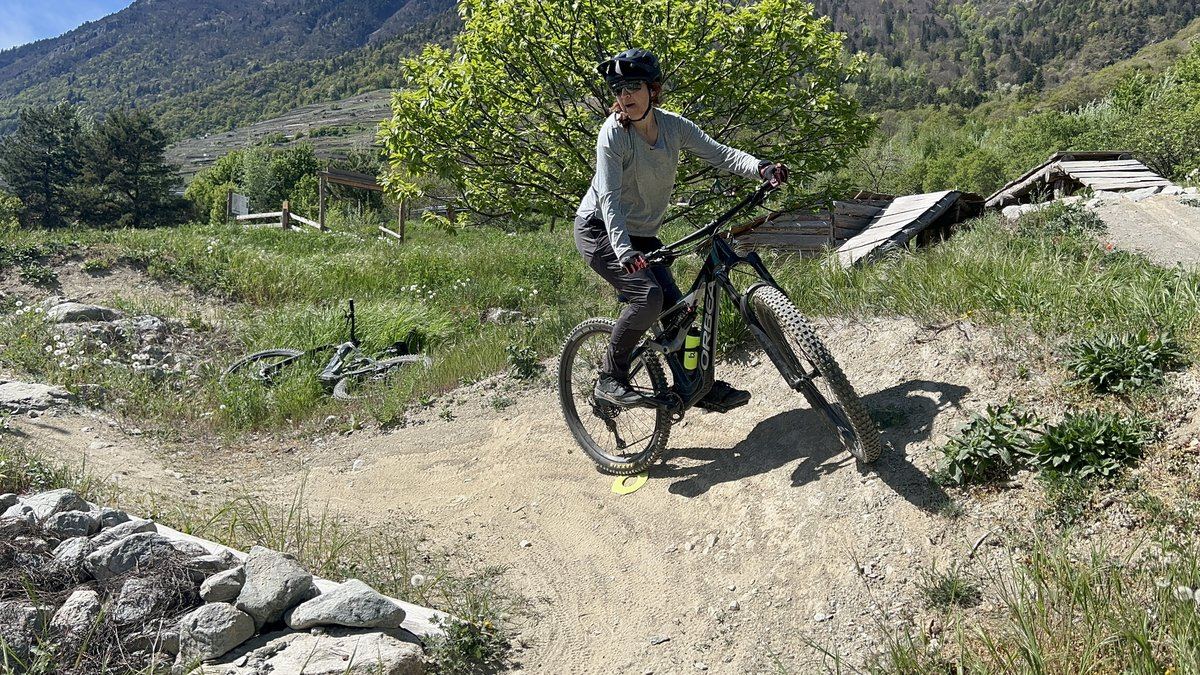
A tight switchback is not a normal corner ridden slowly, it is a different move. The bike pivots more than it turns, the front brake does most of the work, and the body stays fairly upright while the bike comes round underneath.
Ridden as a normal corner it simply does not fit, which is why people put a foot down at the same spot every time and assume it is a fitness problem or a nerve problem. It is neither. It is a technique nobody ever showed them.
5. Steep ground sends you backwards
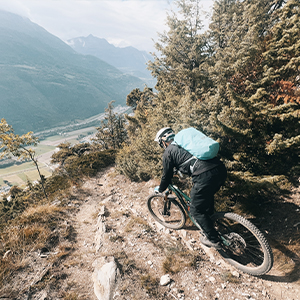
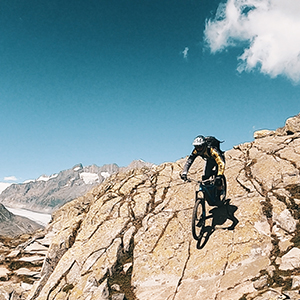
The instinct on something steep is to get behind the saddle, as far back as possible. It feels safe, and it takes all the weight off the front wheel, which is the wheel doing the steering.
Lower instead of further back: drop the chest, arms long but bent, a little pressure kept on the front, and cover the rear brake rather than grabbing the front. The bike is more stable than your instincts believe.


And half of it is in the setup
Before any of the above is worth working on, the bike has to stop fighting you. Four things, fifteen minutes:
- Sag. A fork and shock set for someone else's weight changes how the bike behaves in every single corner.
- Tyre pressure. The single cheapest change to grip there is, and most riders are running too much.
- Brake levers. Reach adjusted for one finger, and the lever angle following the line of your forearm rather than pointing at the ground.
- The dropper. If the saddle is still up on the descents, nothing else on this list is available to you.
Riders often arrive convinced they need to be braver and leave having discovered they needed six clicks of rebound.
Why this goes faster with somebody watching
You cannot see yourself ride. That is the whole problem: you feel the result, not the cause, and the cause is almost always a few metres before the moment that went wrong.
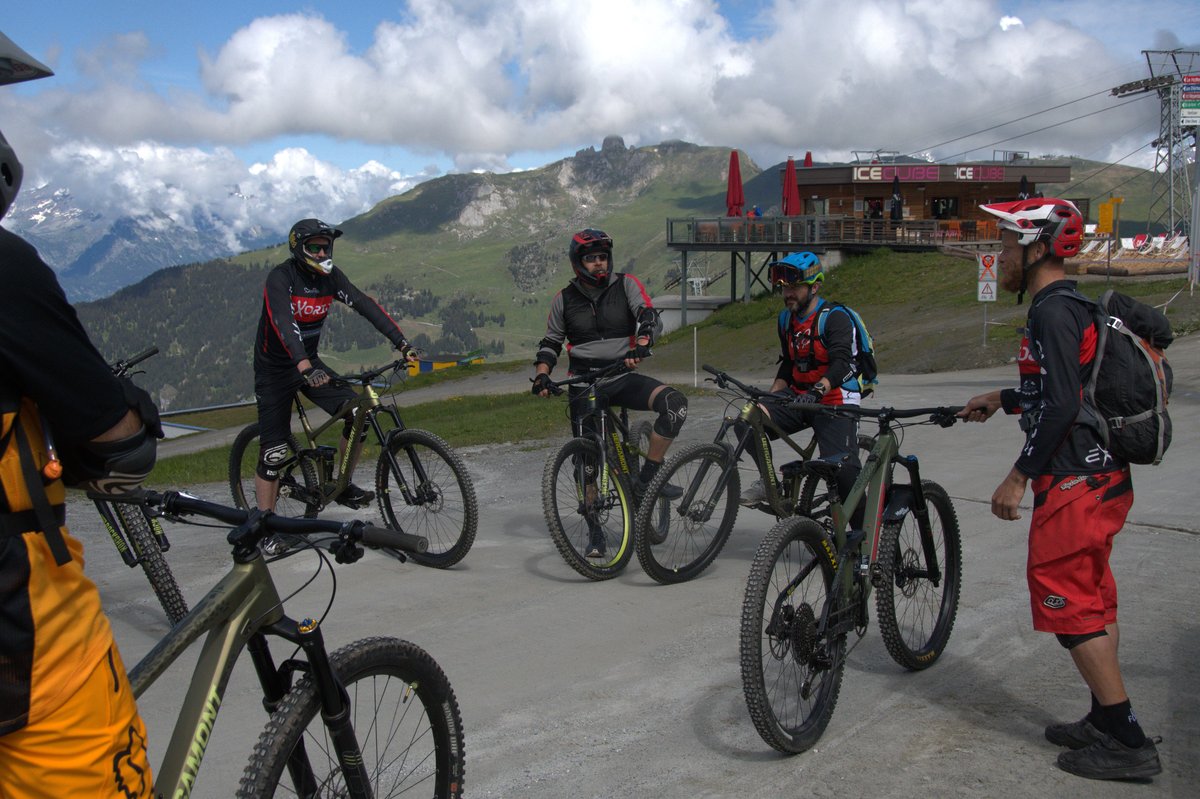
An instructor filming you and showing you the clip on the spot closes that gap in one afternoon. What a day with an instructor actually changes goes through how a session runs, and if you are nowhere near the Valais, sending a thirty second clip for analysis works from anywhere.
Where to work on it
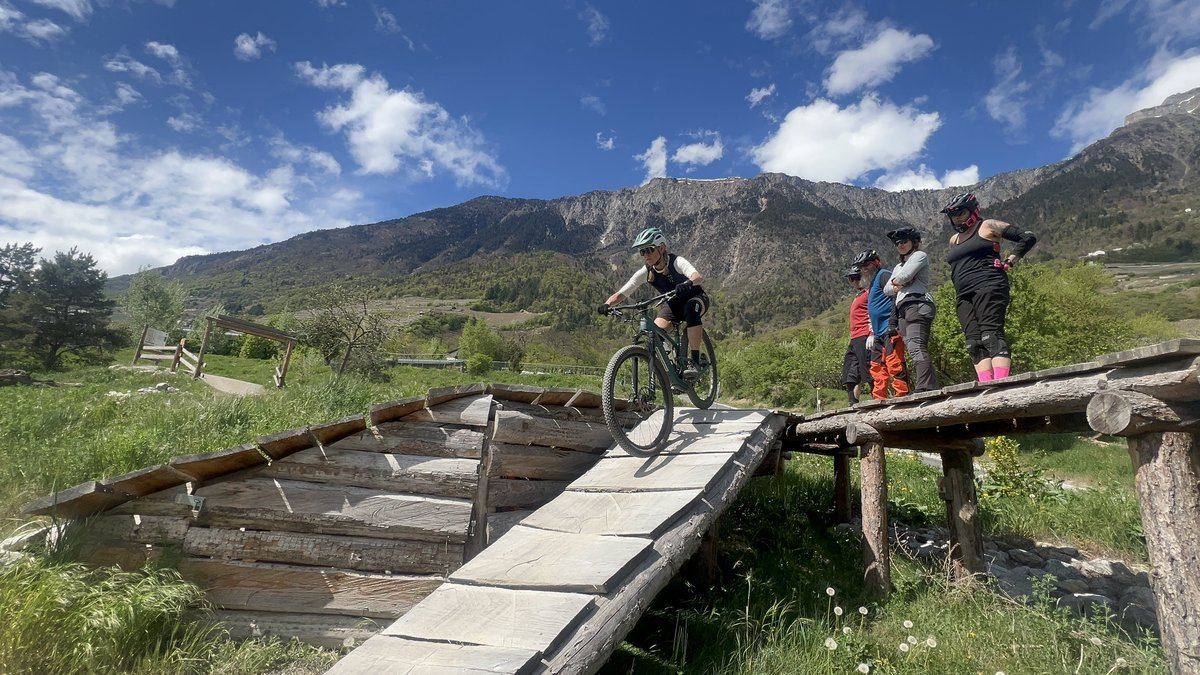
Courses run at 2 out of 4 and 3 out of 4 in small groups, or one to one if you would rather work on one specific thing. The dates are online, and if you are not sure which level you belong in, the levels page sorts it out.
Chris