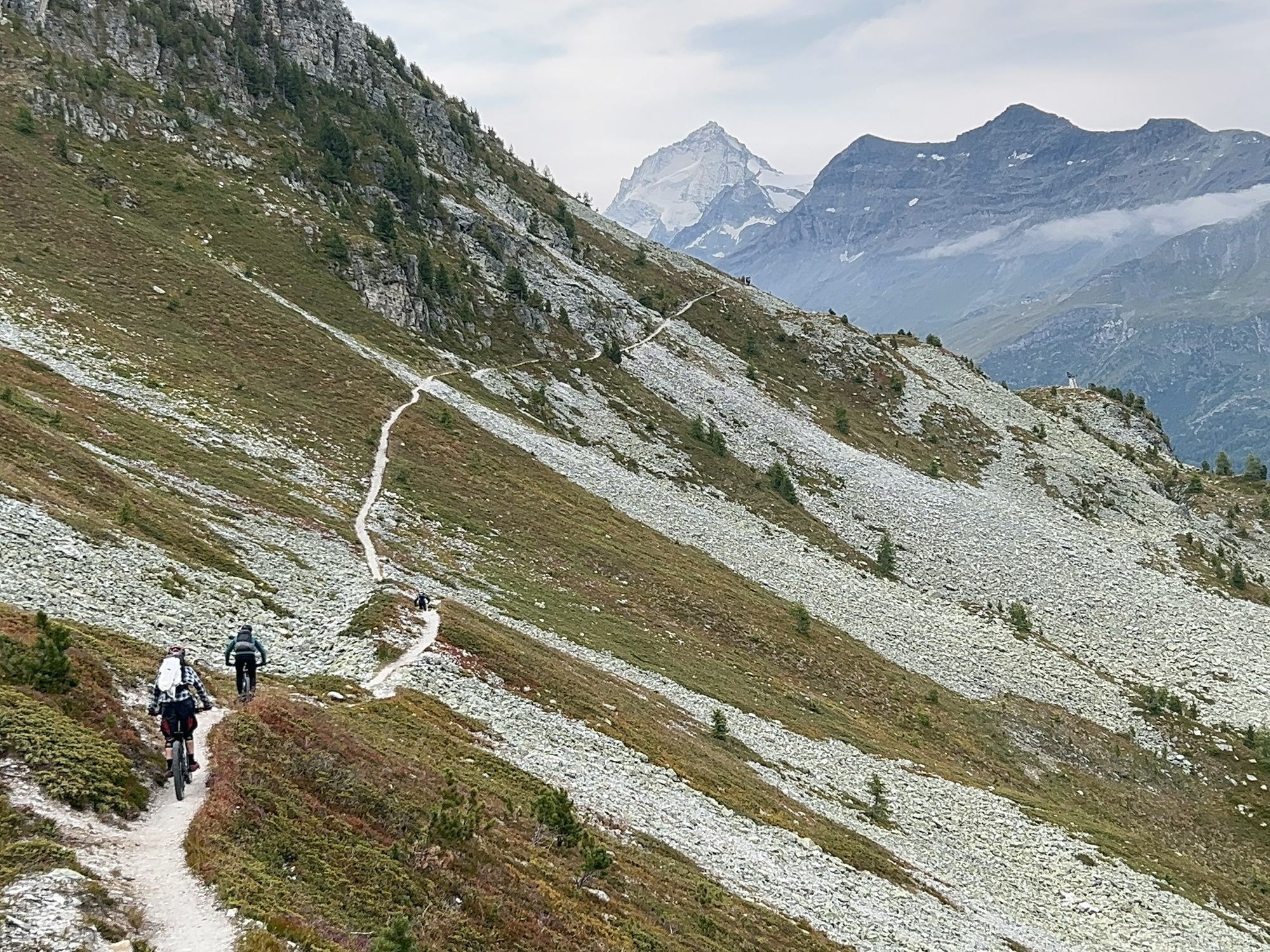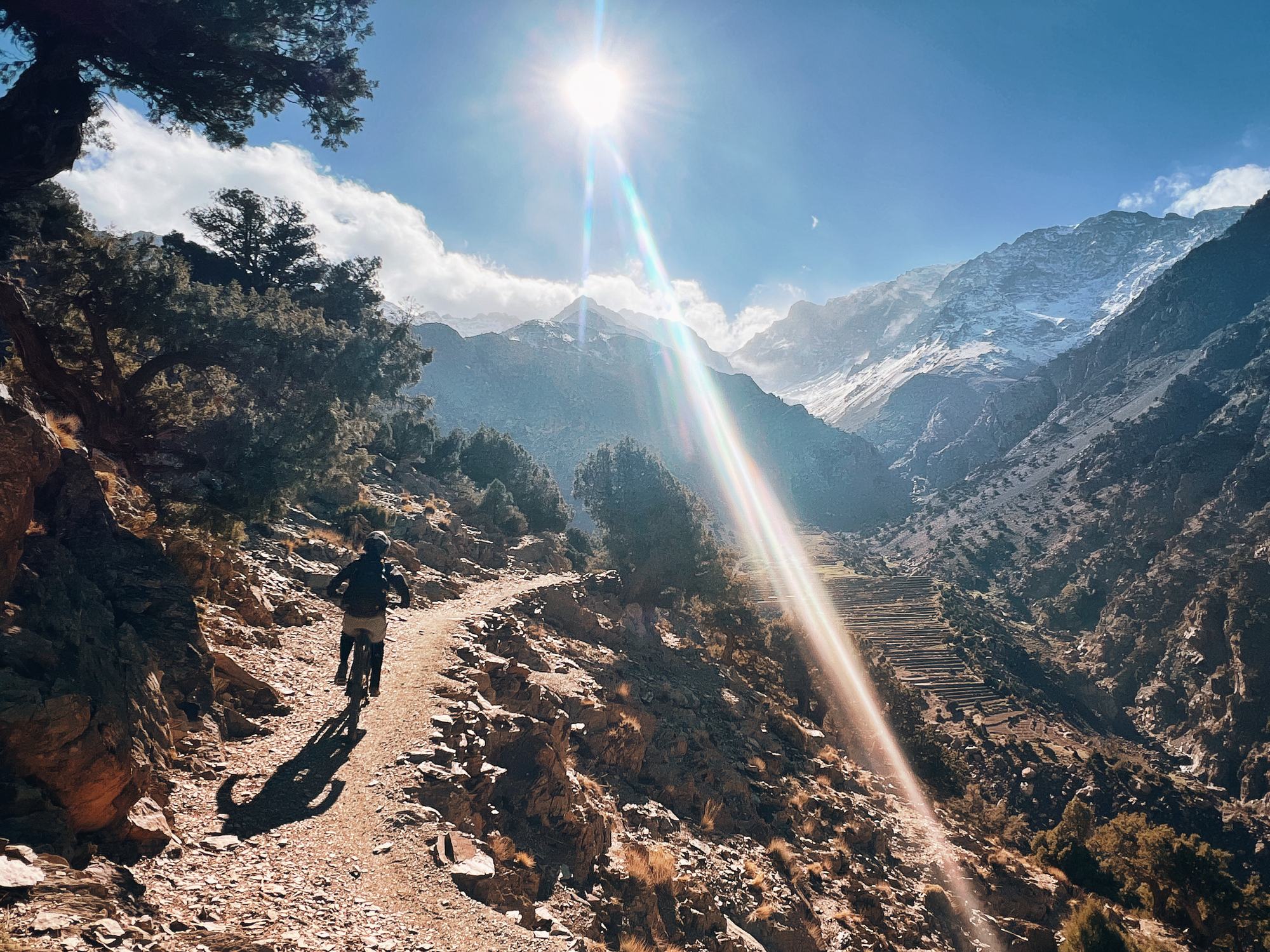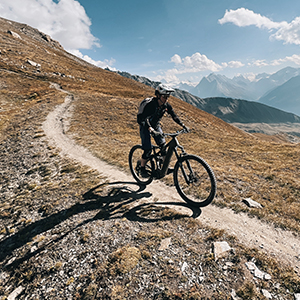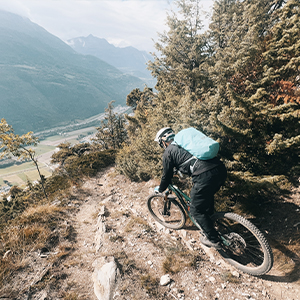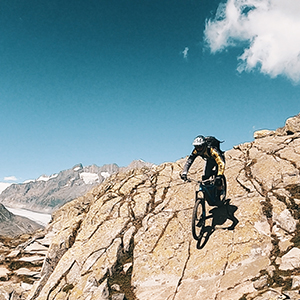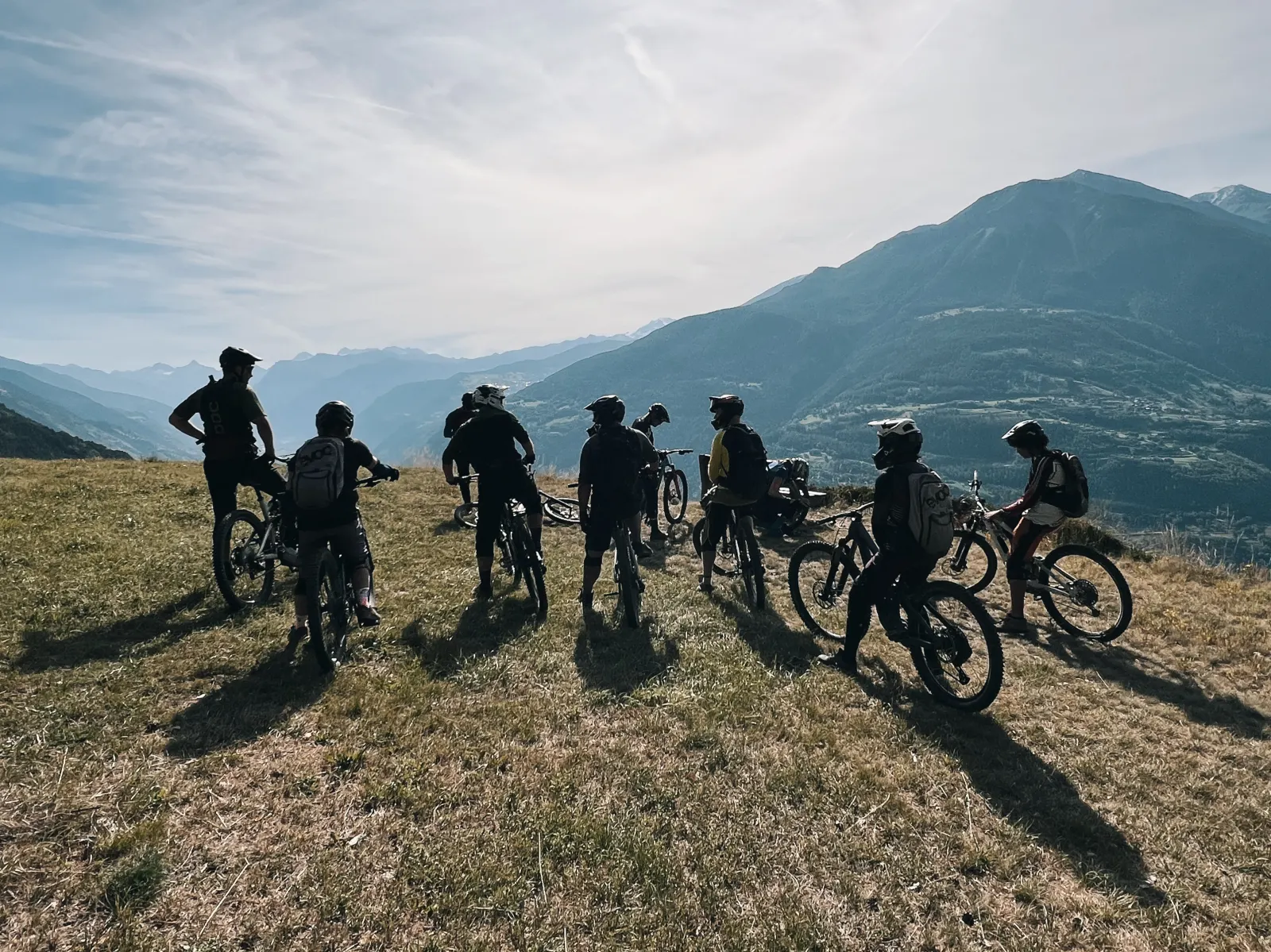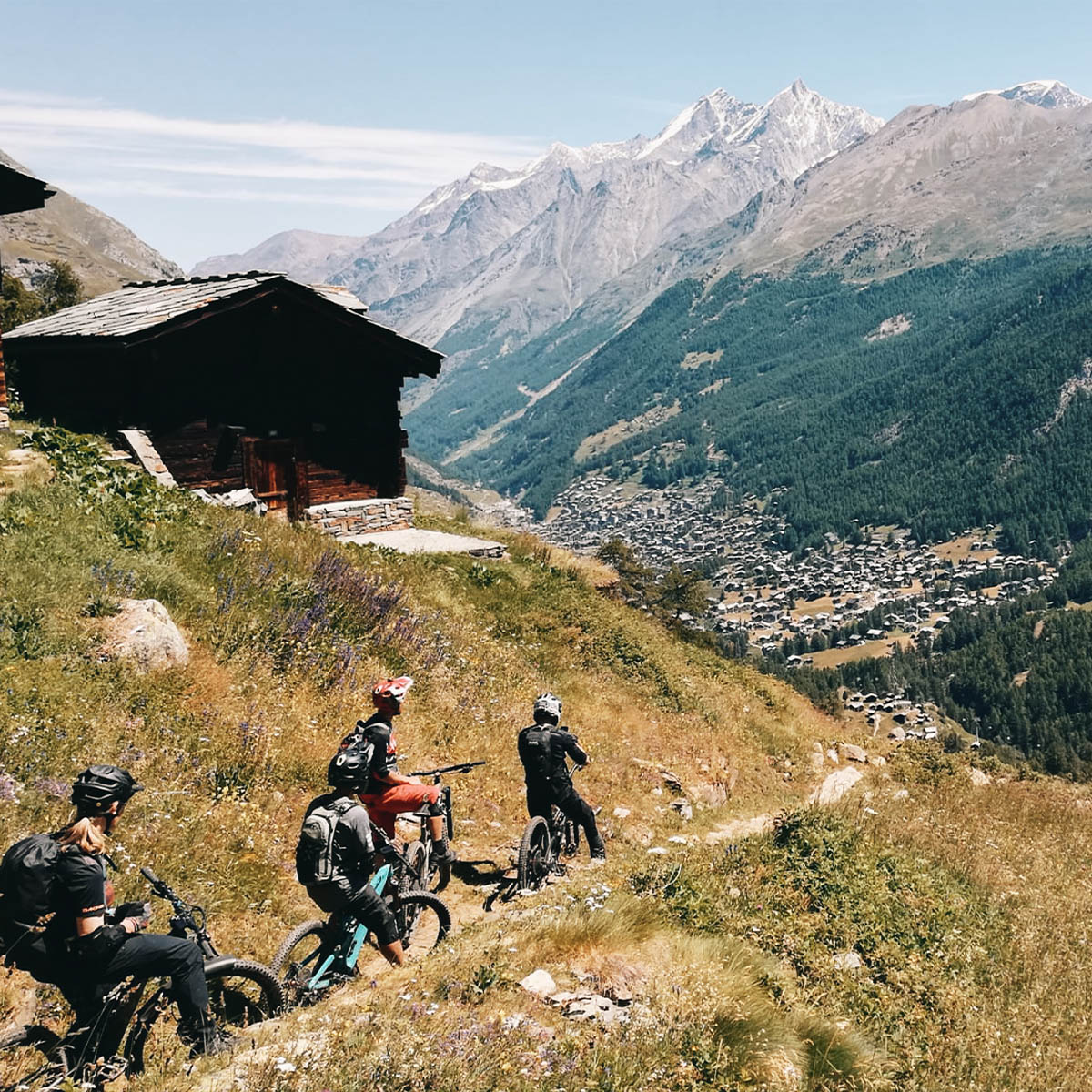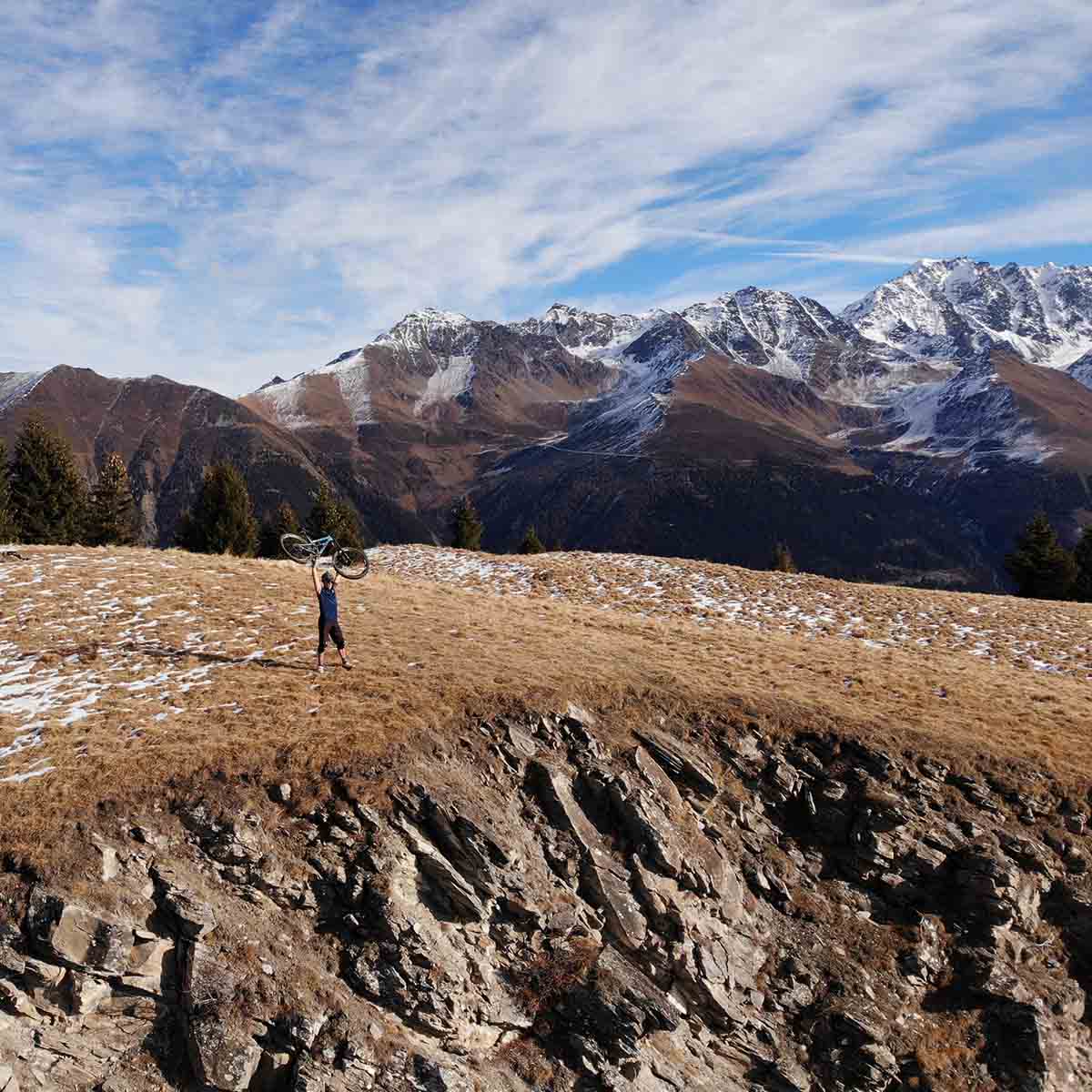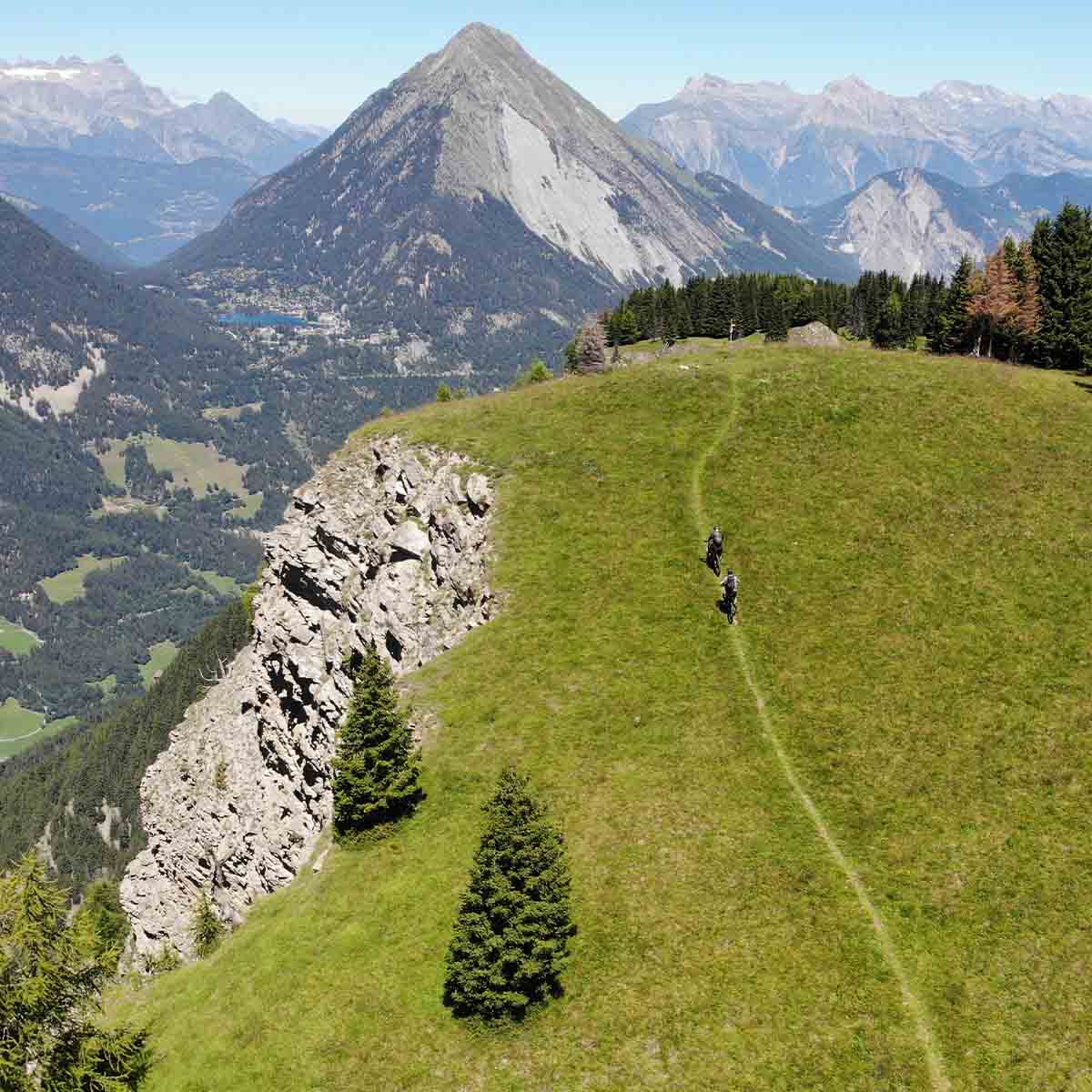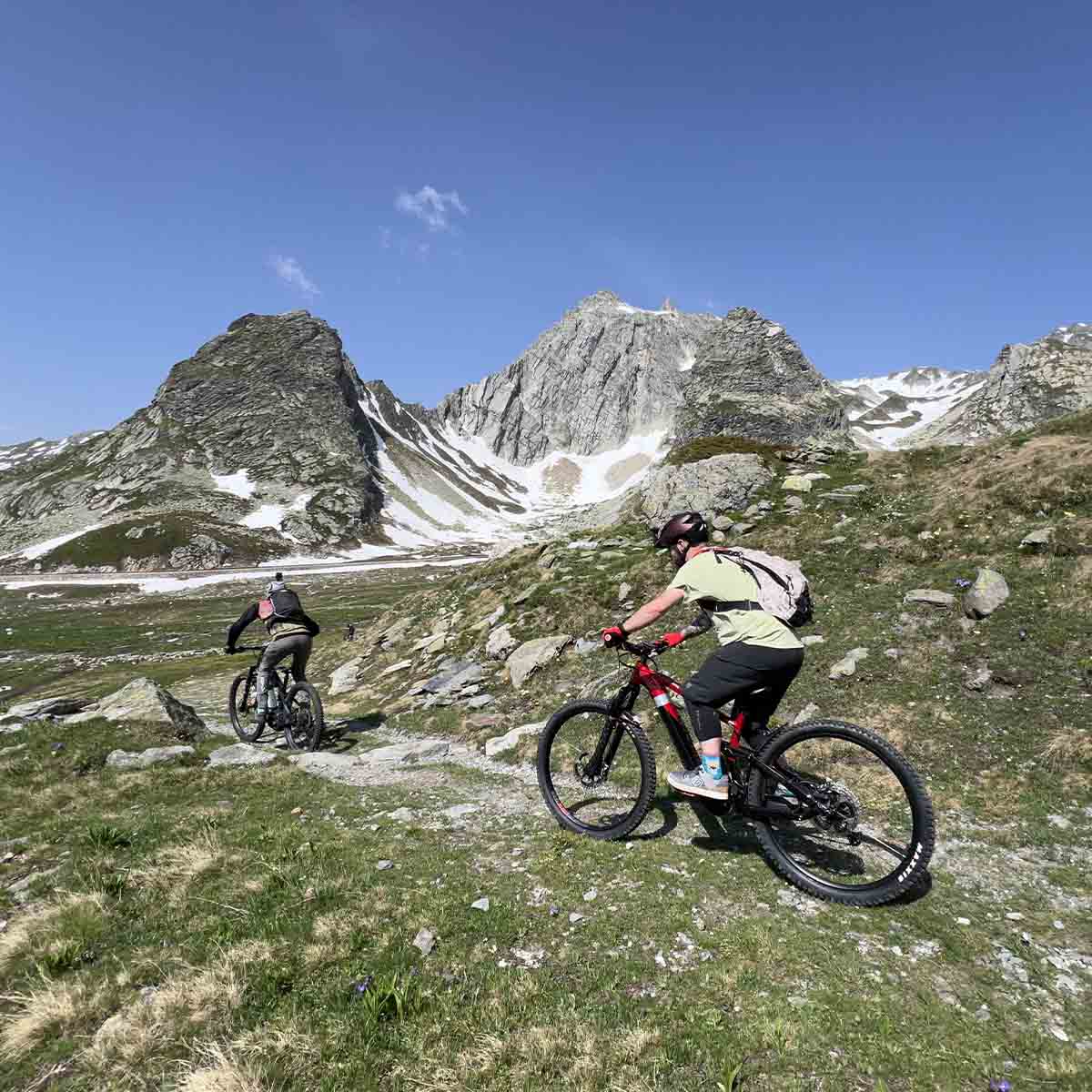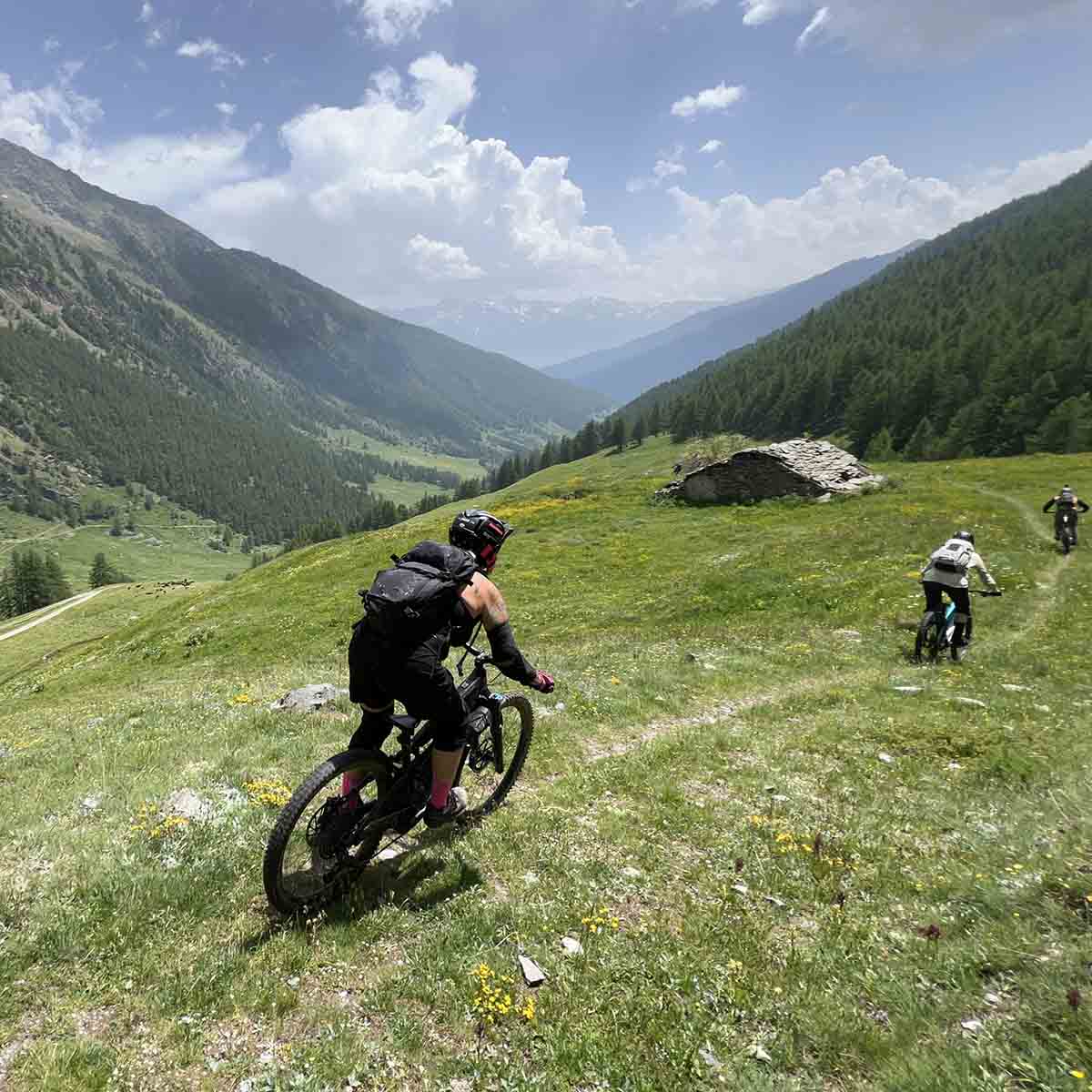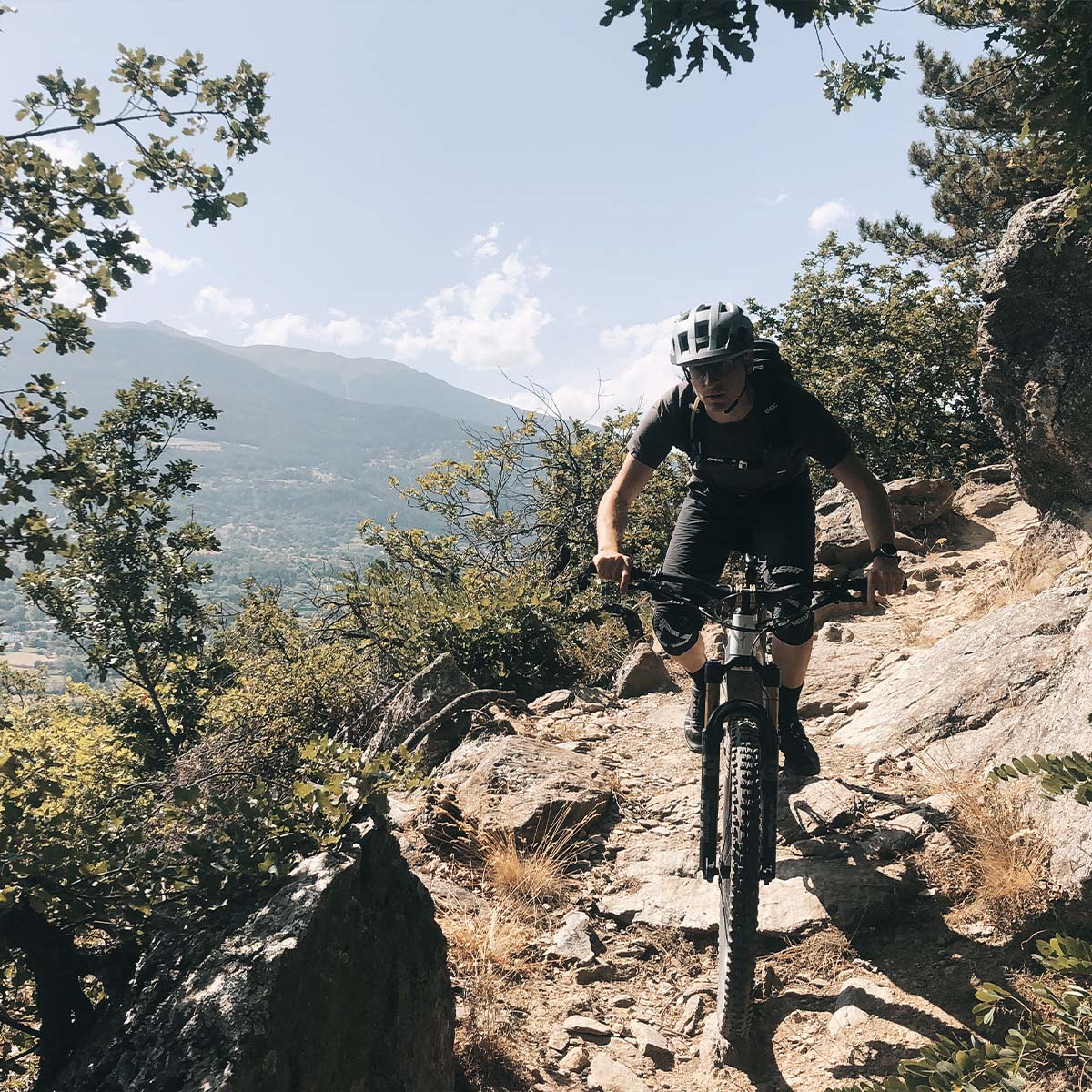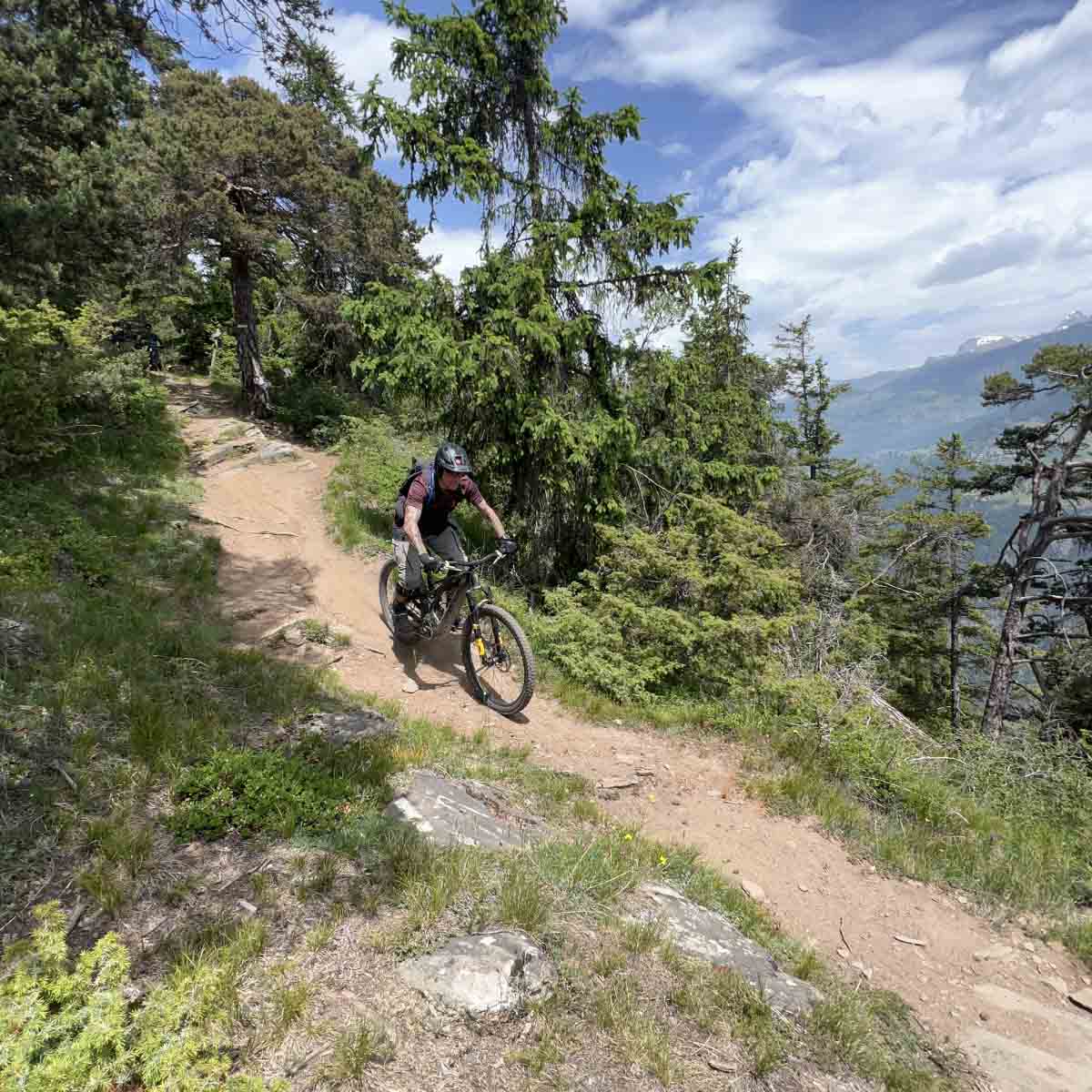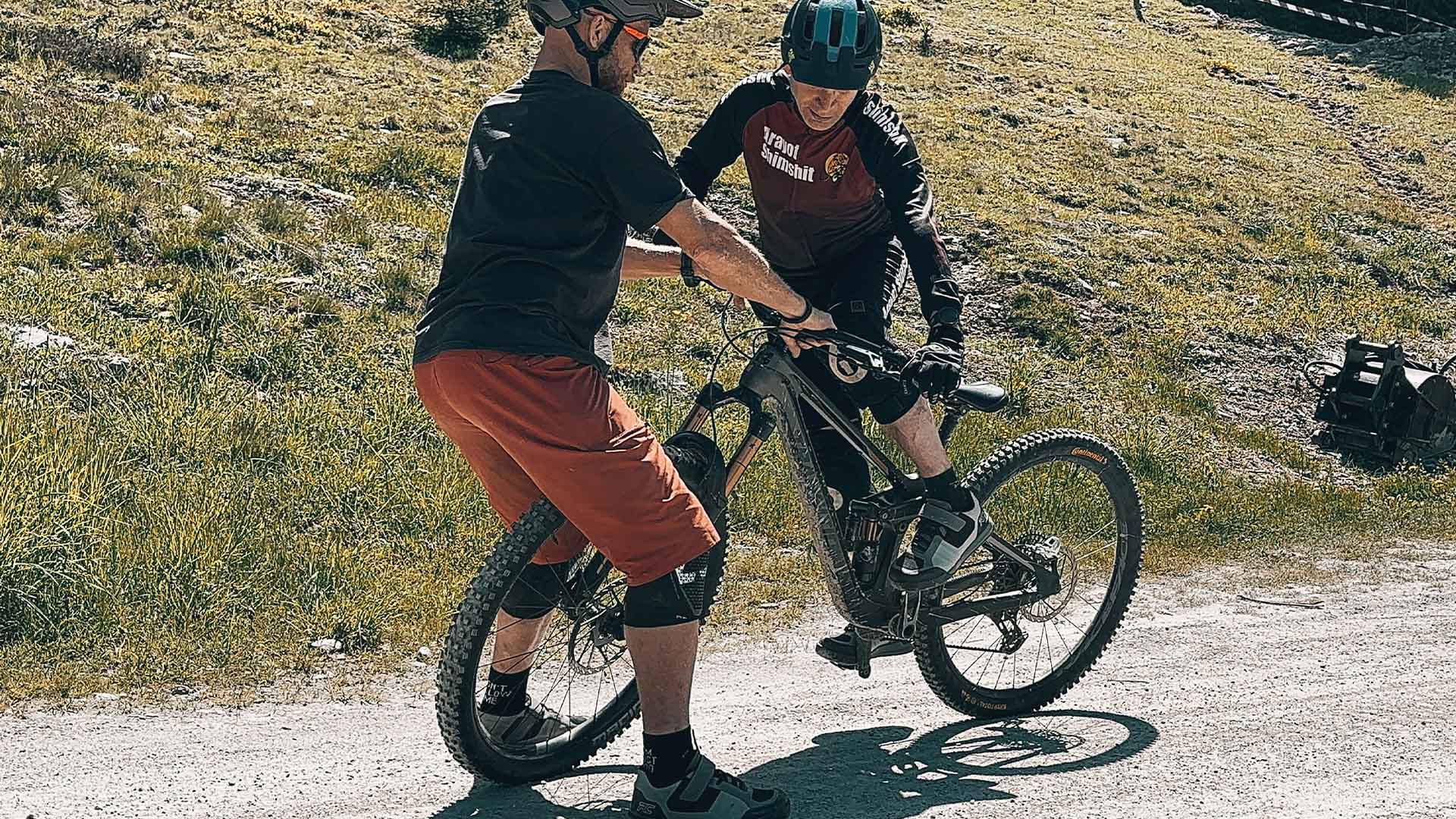
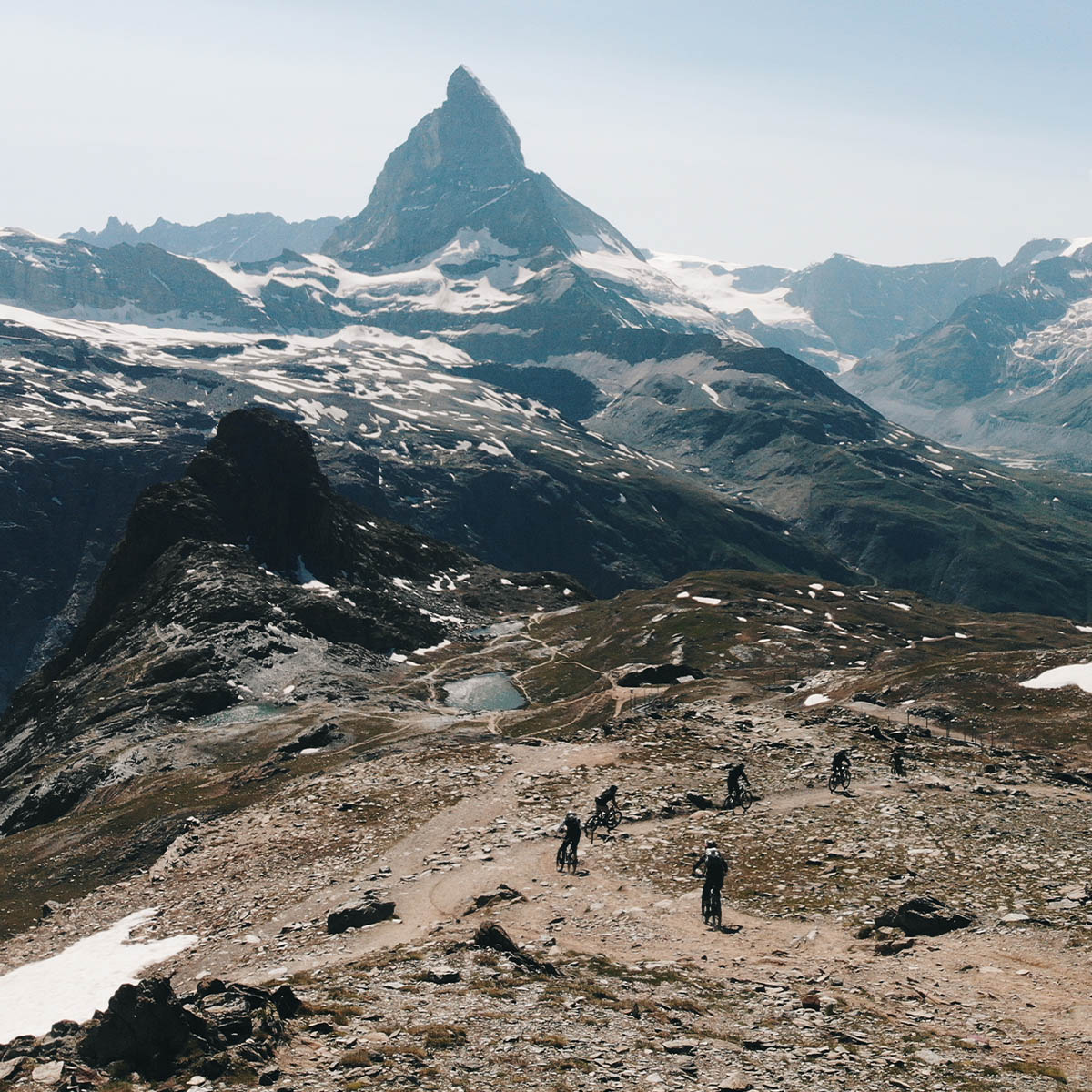
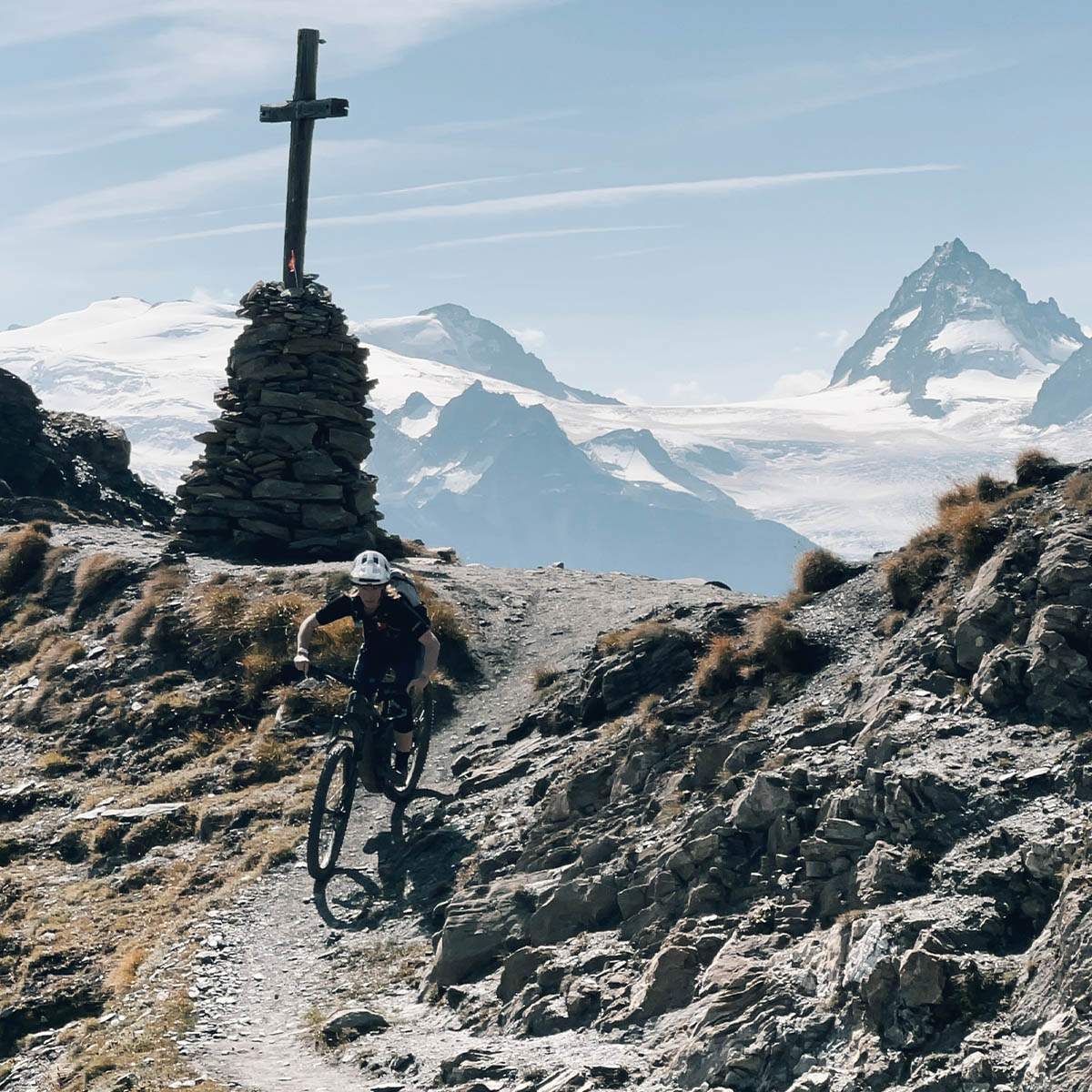
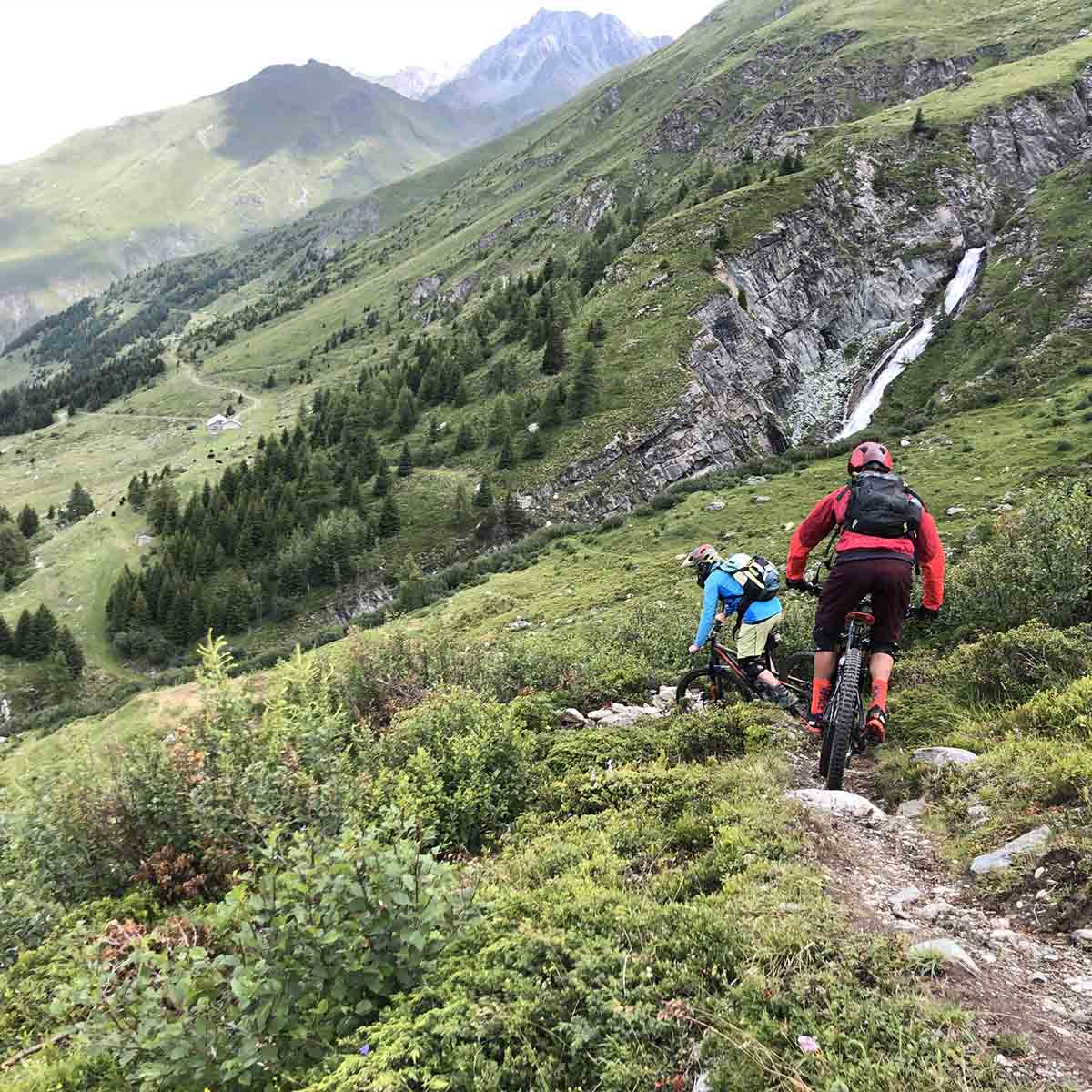
Dry rock on one side of the ridge, a thin layer of fresh powder on the other. The snow had come early, the trail we ride every year had turned into something else entirely, and we spent the descent riding the line between two seasons.
It is the best day of the autumn and it is also the one where people get caught out. Here is what the first snow actually changes underneath your tyres.
One ridge, two seasons
Early snow does not fall evenly. The sunny side keeps dry, grippy dirt well into November, and fifteen metres away the shaded side is already white. On a ridge you get both within one bike length, which looks extraordinary and rides like two completely different trails in the same minute.
That is the whole appeal of the season, and it is also the mechanism behind every autumn crash we have seen.
What the first snow does to the ground
- Powder hides everything. Two centimetres is enough to smooth over a rock step, a root or a hole. You do not read the trail any more, you guess it.
- Wet rock is the real hazard, not the snow. Limestone and polished rock with a film of meltwater on it has almost no grip, and it appears exactly where the snow has just melted, meaning in the sun, meaning where you feel safest.
- Old snow patches are worse than fresh ones. A refrozen patch in the shade is ice with a dusting on top, and it is usually in a traverse where falling means sliding.
- Everything drains slower. The ground below the snow line is saturated for days afterwards, which is the moment to stay off the softer trails entirely.
The cold, your hands, and the hours of daylight
Autumn days end faster than the legs expect. A descent that took ninety minutes in July takes longer with cold hands and careful lines, and the light goes at five rather than at nine.
Warm gloves, a spare dry pair, a proper layer for the top, clear lenses and a light in the pack. None of it is heavy, and the alternative is finishing a technical trail in the dark with hands you can no longer feel on the levers.
When to turn round
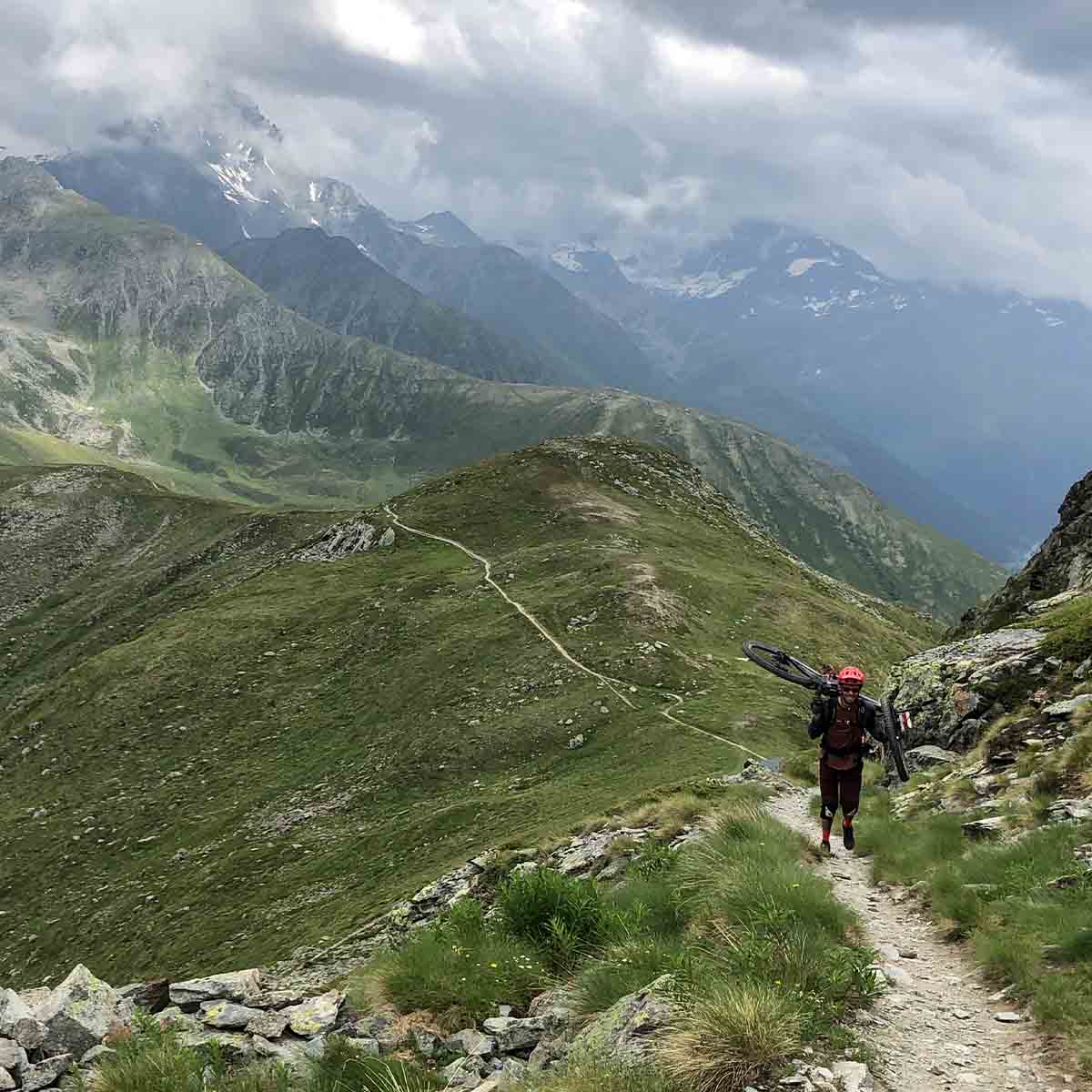
Not a popular section, and the useful one. Turn round when the trail becomes a traverse you cannot walk comfortably, when you are pushing more than riding on the shaded side, or when the snow is deep enough that you no longer know what is under the wheel on exposed ground.
Autumn is also when the mountain rescue statistics quietly go up, because people ride a summer trail in winter conditions and treat the difference as a detail. It is not a detail. The same line is a different line at two degrees.
Where the season carries on
When the high mountains close, the riding moves rather than stops. The low, sunny side of the valley stays dry for months, which is the whole basis of the winter Solstice days. Northern Italy keeps going later still, and by December the trips head south to Morocco, where the season is only just starting.
So the first snow is not the end of anything. It is the two or three weeks where you get the best light of the year, and then the calendar simply moves down the hill.
The autumn and winter dates are online.
Chris