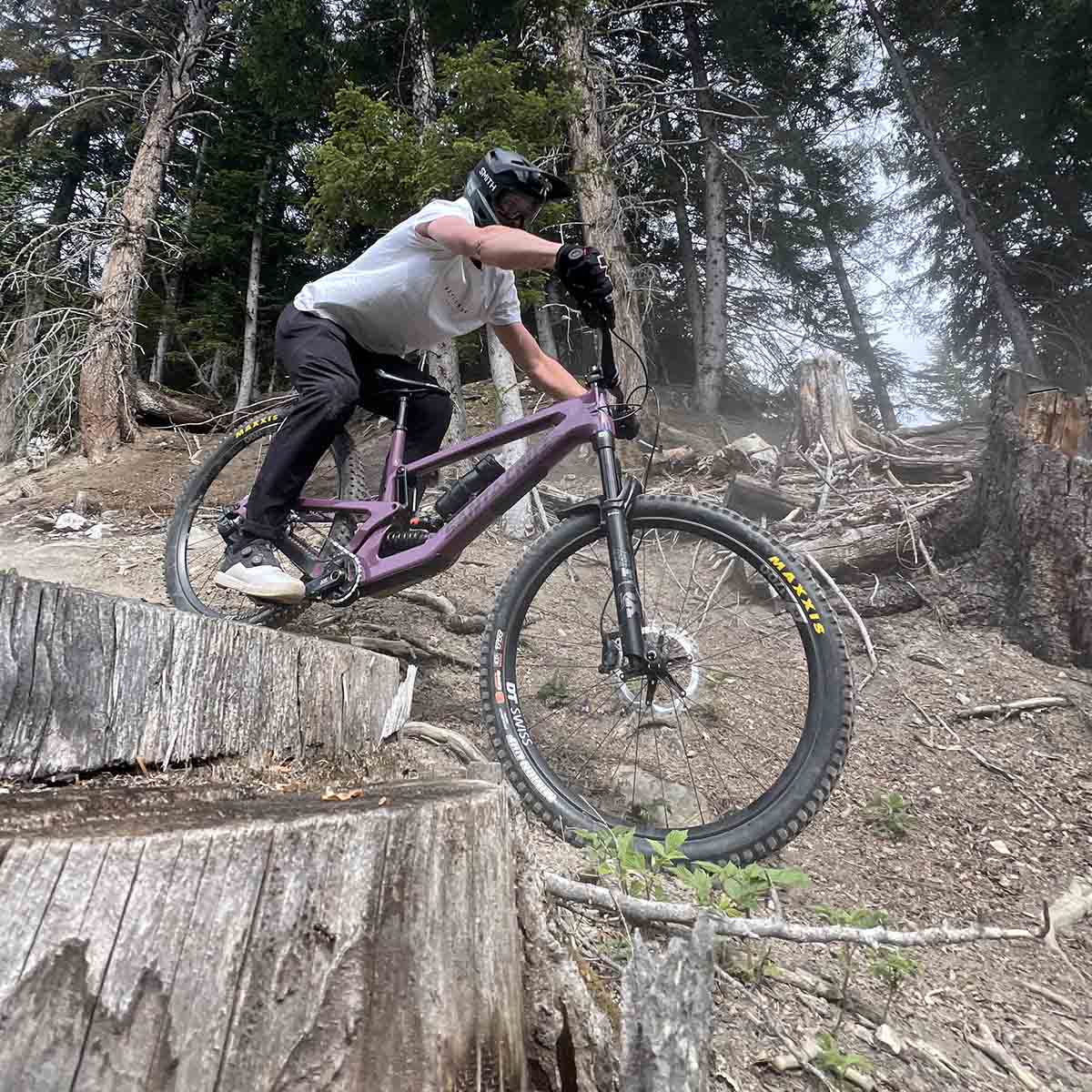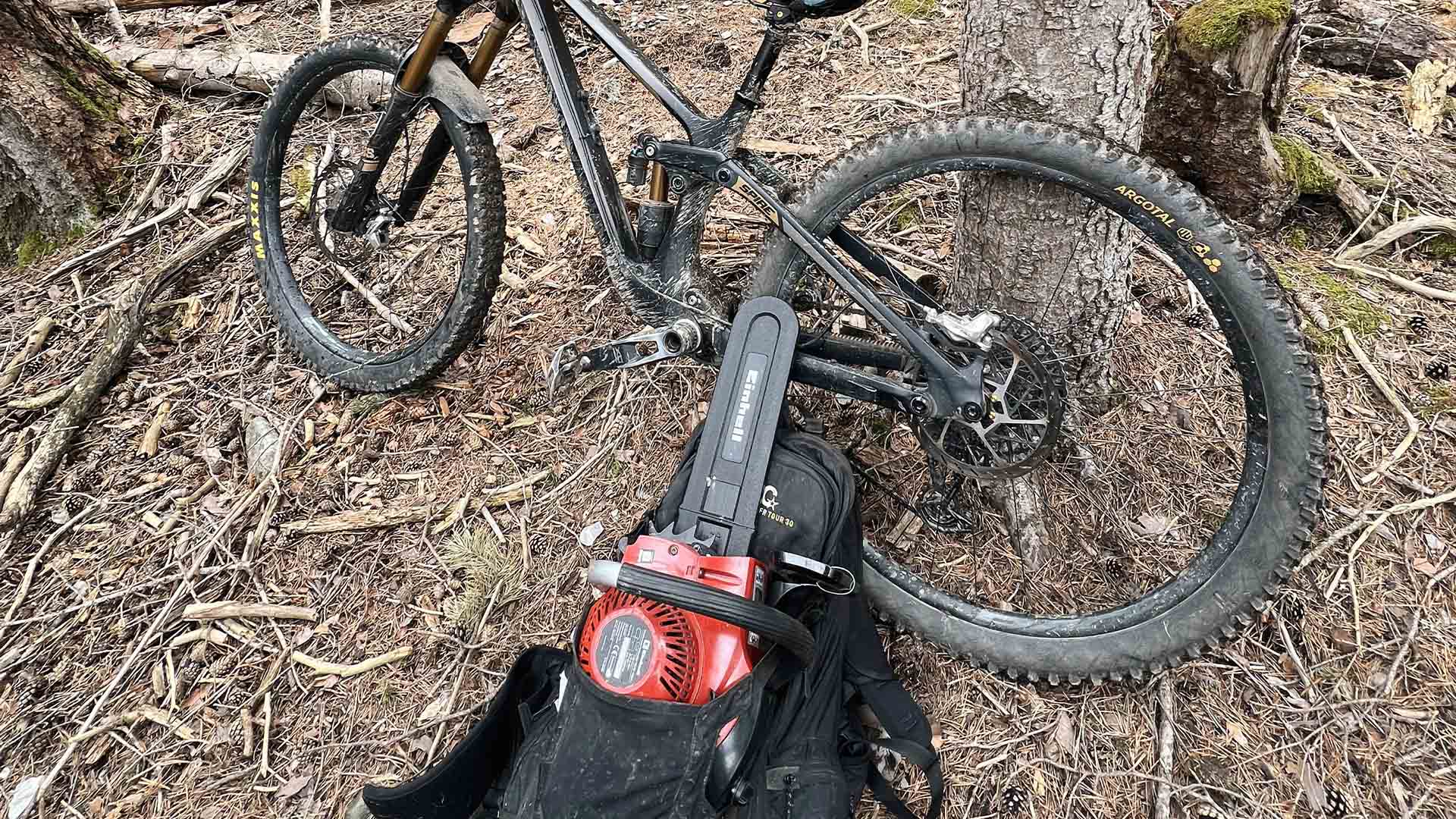
Every spring the same job comes round, and nobody is paid to do it. The weight of the snow lays whole trees across the trails, tears off branches, and buries some accesses so completely that there is no readable line left at all. Then the snow goes, and somebody has to go up there with a chainsaw.
That somebody is usually us.
What the snow leaves behind
It is not a few twigs. Heavy snowfall brings down mature trees, and they land across the trail rather than beside it. On the worst sections there is no trace of the path underneath: you have to clear before you even know where the trail went.
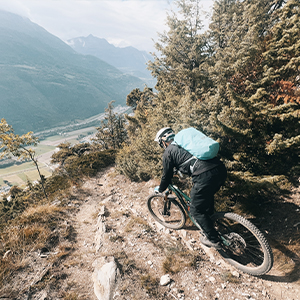
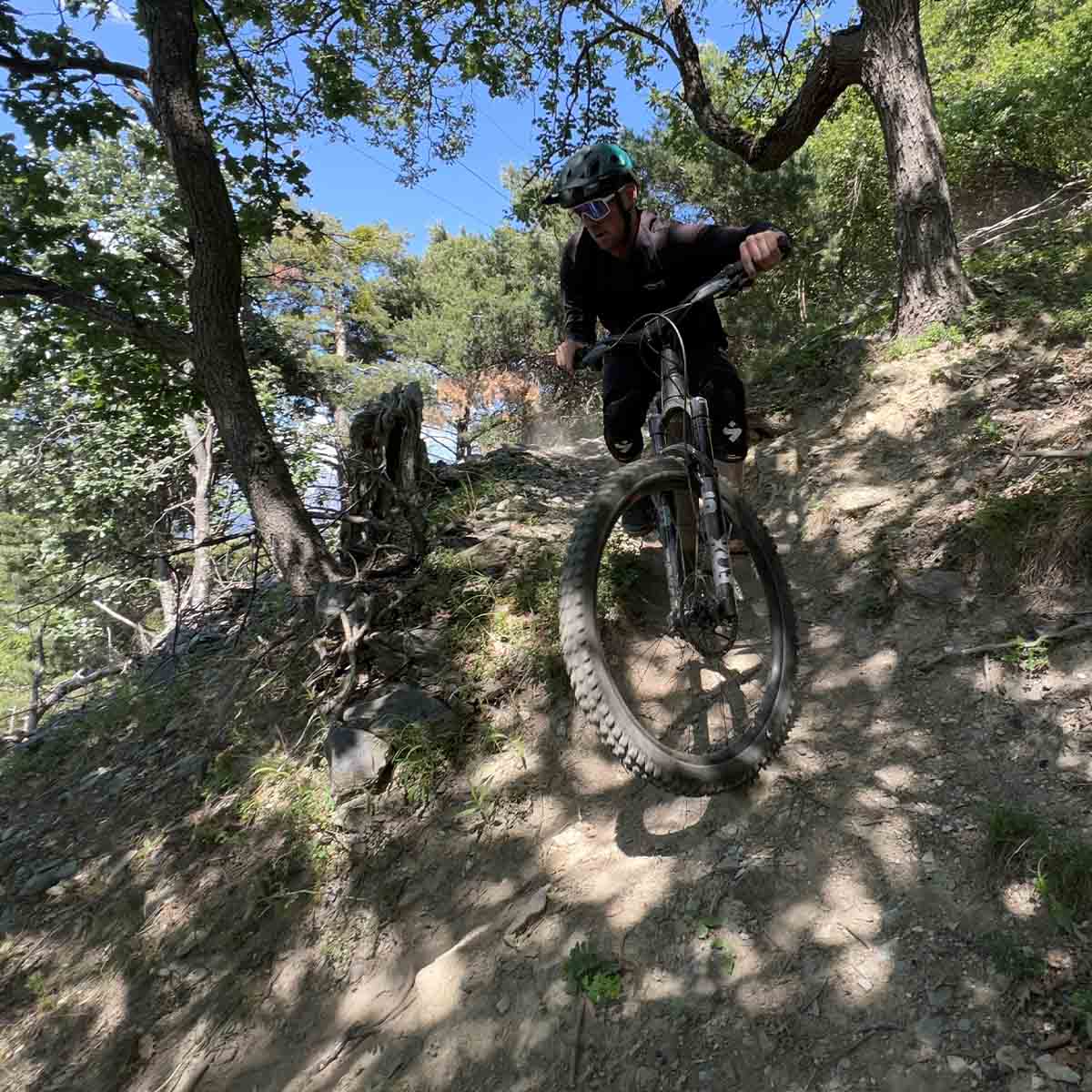
Wind and thaw add the rest, which is loose rock in the cuttings, collapsed edges where the water ran, and the odd section that has simply slid.
Nobody is paid for this
There is no service that turns up in April and puts the singletrack back. Communes and forestry services look after the marked paths and the forestry roads, and they do it well, but the trails riders actually use are mostly maintained by whoever cares enough to go and do it.
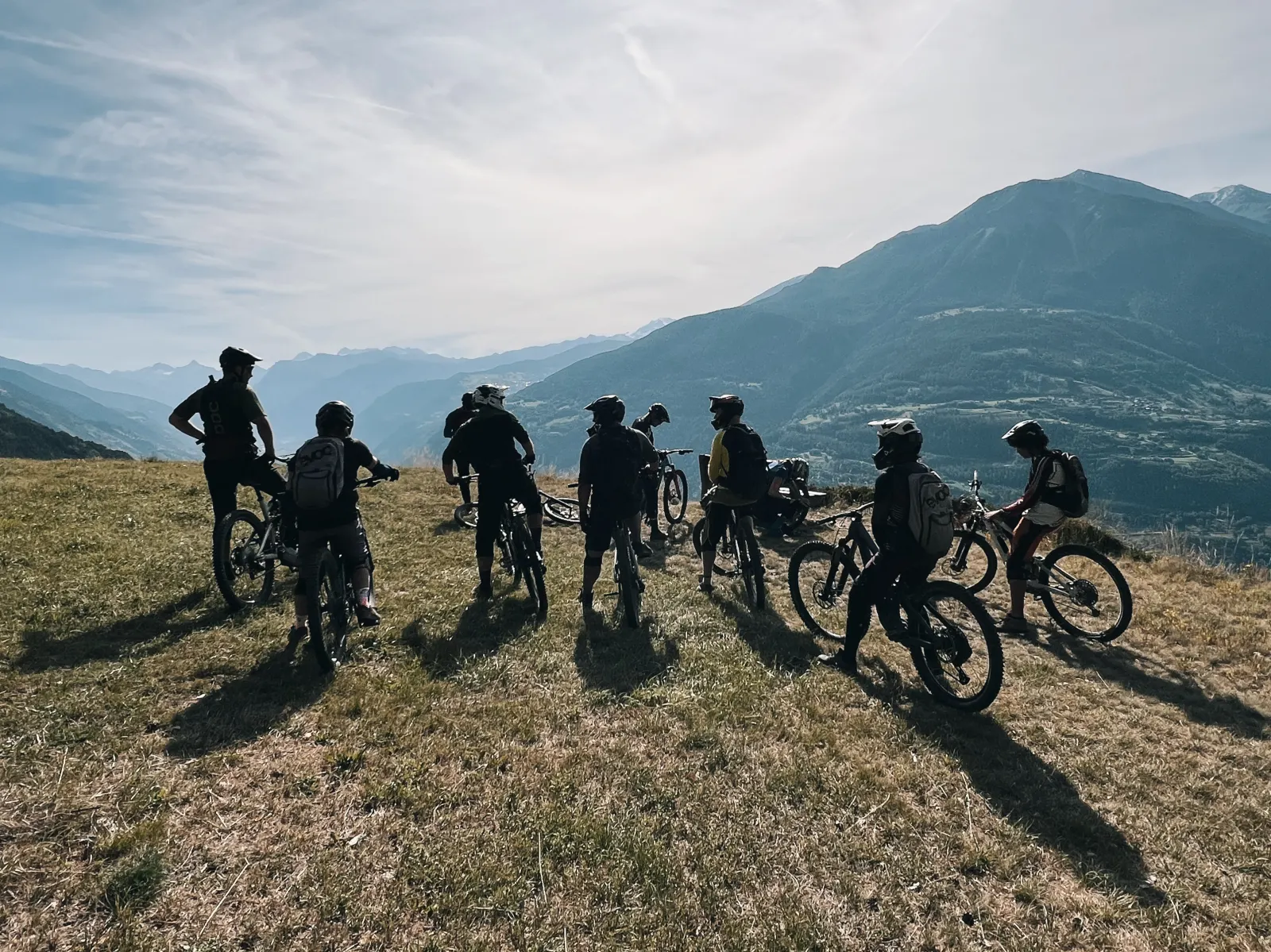
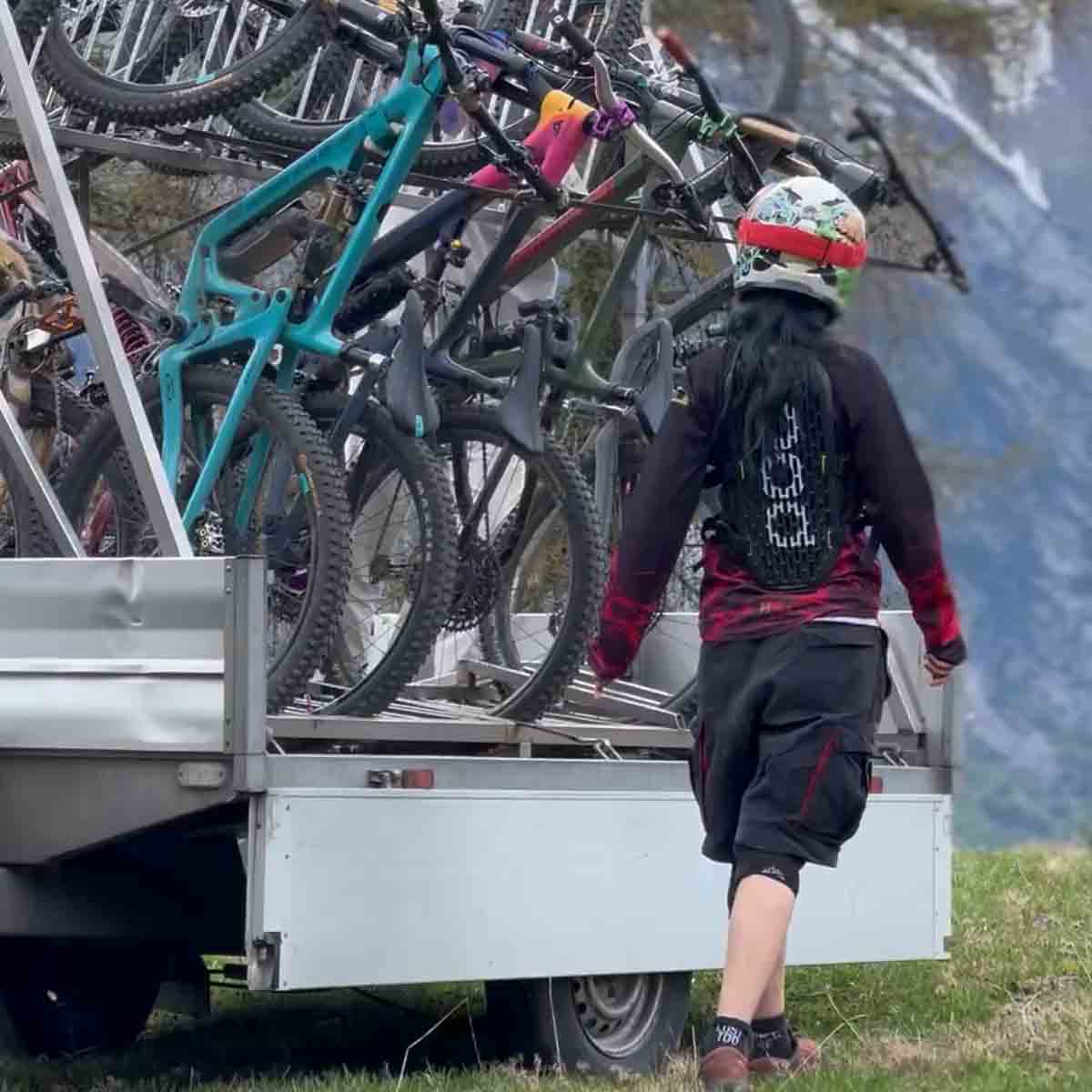
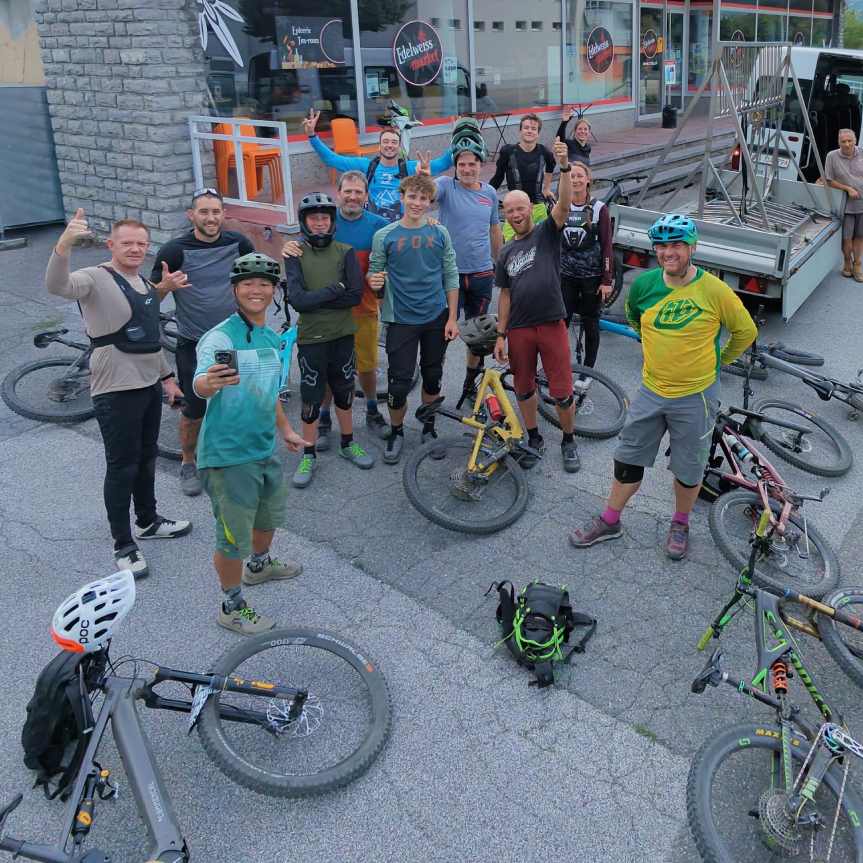
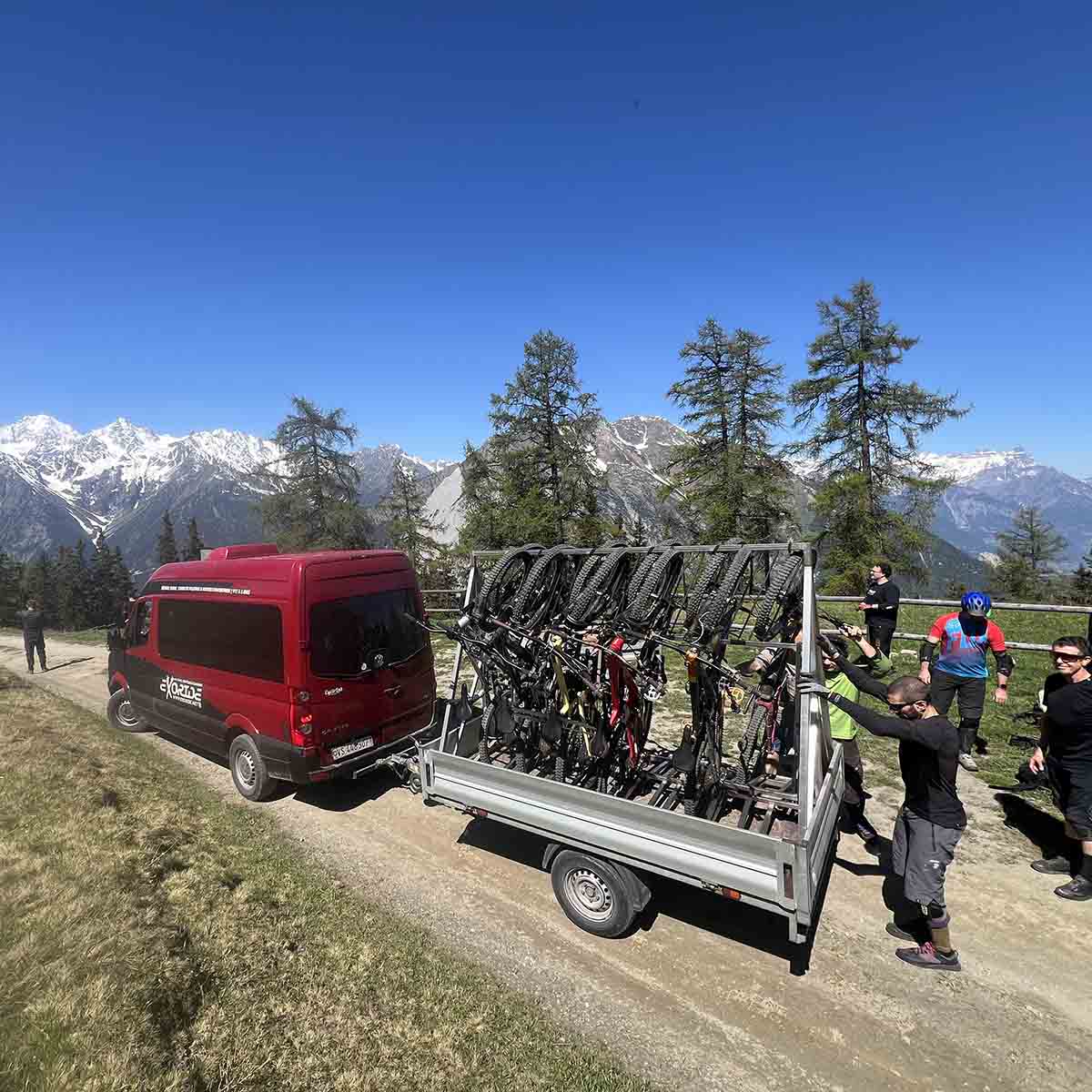
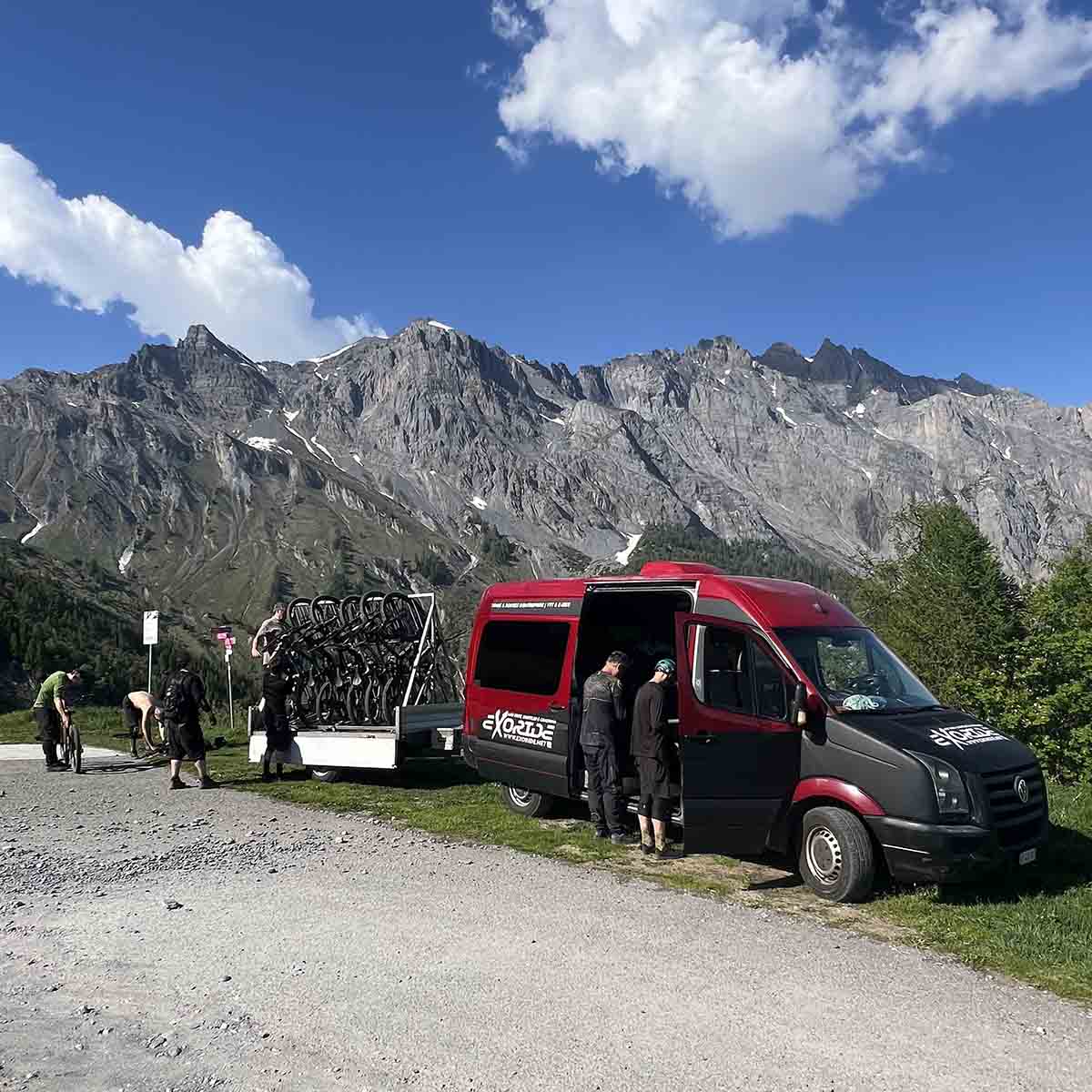
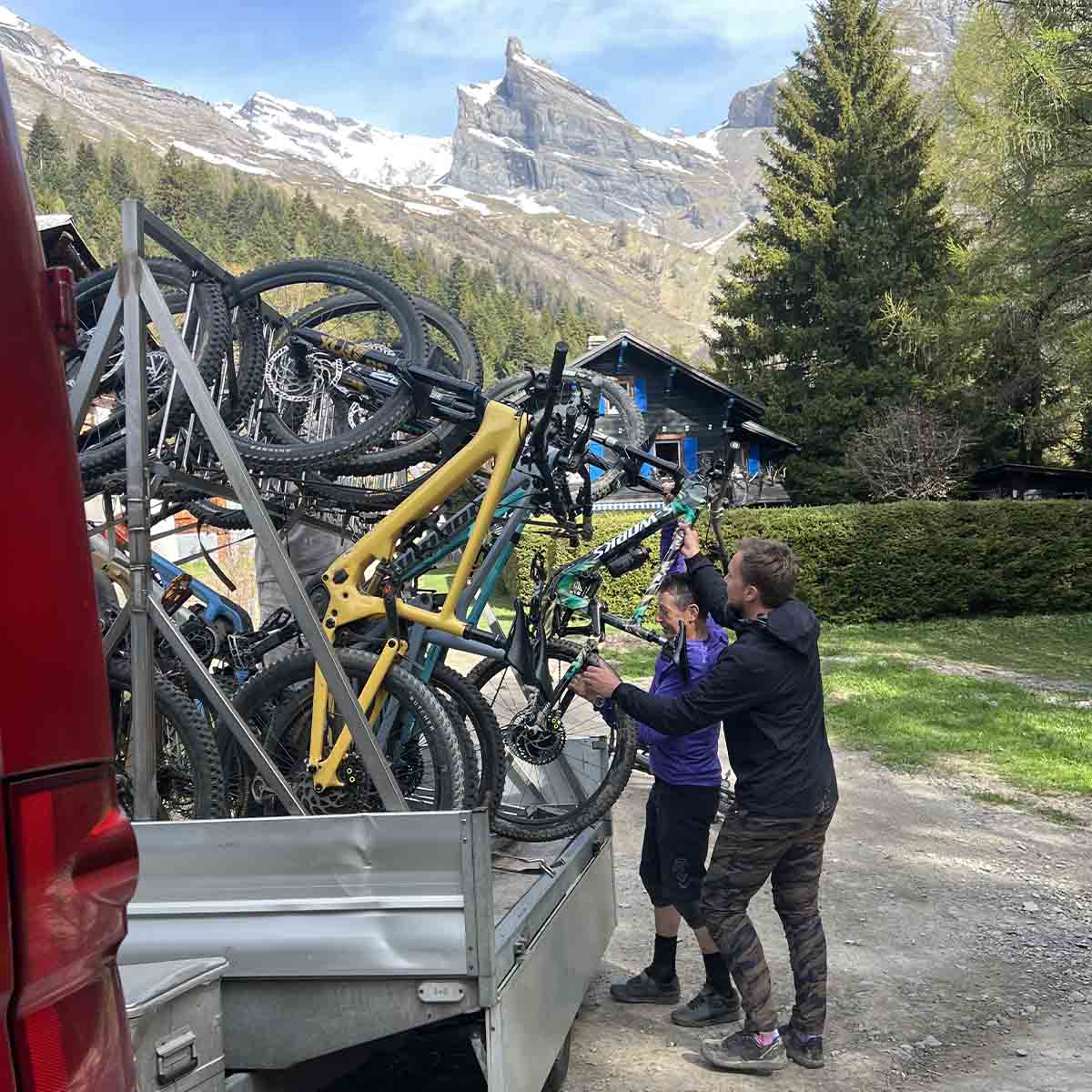
So as soon as conditions allow, we load chainsaws and gear into the bus and go. Several days of work, wood to cut, trunks to shift, sections to re-cut. Nothing spectacular, just people who are attached to their own playground.
The chainsaw goes up by e-bike
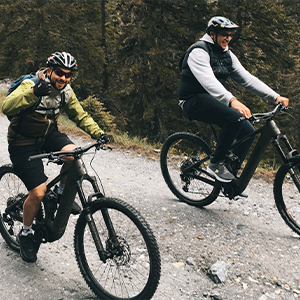
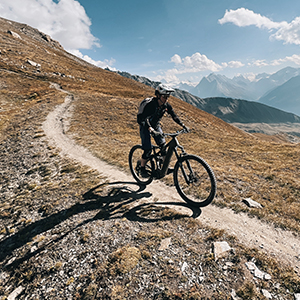
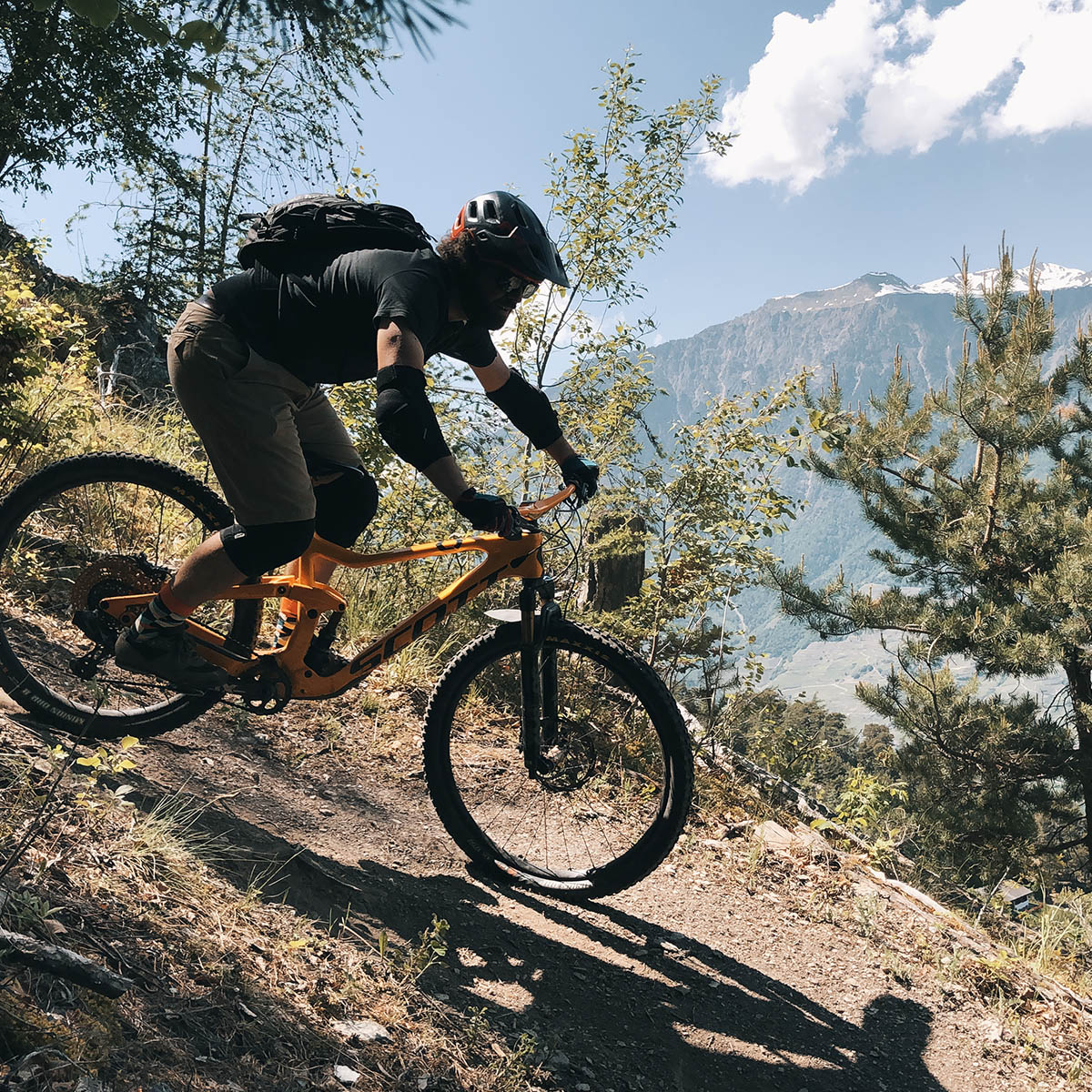
Where the bus stops, the tools carry on. Chainsaw on the back, e-bike under you, up to the sectors nobody drives to. It looks ridiculous and it works, and it is the only reason the remoter trails get cleared at all rather than staying blocked until someone happens to walk up there in July.
A reopened trail does not belong to anybody
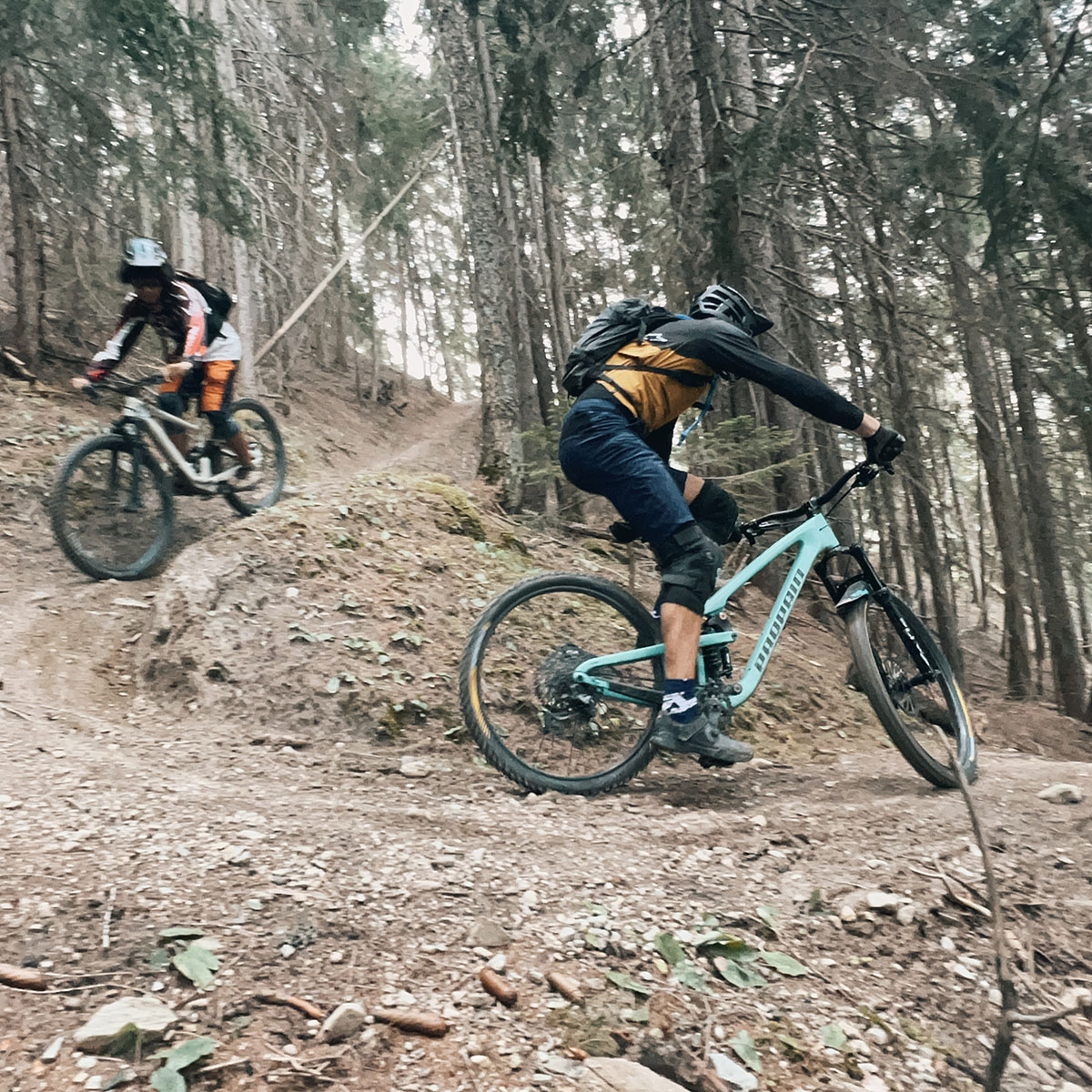
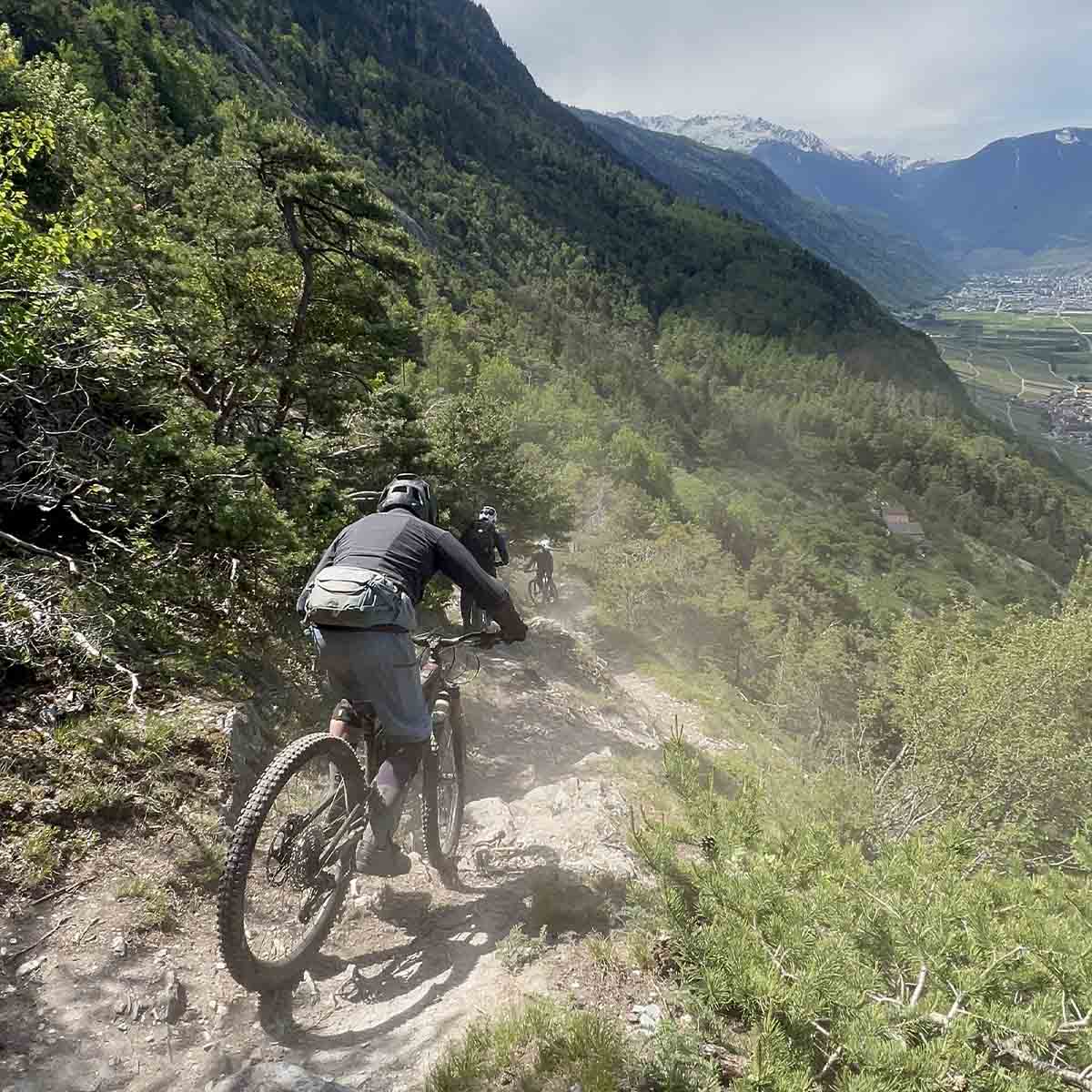
This work does not only benefit our riders. A cleared trail is handed back to everyone who uses it: mountain bikers, walkers, trail runners, families out for an hour. We make a living off this ground, so looking after it seems like the least we can do, and not only after something has gone wrong.
It also buys goodwill that matters later. Access is not a right, it is a relationship with the people who own the land and walk the same paths, and turning up with a chainsaw is a better argument than any charter.
What you can do, which is mostly about timing
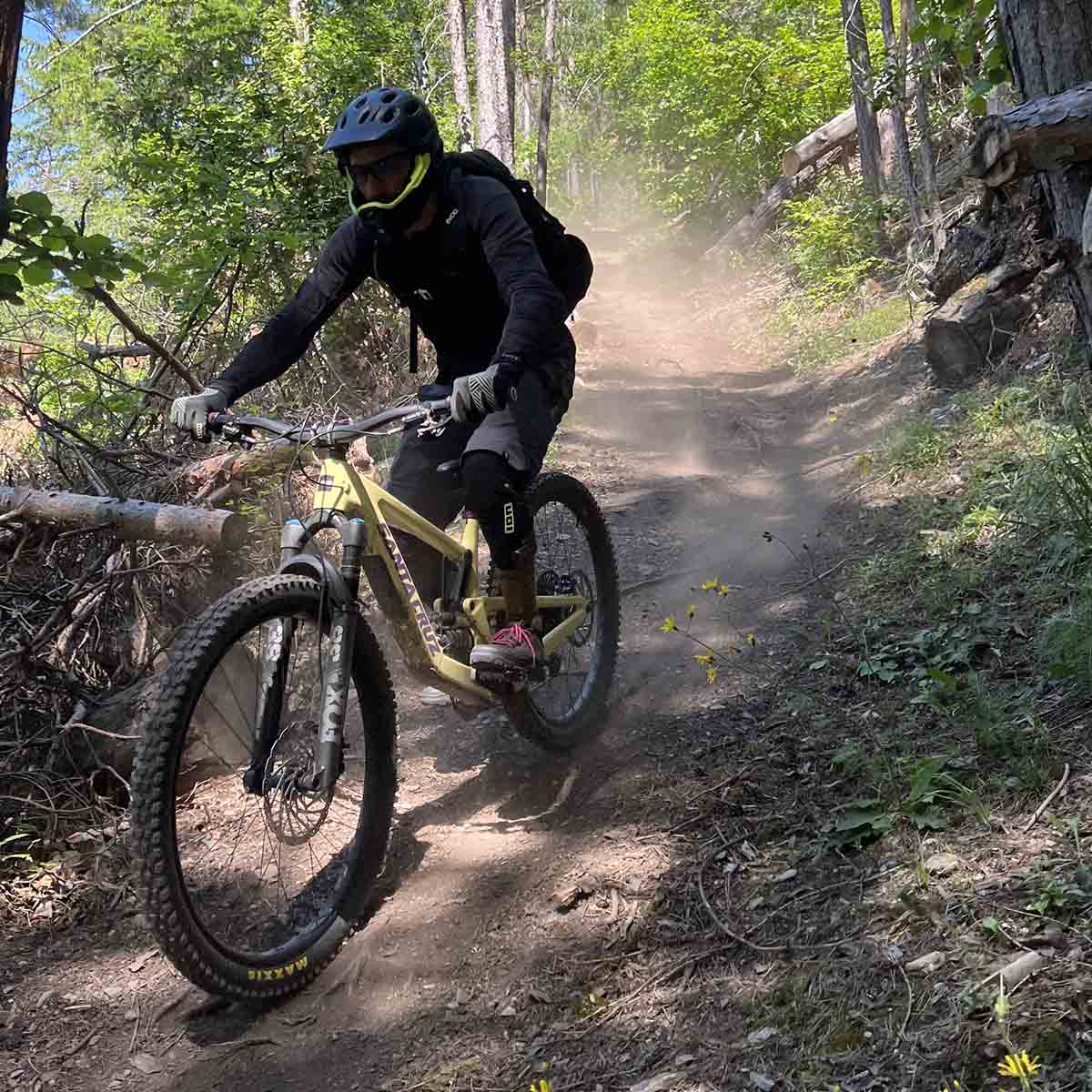
The fastest way to undo a spring of trail work is to ride a trail that is still saturated. Wet ground does not bounce back, it records: every tyre cuts a channel, the channel becomes the water's route down, and by August that section has lost its surface.
- Wait for the ground, not the calendar. A warm week in March does not mean the north side has drained.
- Ride through the puddle, not around it. Going around is how a trail doubles in width in one season.
- Do not skid to test the grip. You already know the answer.
- Move the branch you ride over. Thirty seconds, and the next hundred riders do not have to.
What it changes on a shuttle day
A guided day is built on knowing which sectors have actually been cleared and which are still blocked, which is information that does not exist anywhere online. It is the same knowledge that decides the valley on the morning itself, and it is the reason the destination is announced on the day rather than three months earlier.
The shuttle dates are online, and which area works at which time of year covers the seasonal side.
Chris