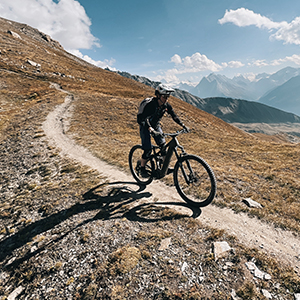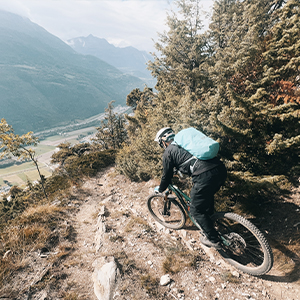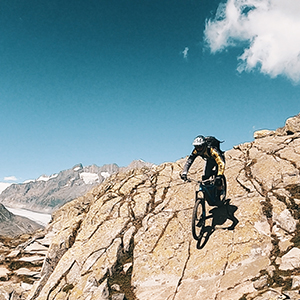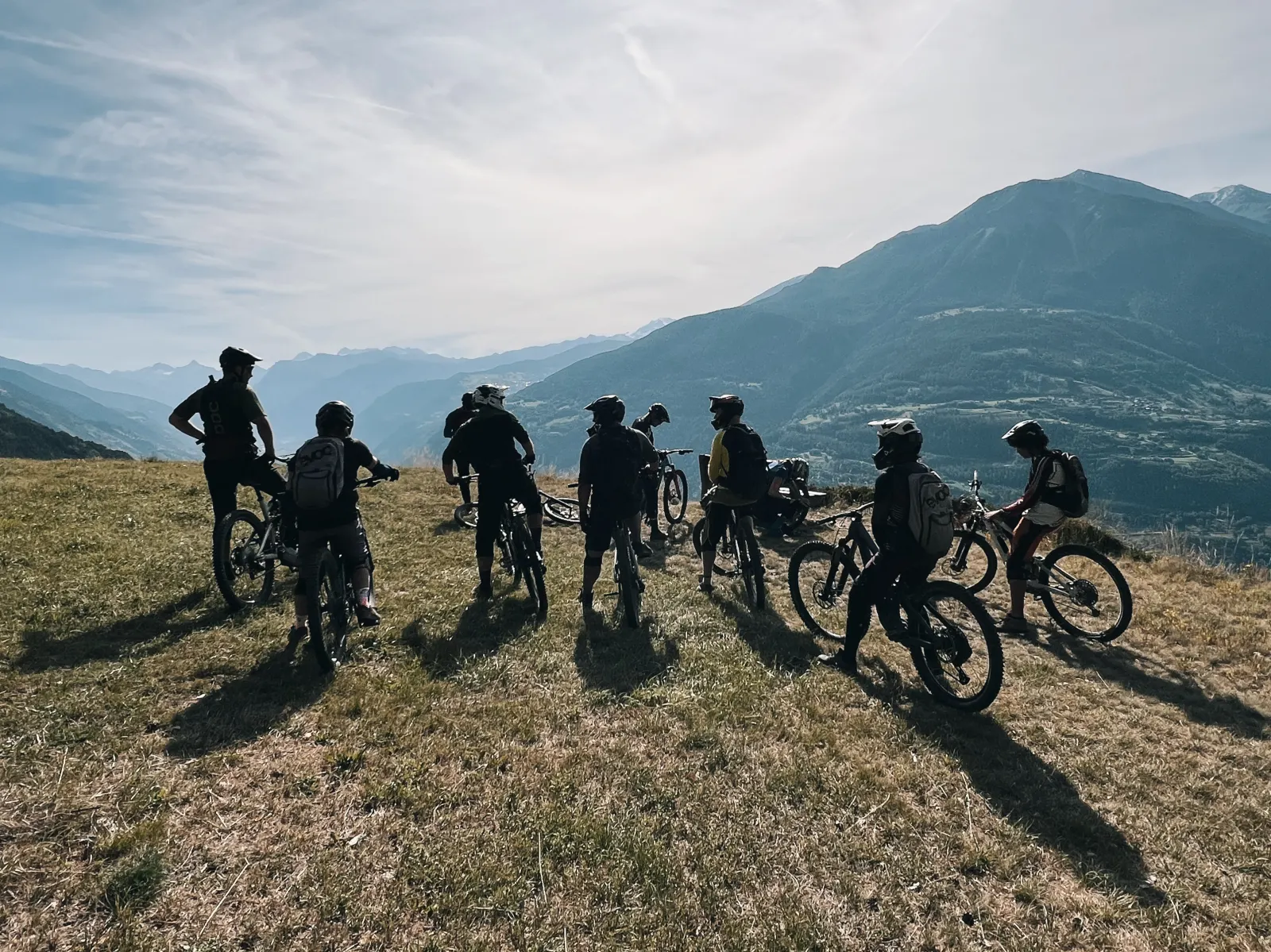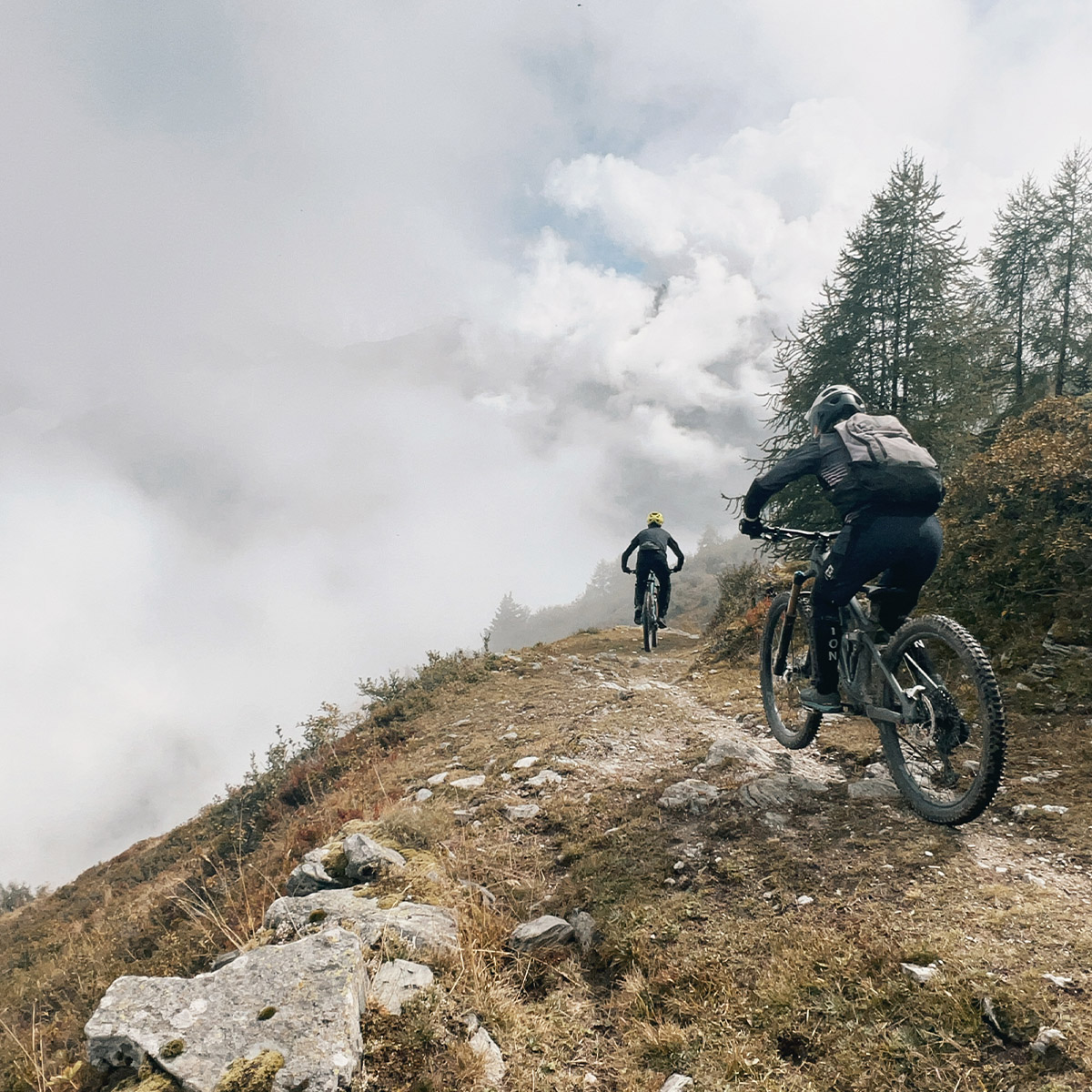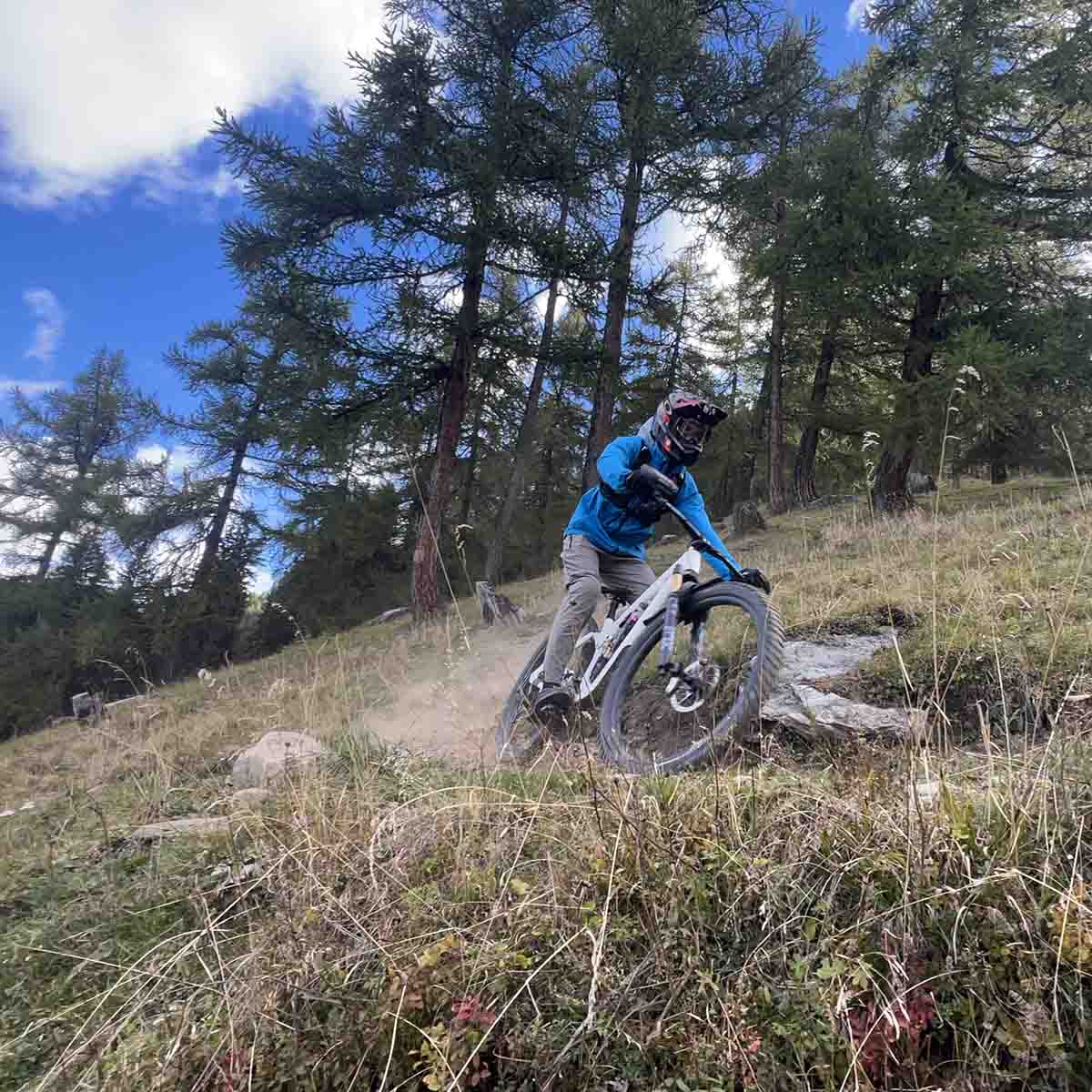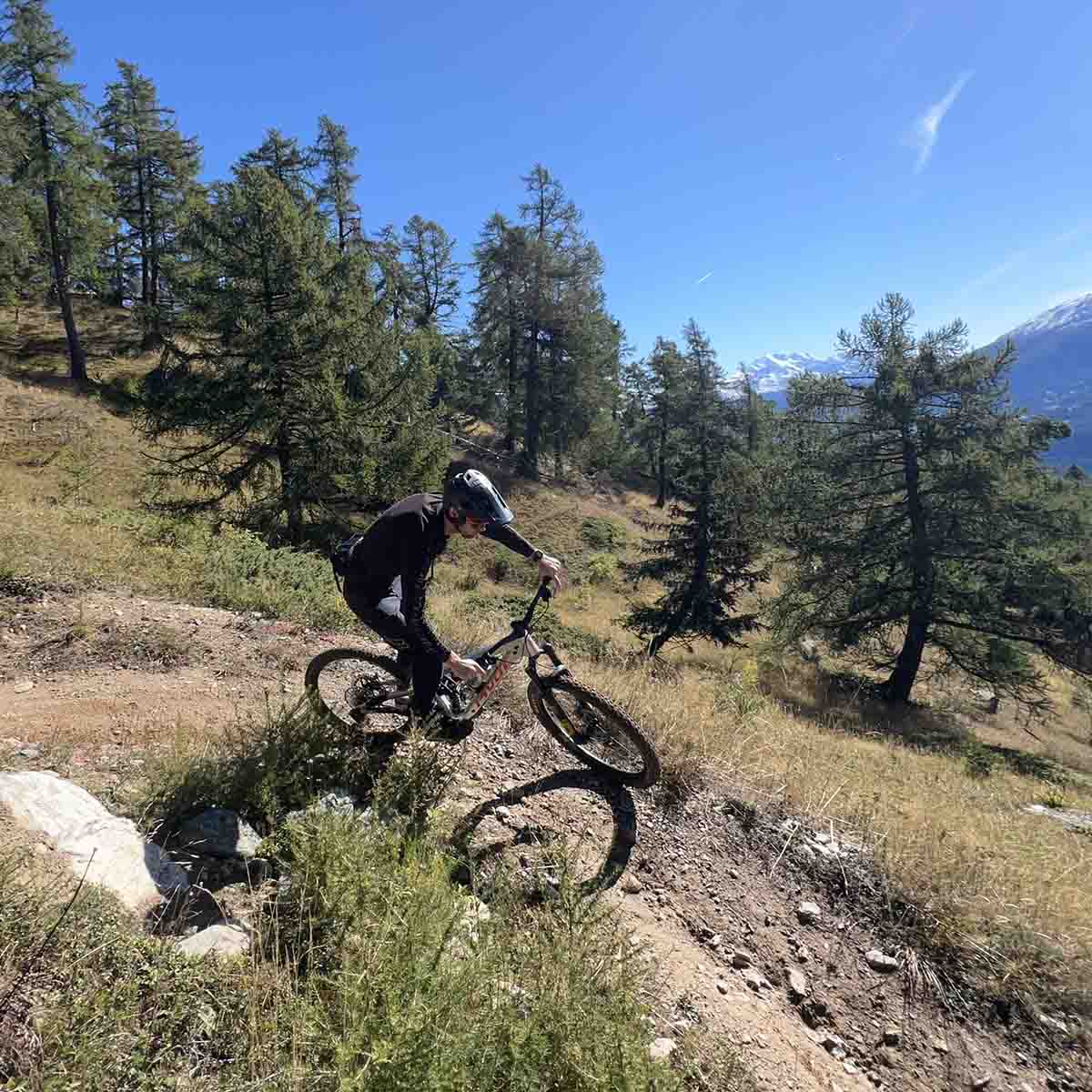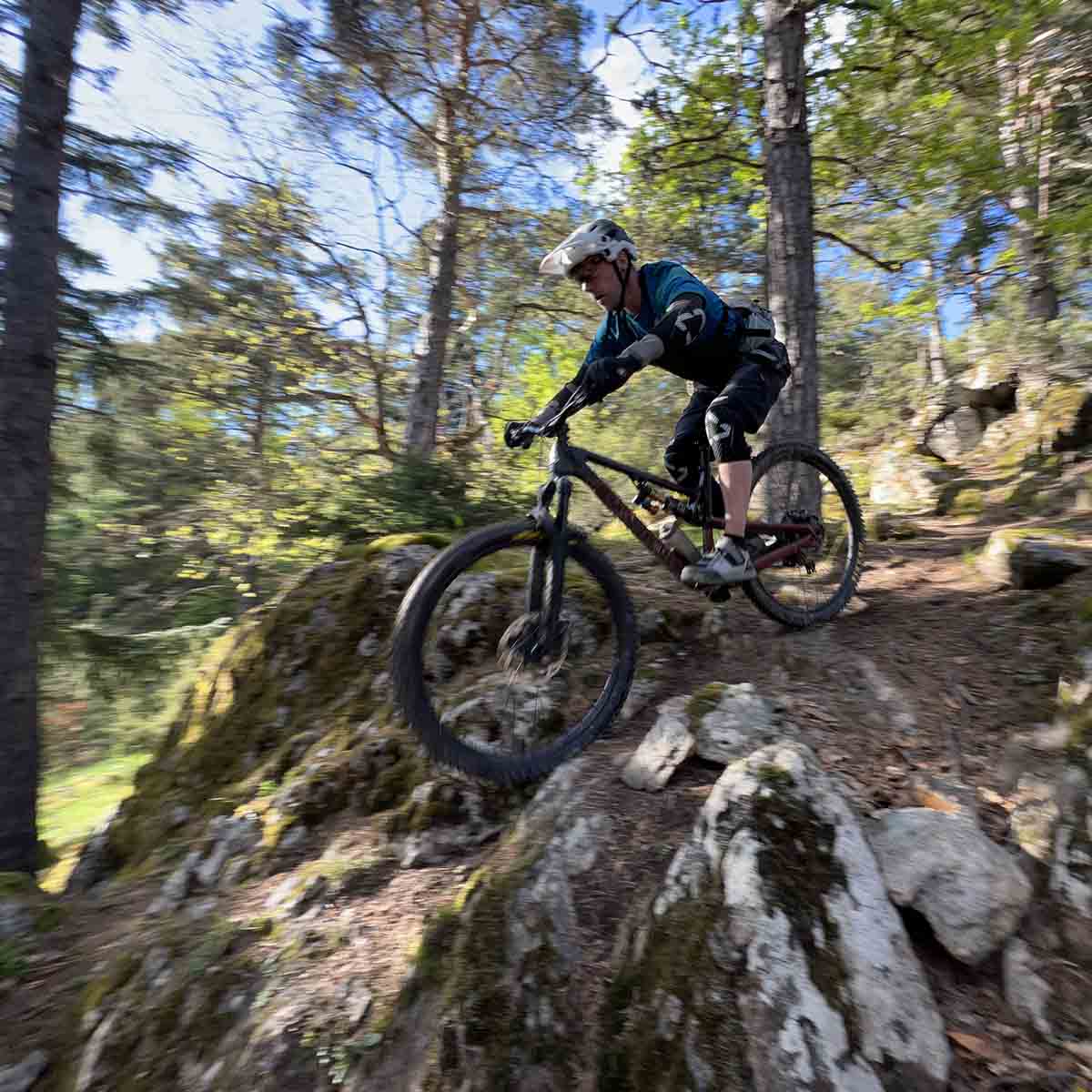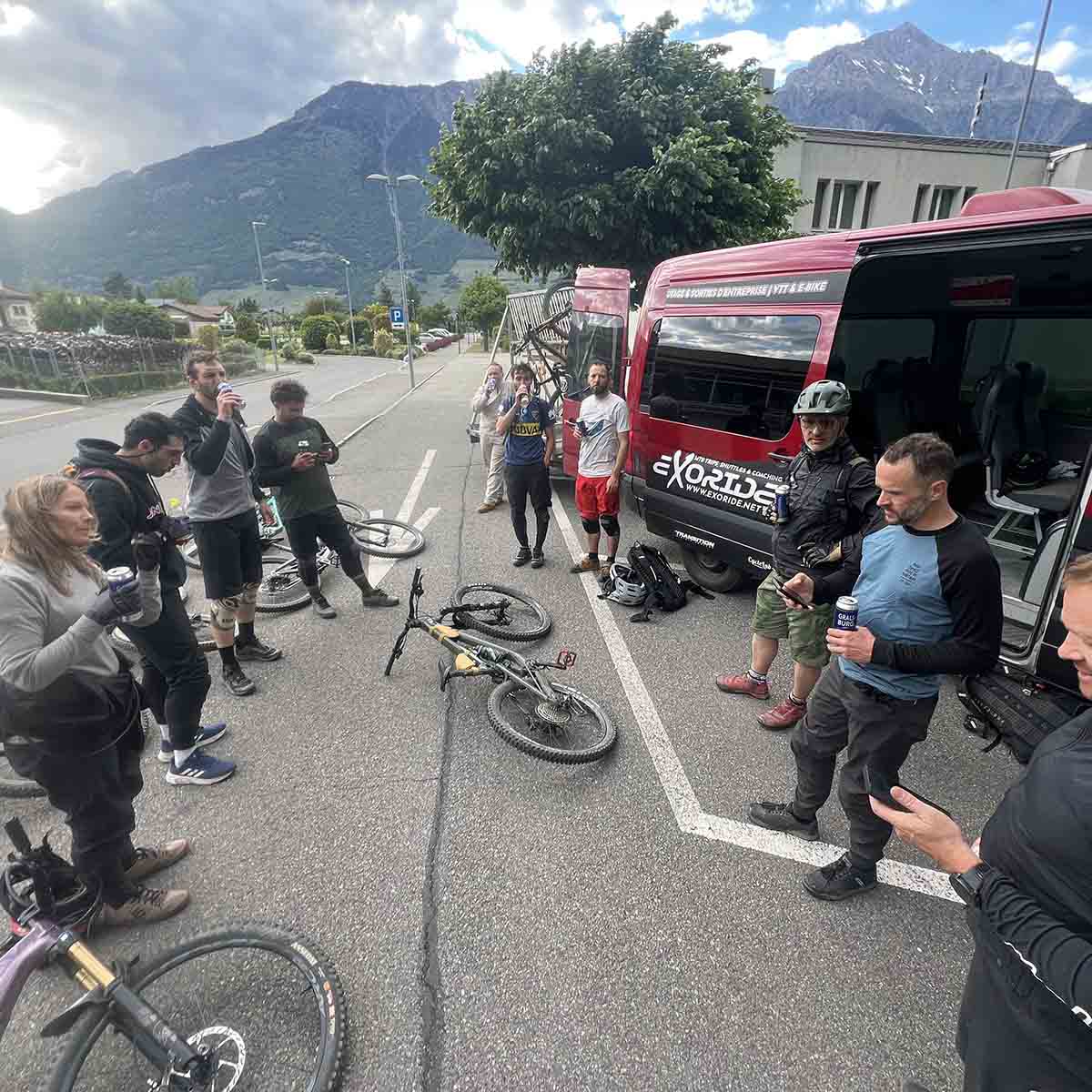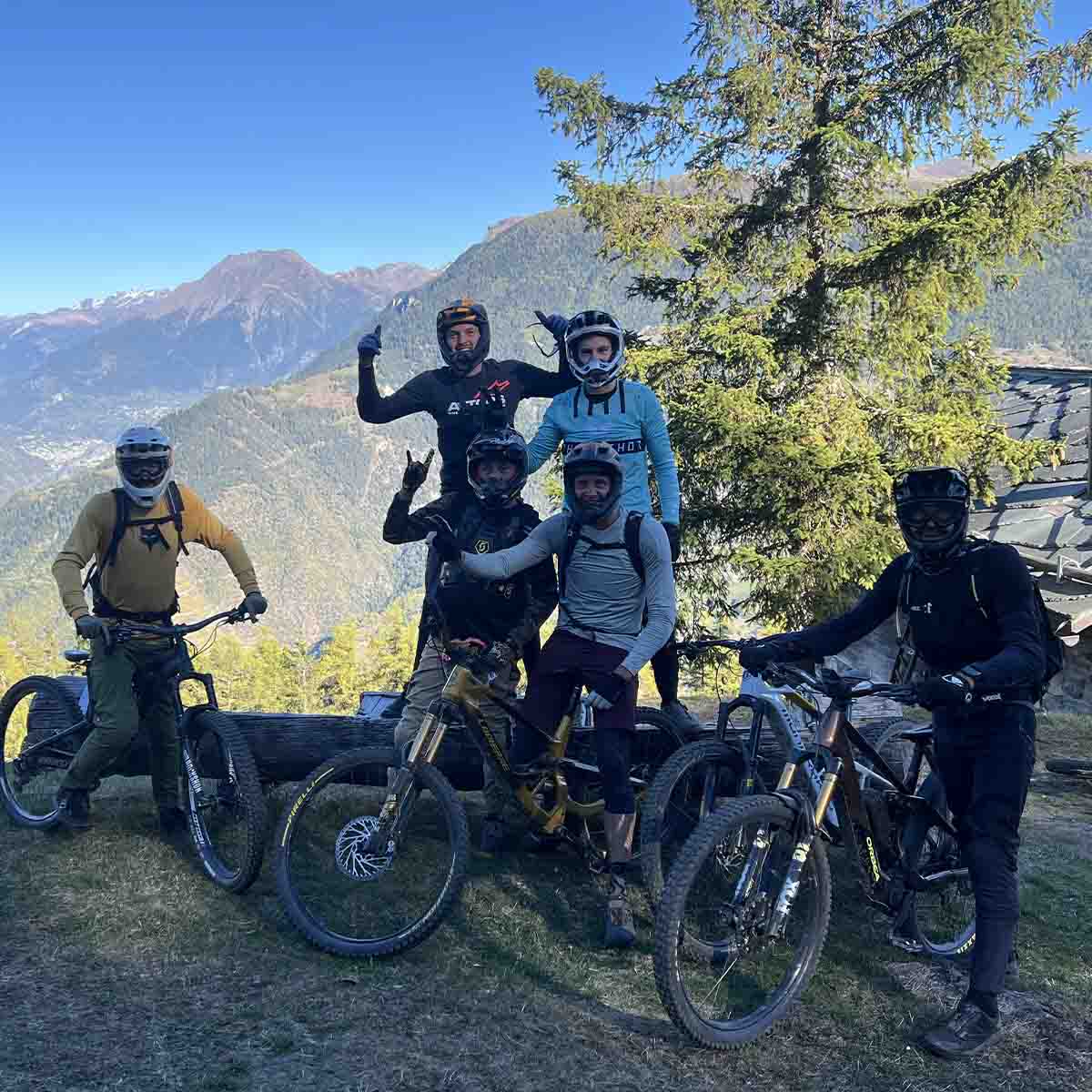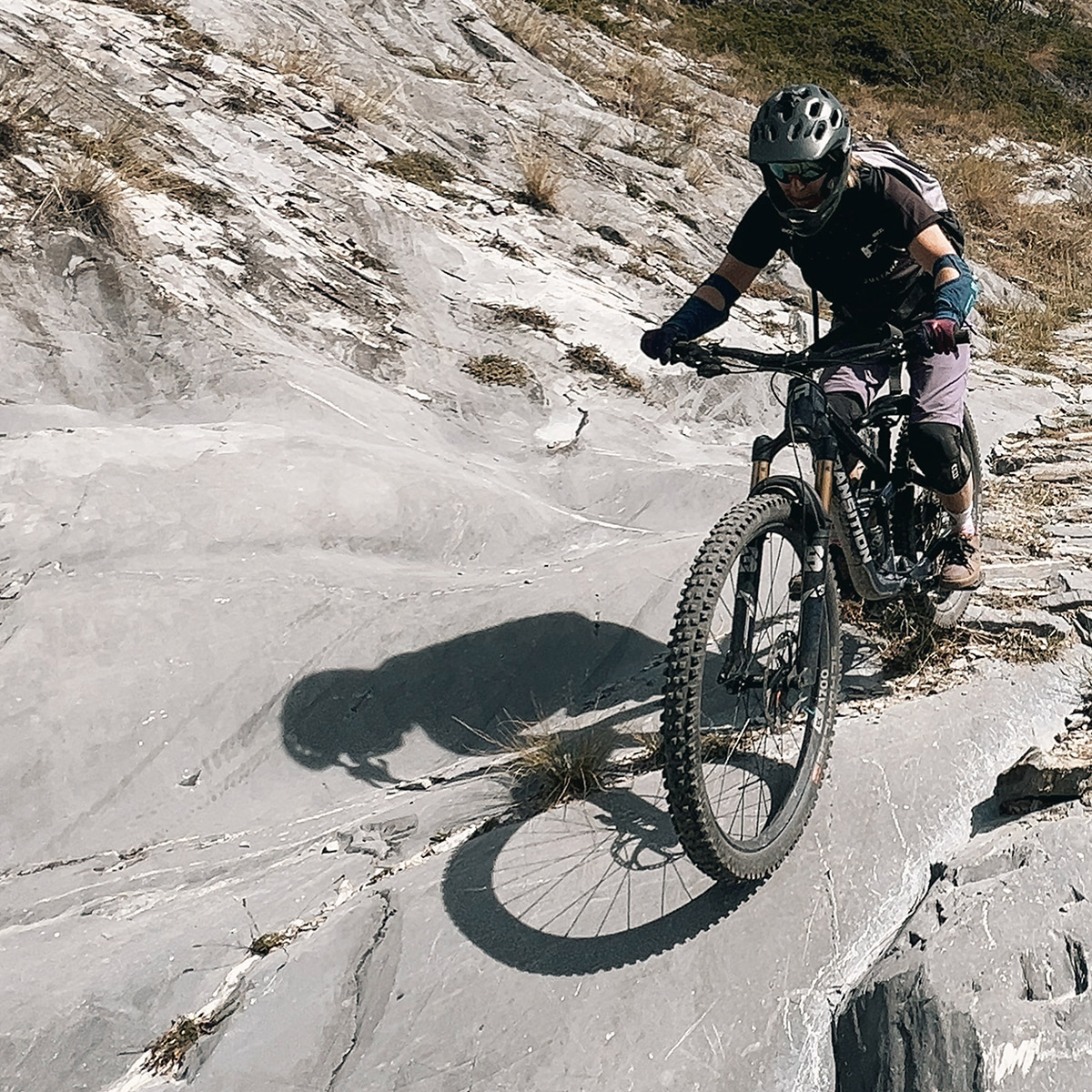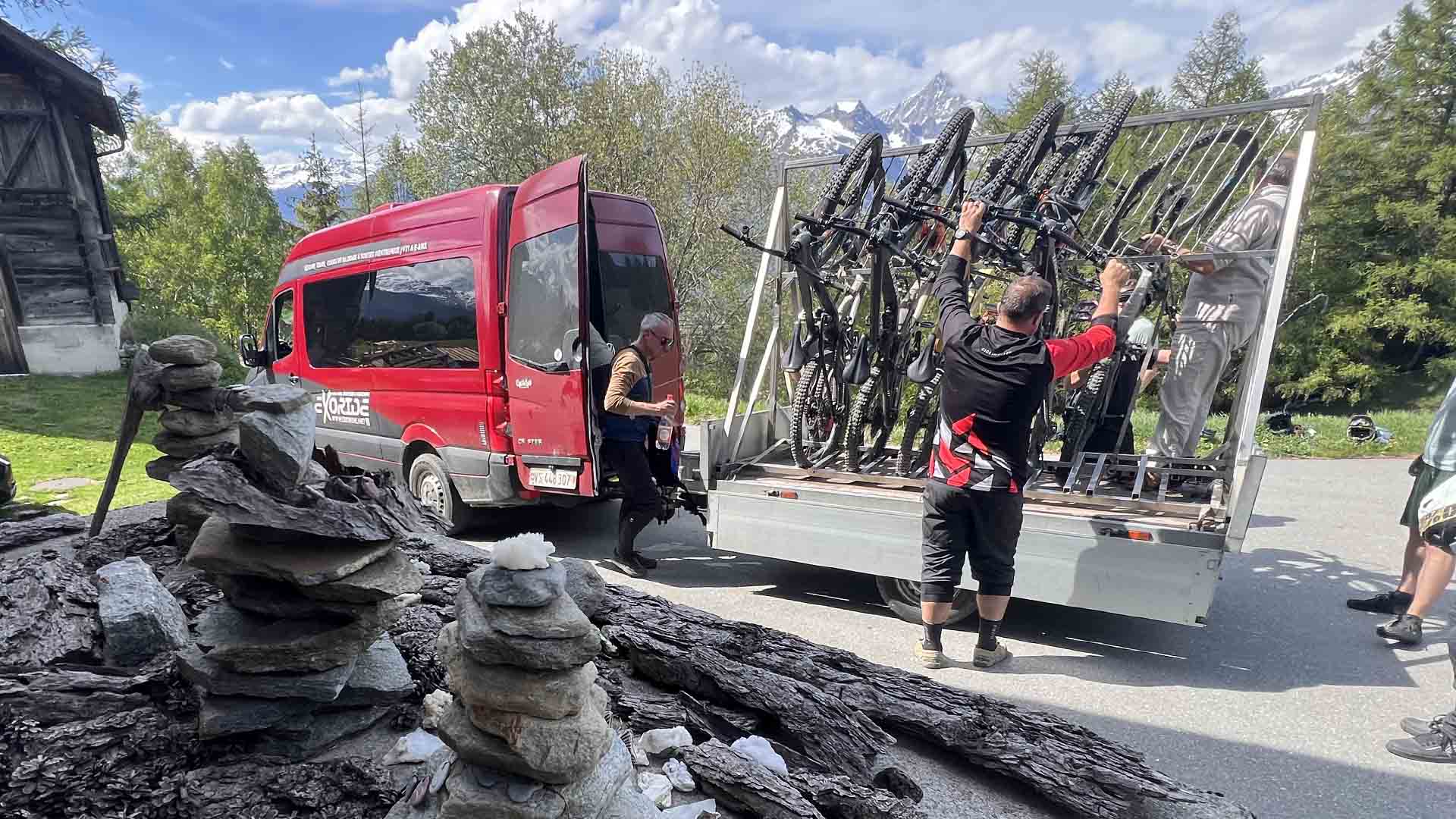
The Valais is not one riding area, it is five, and they are not open at the same time of year. A trail that is perfect in early April is under snow in the same week one valley further up, and the alpine ground that makes the region famous is only rideable for a few months.
Here is what separates the five areas we shuttle, and when each of them is actually worth the drive.
Lower Valais: first to open, last to close
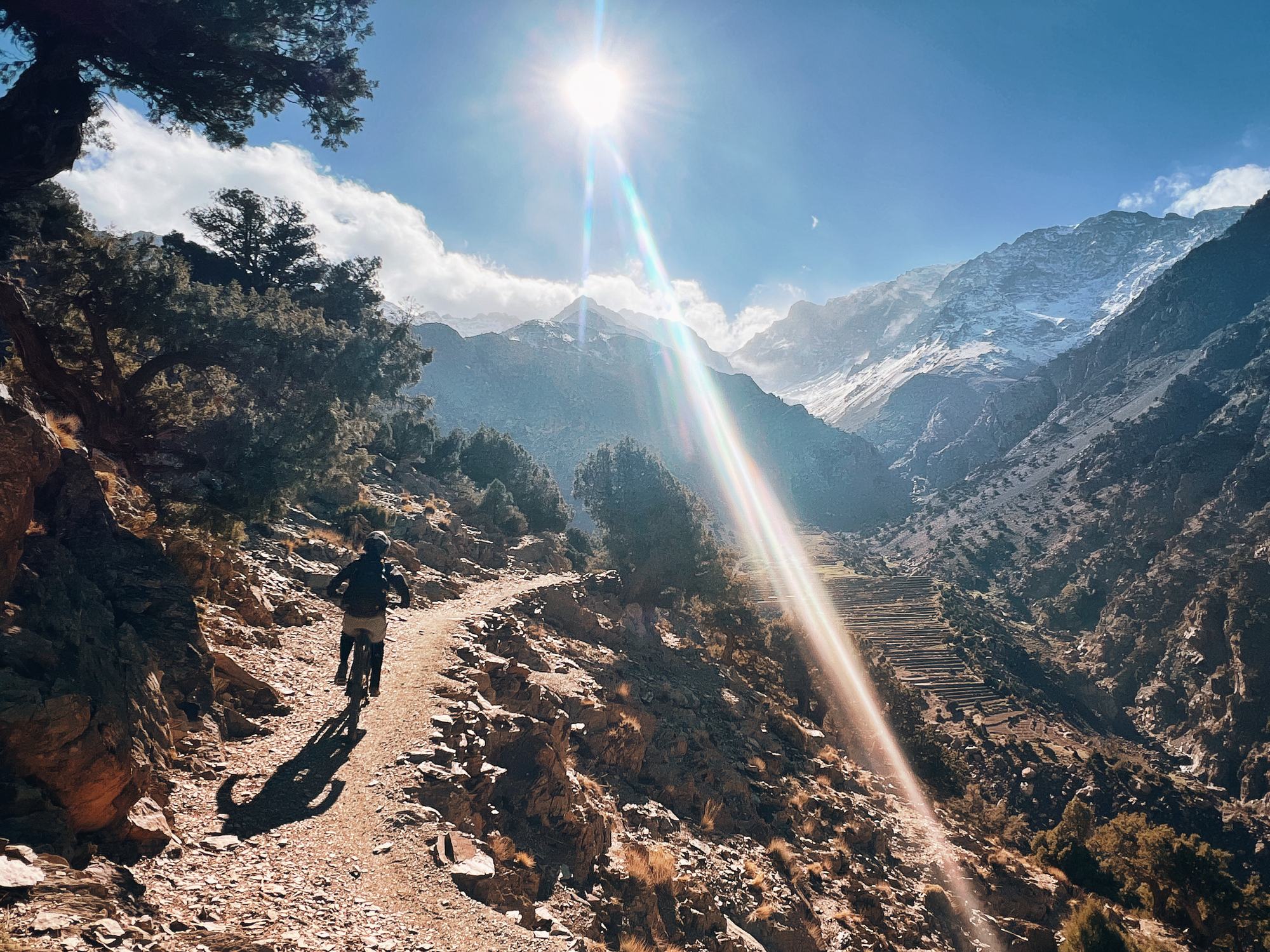
The bottom of the valley sits low and faces the sun, and it is the driest ground in the canton. That makes it the shoulder-season area: it is rideable when everything else is white, which is why the winter days happen here.
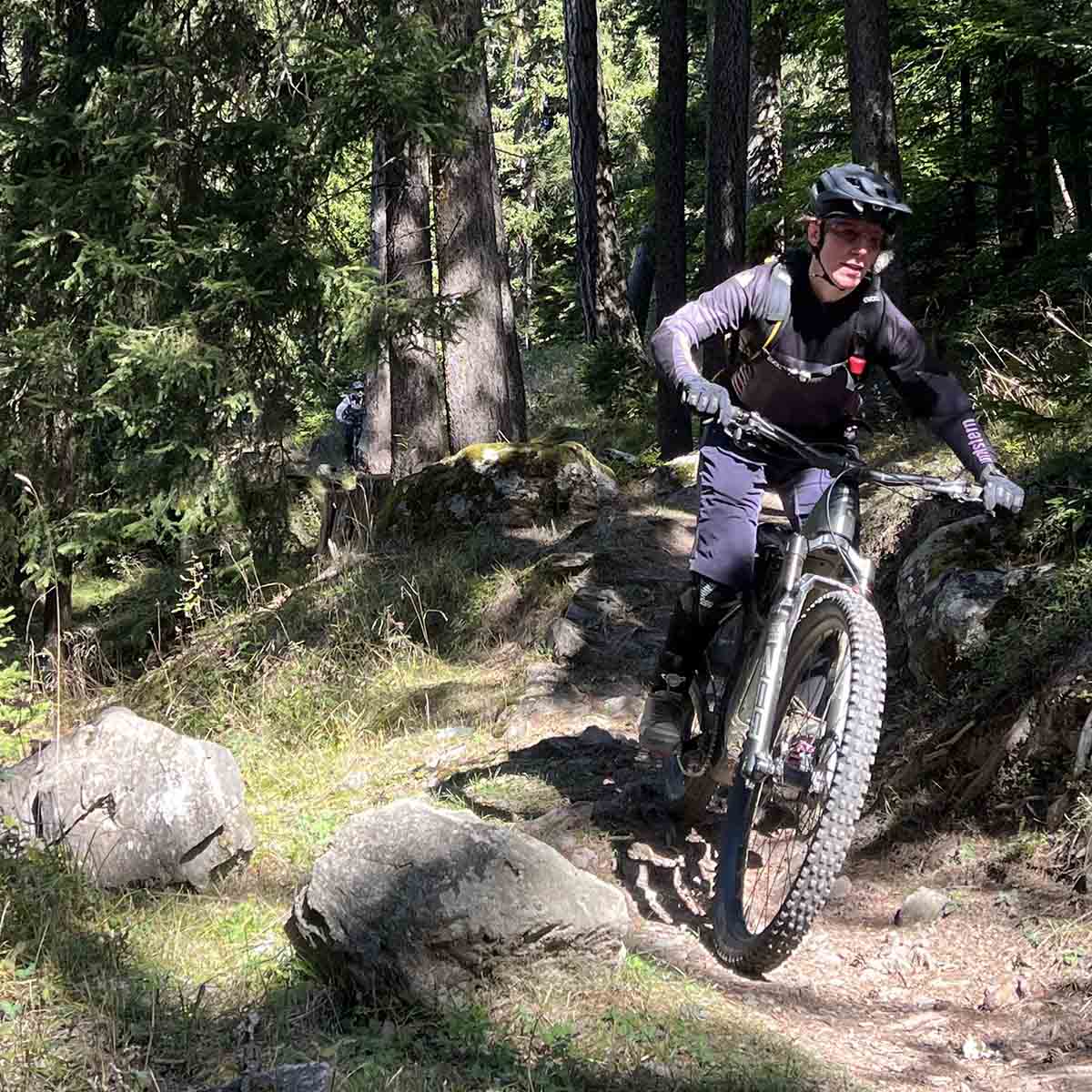
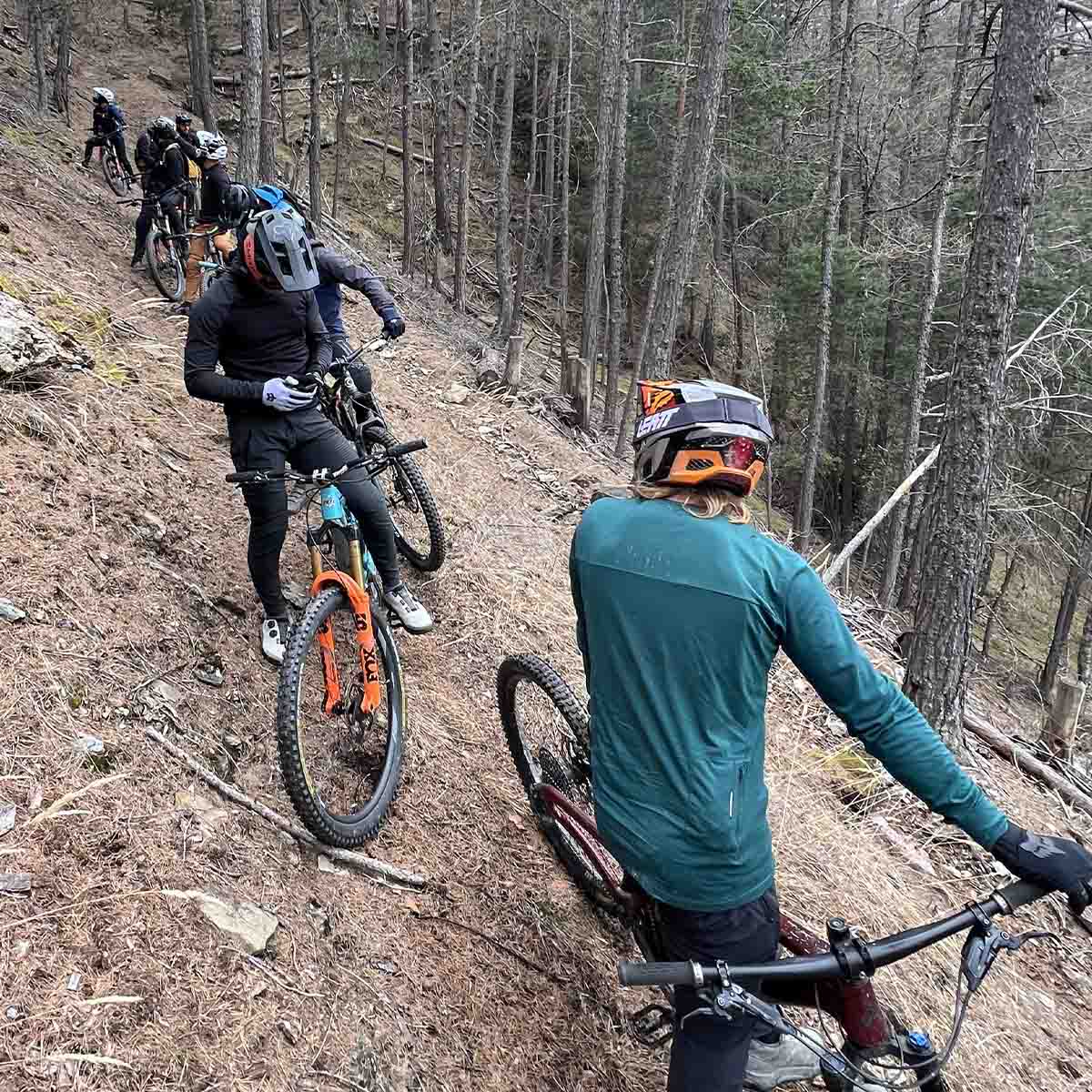
The terrain is more wooded and steeper in the trees than people expect from the Valais, with shorter descents than higher up but a lot of them in a day. In midsummer it is the one place you might find too hot, which is exactly when the others come into their own.
Central Valais: the vertical
This is where the numbers come from. Descents of 1,500 to 2,000 metres in one go, starting in high alpine terrain and finishing among the larches and the villages on the valley floor. It is the area that makes people say the Valais has vertical you do not find elsewhere in Europe, and they are not wrong.
The season is the classic one, roughly June to October depending on the year, and it is the area that rewards a rider who can descend for forty minutes without their hands giving up.
Upper Valais: high mountains, a short window
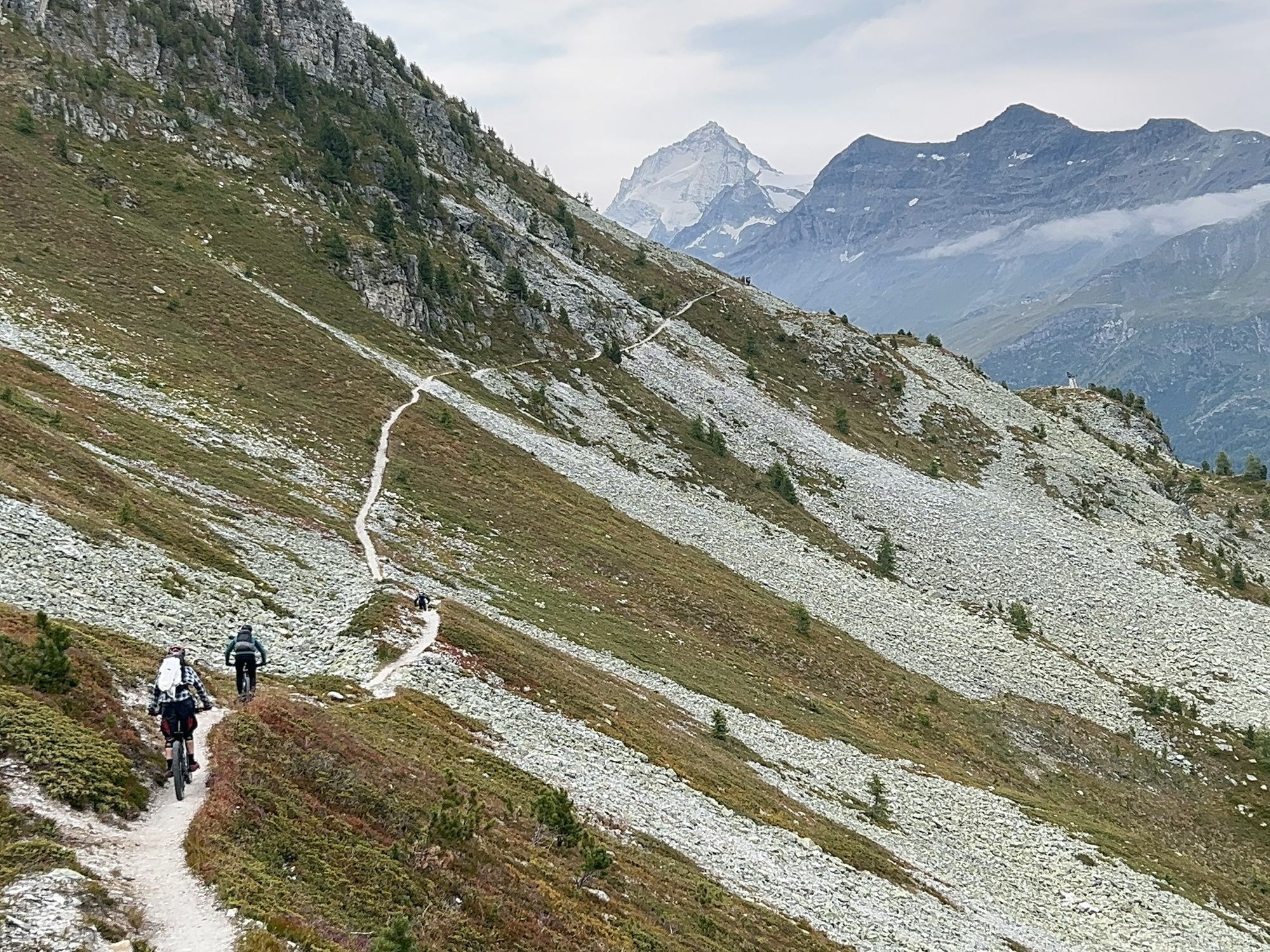
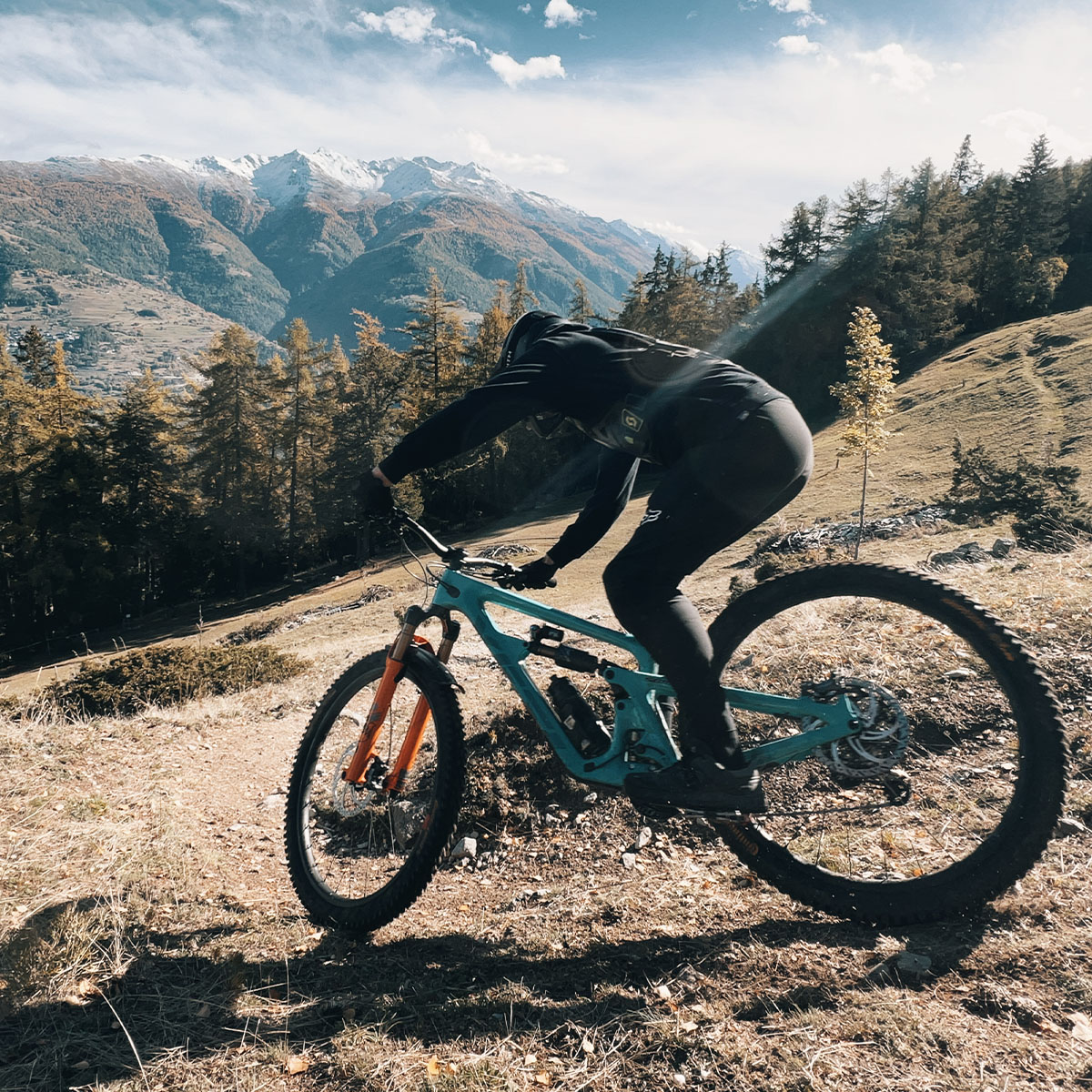
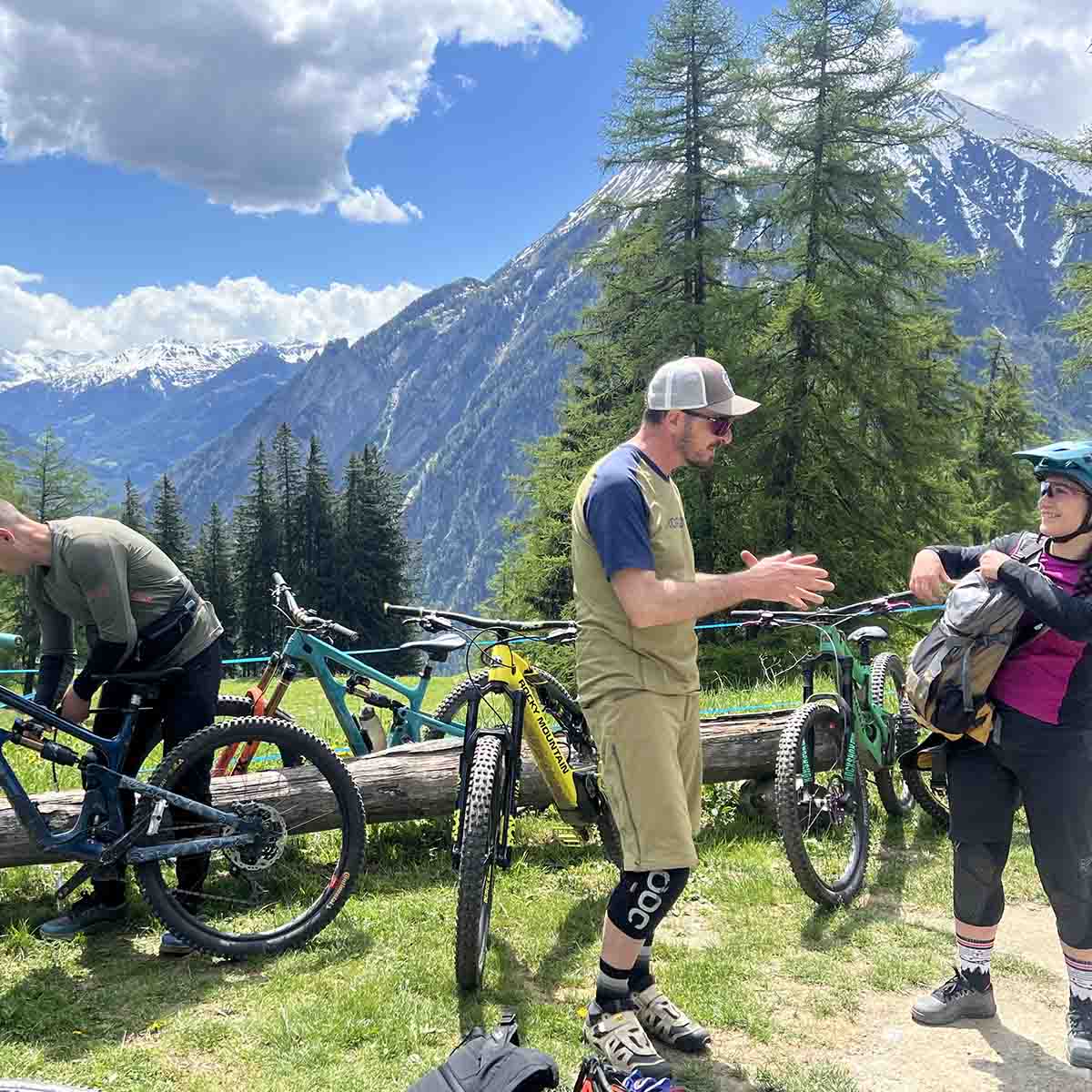
Higher, more mineral, more spectacular, and open for less of the year. Scree, big faces, high passes and the feeling of being properly in the mountains rather than above a valley. It opens late and closes early, and a snowfall in September can end its season in an afternoon.
When it is open, it is the best riding of the year. That is why the days here get picked as soon as the conditions allow rather than planned six months ahead.
The Vaud Alps: not a fallback
Just over the boundary, greener, more pre-alpine, and often under a completely different sky. When a front parks itself over one side, the other side is frequently fine, and that alone makes these days worth having on the list.
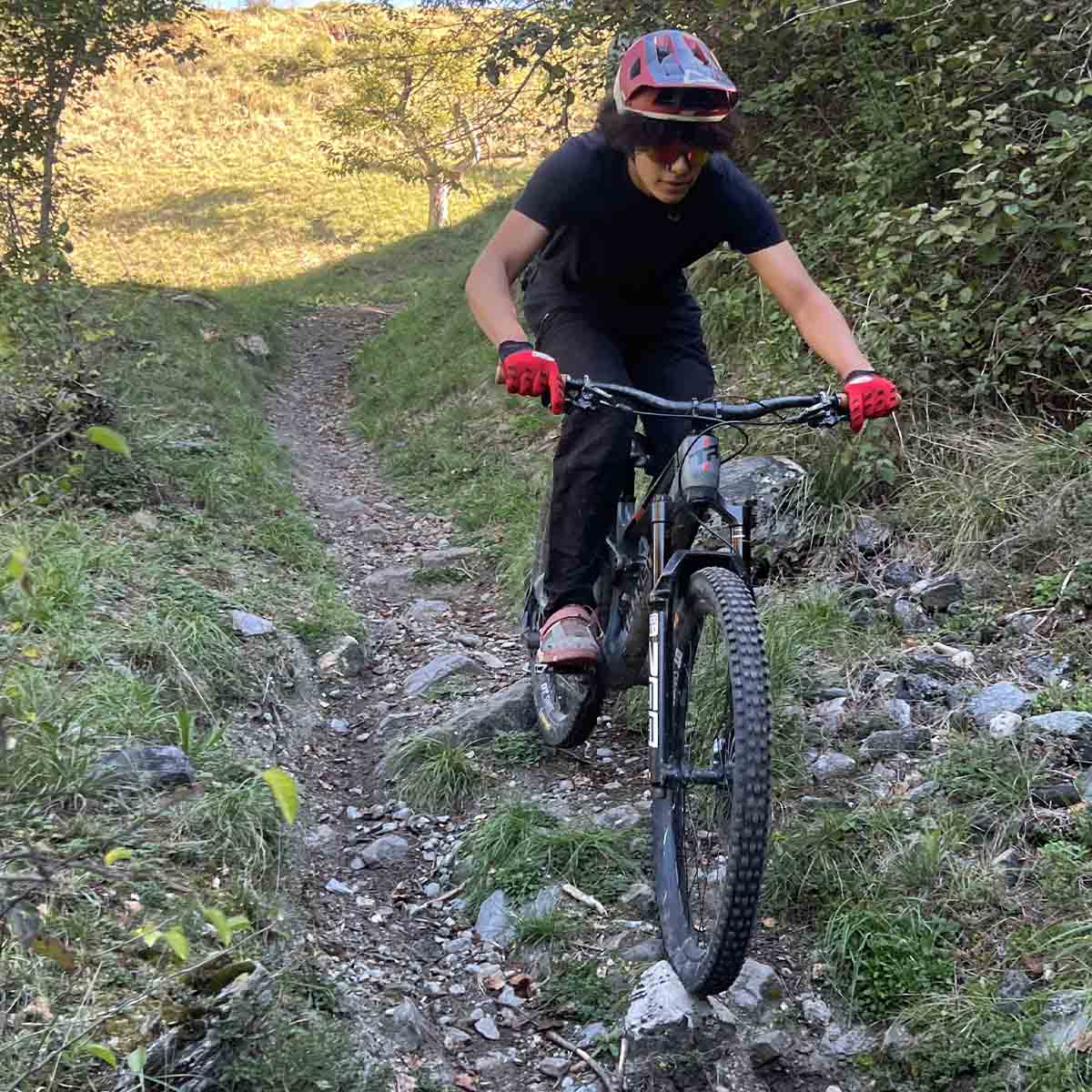
The terrain is softer and more flowing than the Valais proper, which suits a group that wants to ride fast rather than fight for every metre.
Northern Italy: when the weather says no here
A day across the border is a different climate, longer descents and a different kind of dirt. It is the answer to a forecast that has ruined a Saturday in Switzerland, and it is also a good excuse on its own.
You do not pick, and that is the good news
The area is chosen in the days before, not when you book. Snow line, the last rainfall, forestry work, seasonal restrictions on certain sectors, grazing and hiking traffic: all of that moves week to week, and the point of a shuttle day is that somebody else has already done that homework.
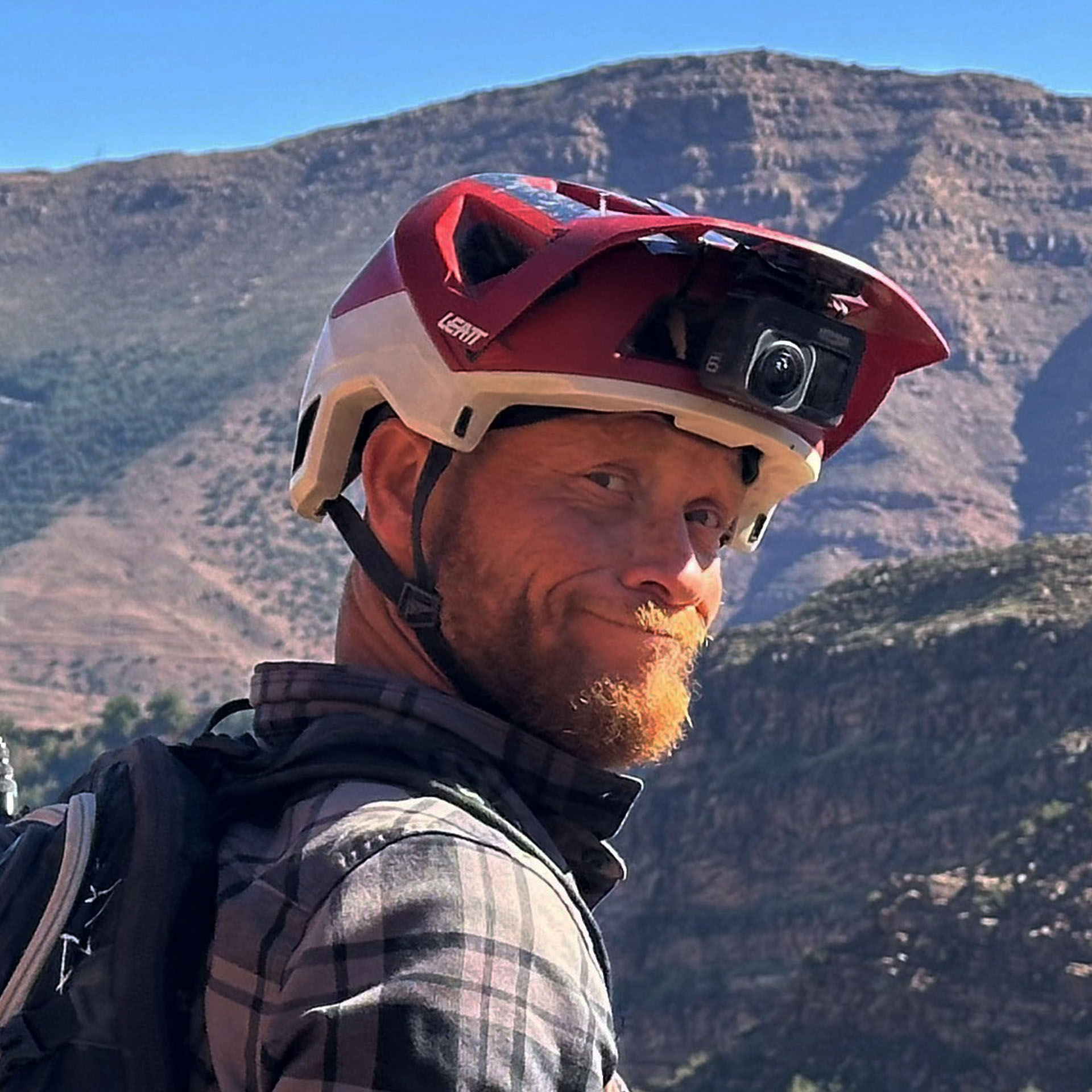
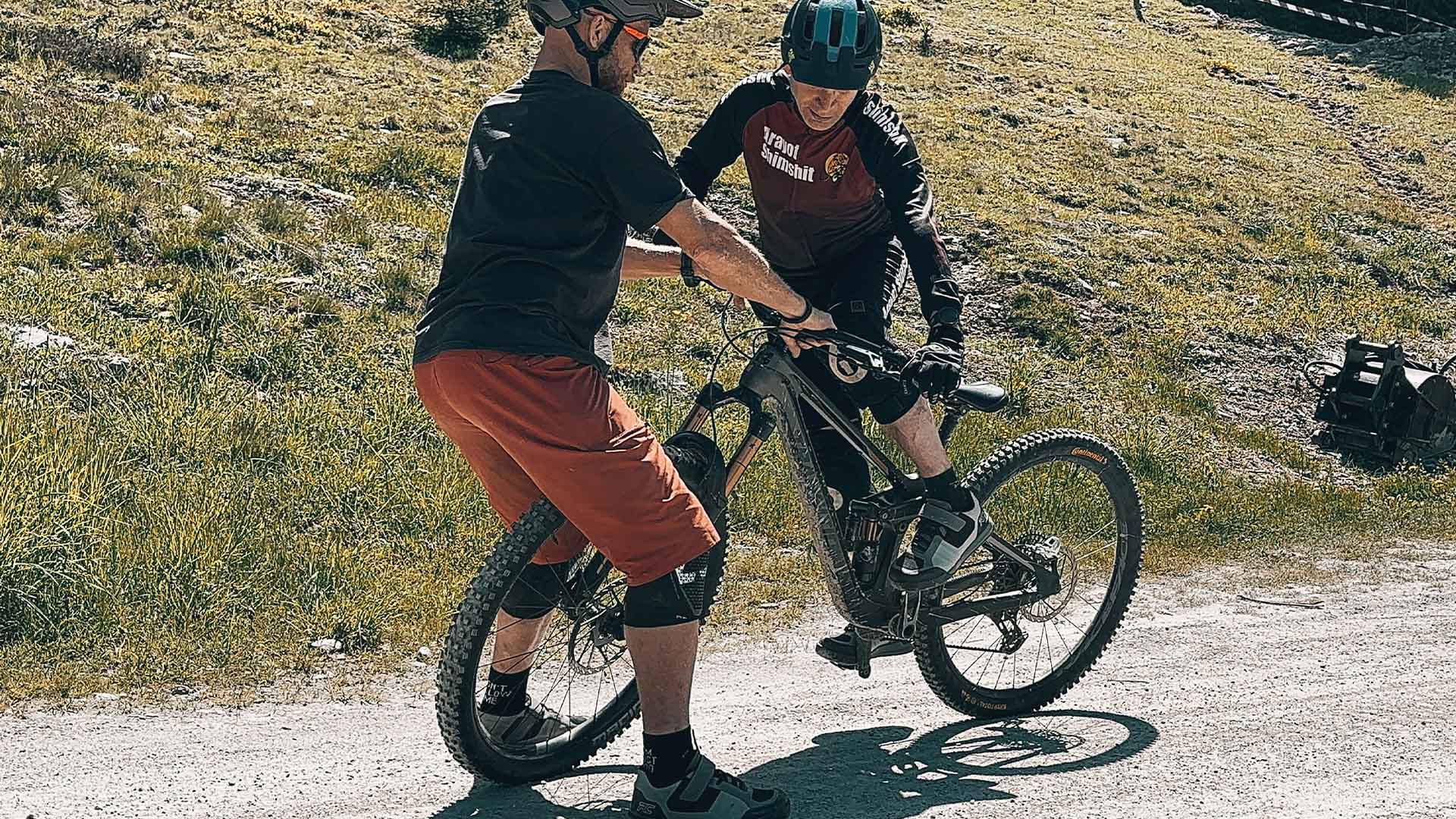
In our case that somebody is Chris, who has been riding the Swiss Alps since 1989, is still racing enduro, takes a bike out most days of the year, and is Swiss Cycling certified. The useful part is not the racing, it is that the state of the trails is read in real time rather than remembered from last summer.
It also covers the part riders rarely think about: which sectors are under seasonal restriction, which paths are shared with walkers and farmers, and which areas are protected. Riding with somebody who knows that is not a detail, it is how the trails stay open for the years to come.
Booking a day
Guided days are CHF 95, self-guided uplift starts at CHF 45, the fleet takes mountain bikes and e-bikes with no weight limit, and a private day for a club or a group of friends can be built in any of the five areas.
The dates are online. What is on board a professional shuttle covers the equipment, guided or self-guided covers the choice, and the winter days cover the end of December.
Chris