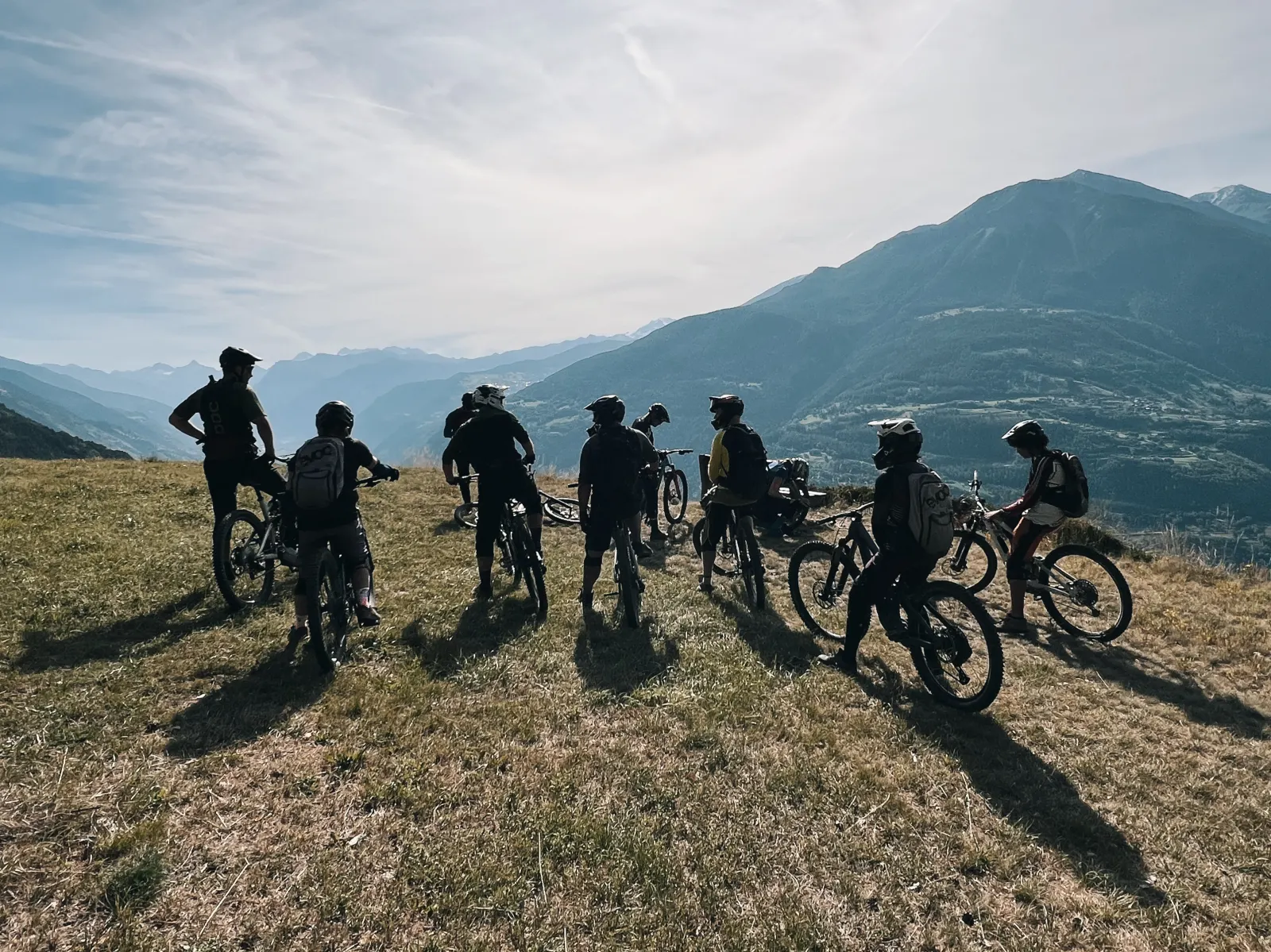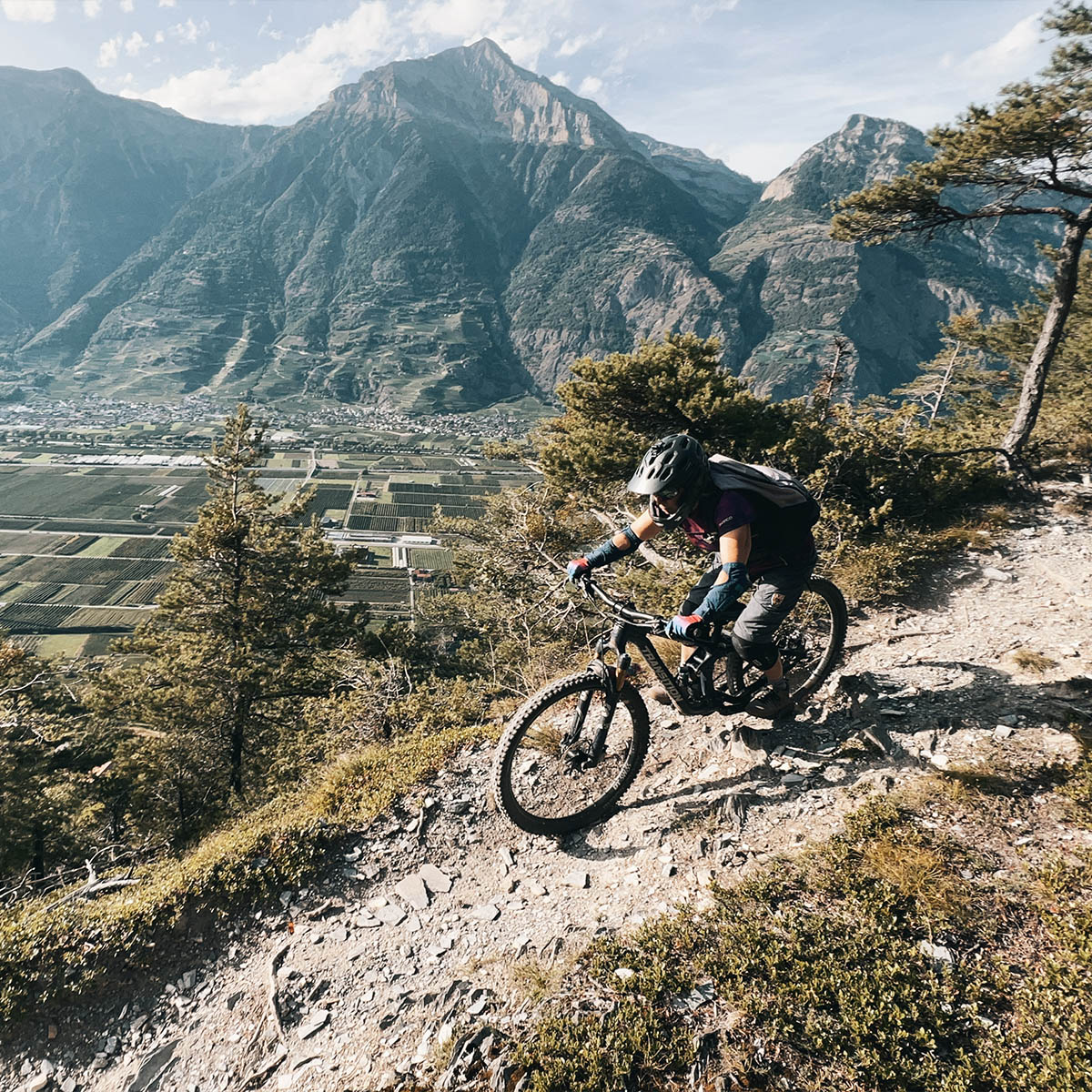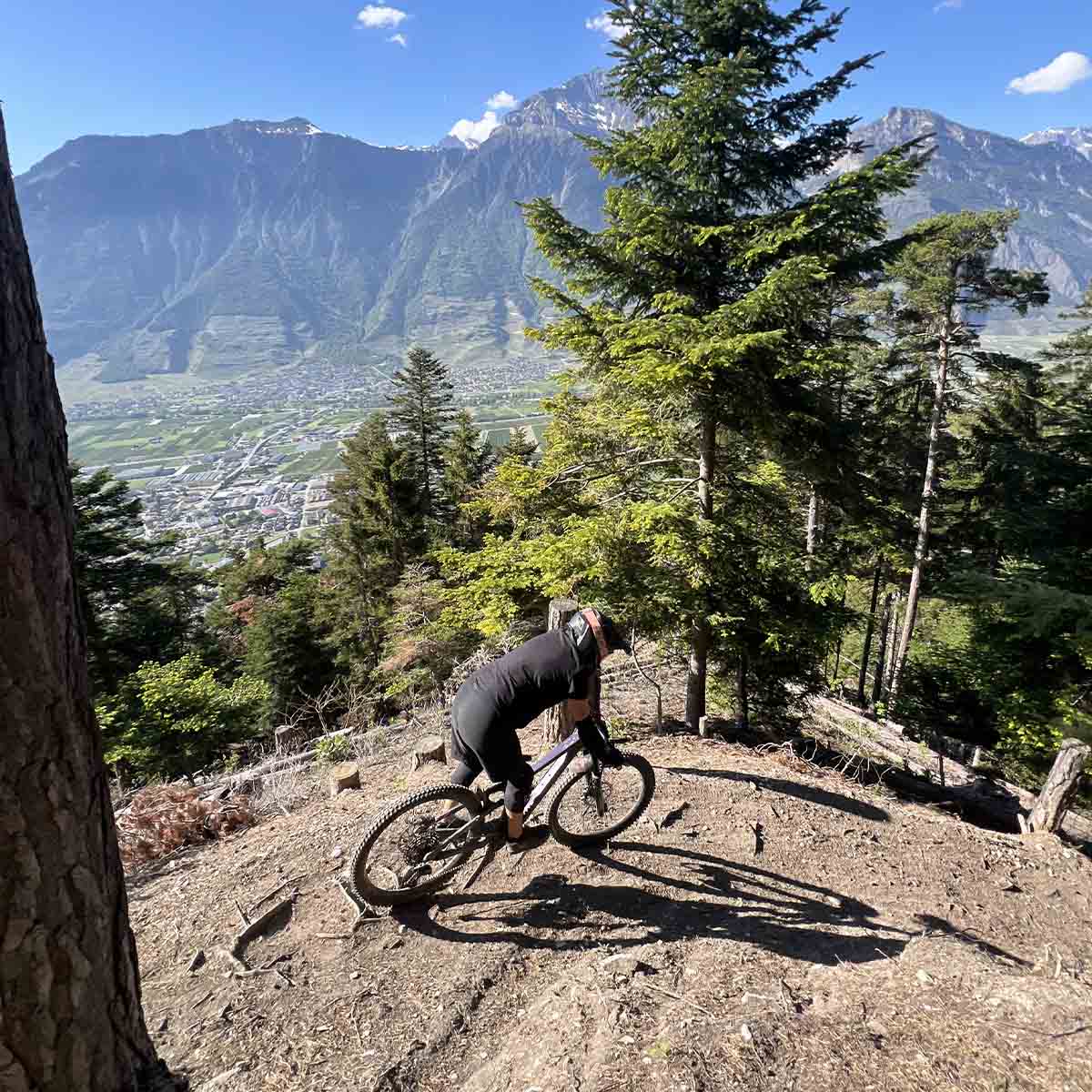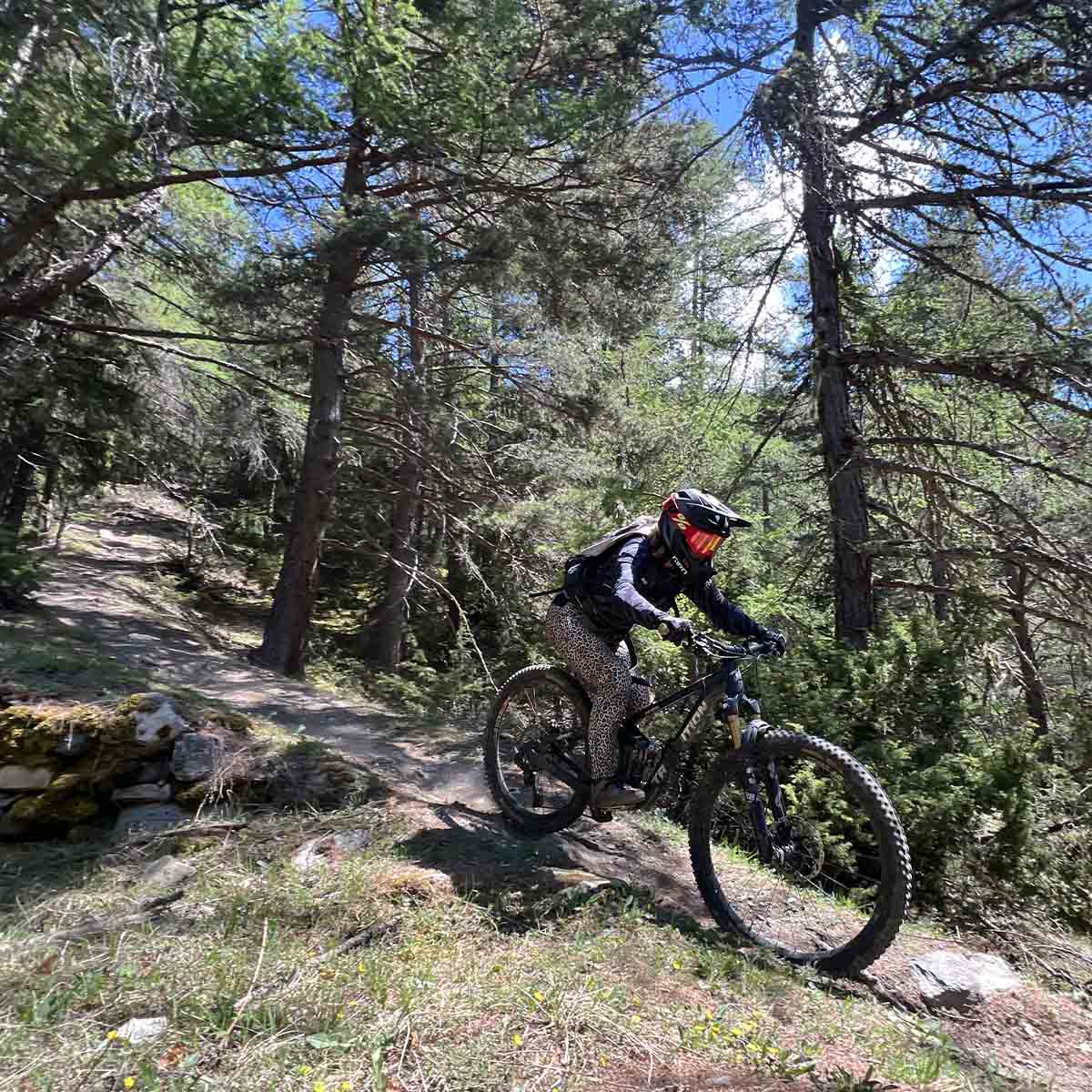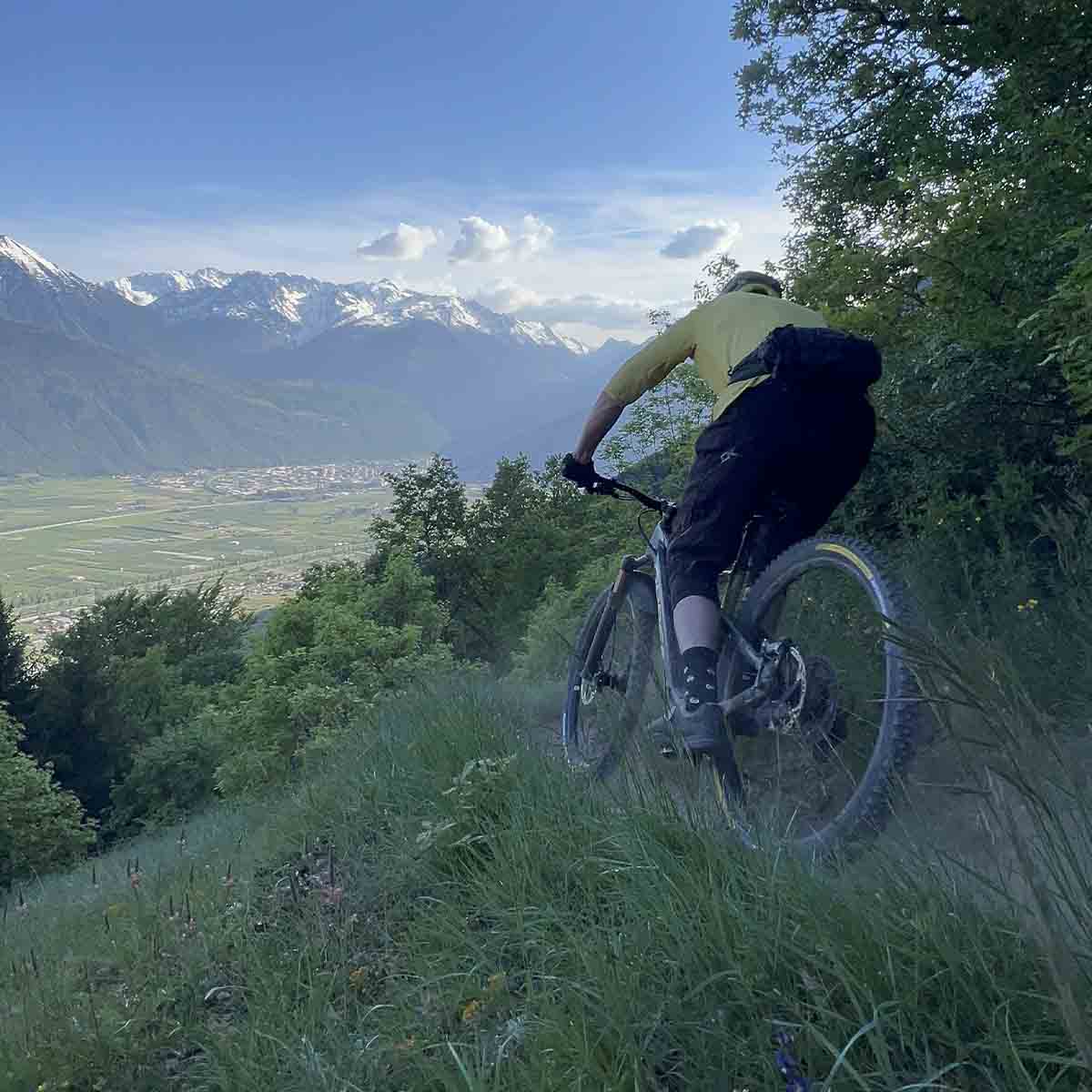
From a distance, a shuttle is a van going up and bikes coming down. Anyone with a van and a trailer can do that, and plenty of people do.
So what separates a professional shuttle from the mate who offers to run you up to the pass for the price of the fuel? I have fifteen years of shuttles behind me, I was the first to run them in Valais, and here, piece by piece, is what you are actually buying when you book a day.
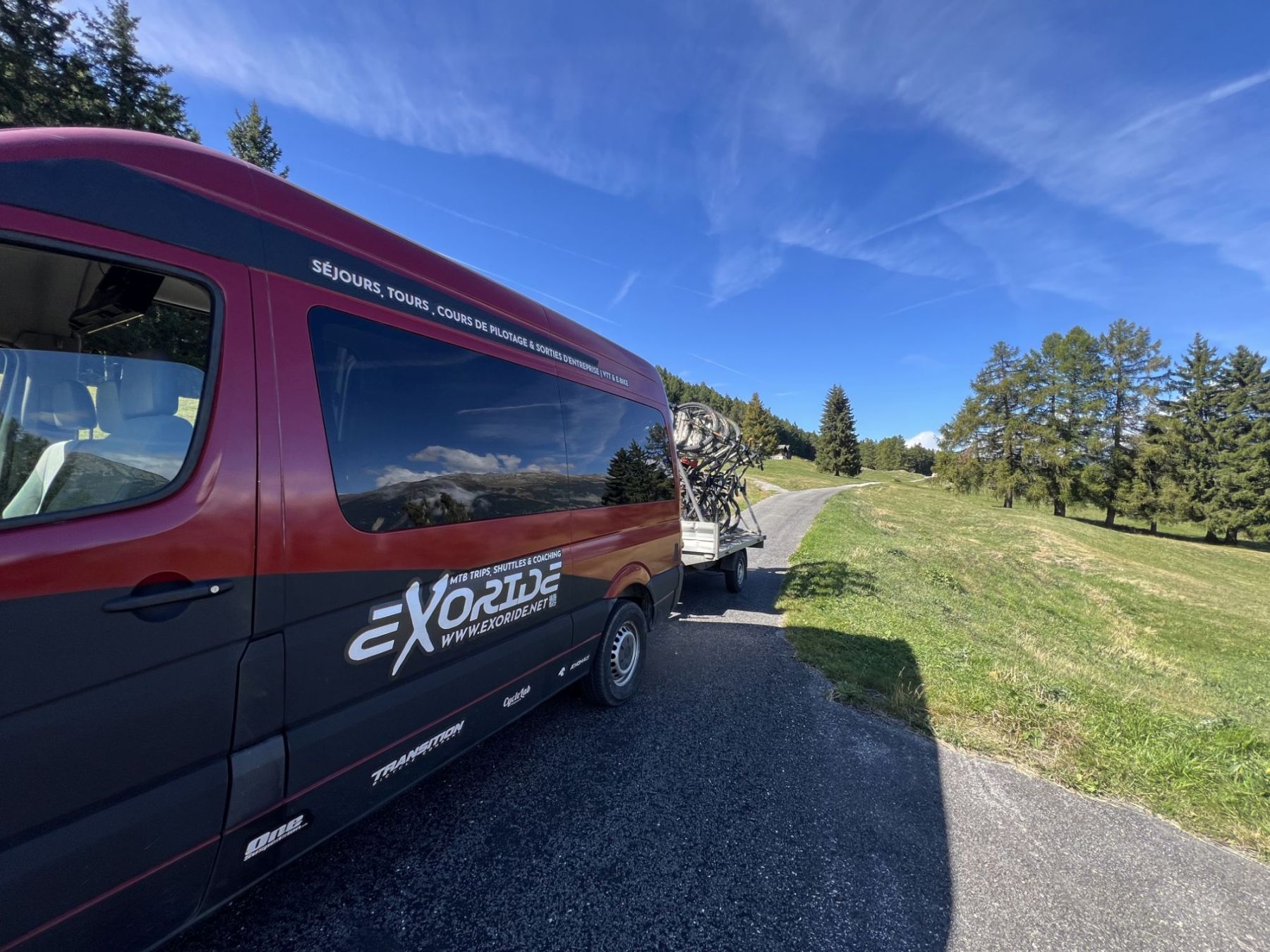
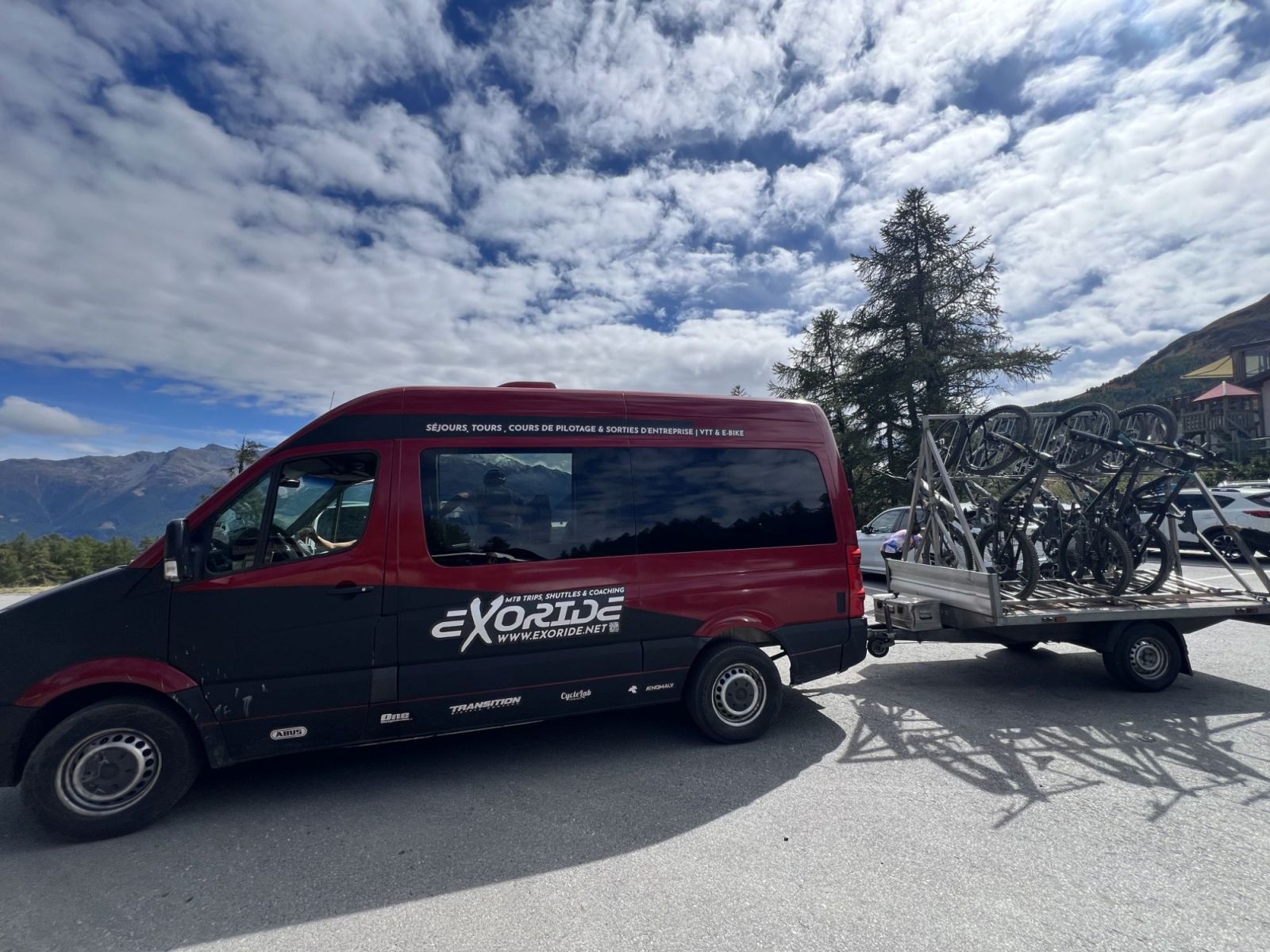
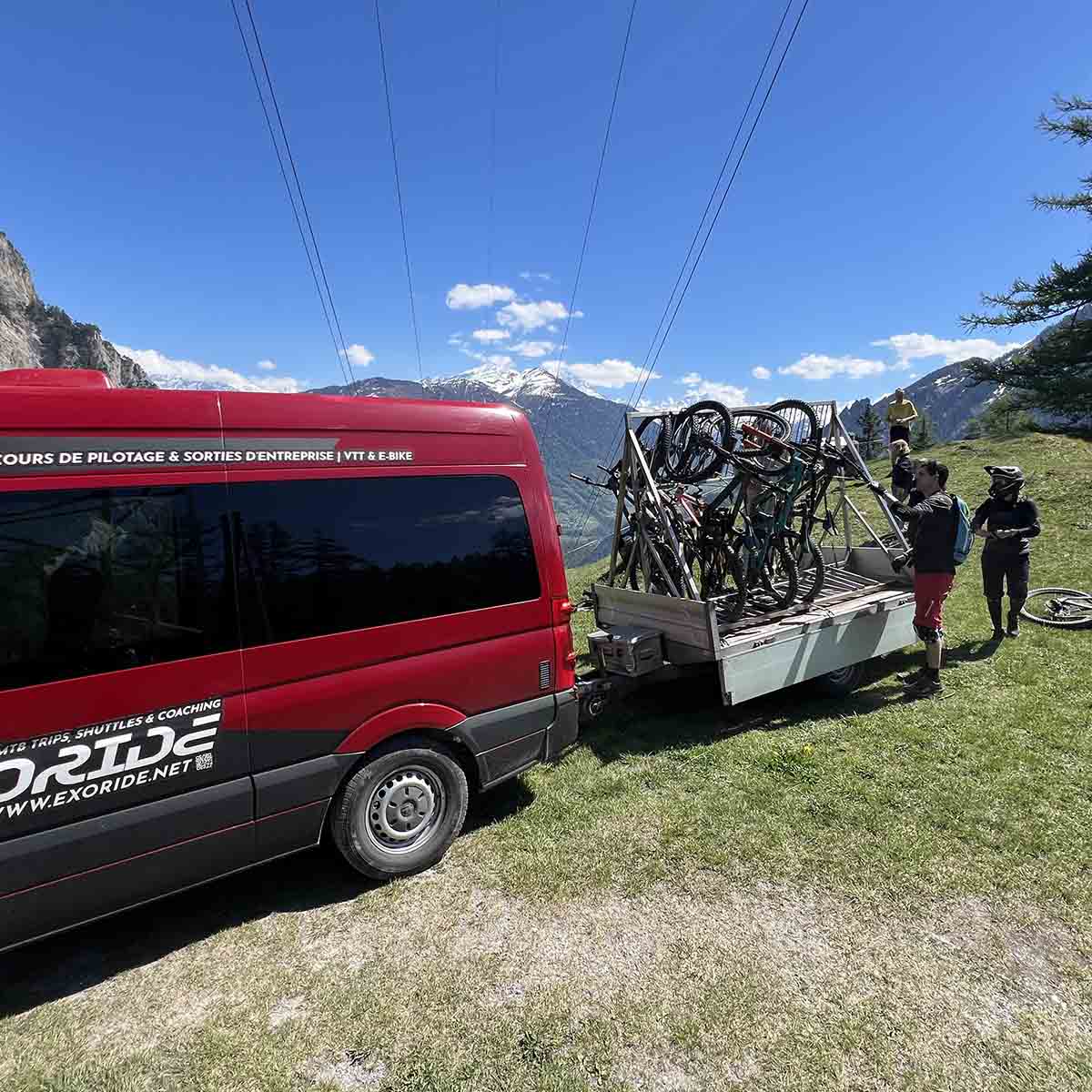
The trailers: two vans, eleven and fifteen racks, every bike strapped alone
Let us start with what you see when you arrive in Martigny.
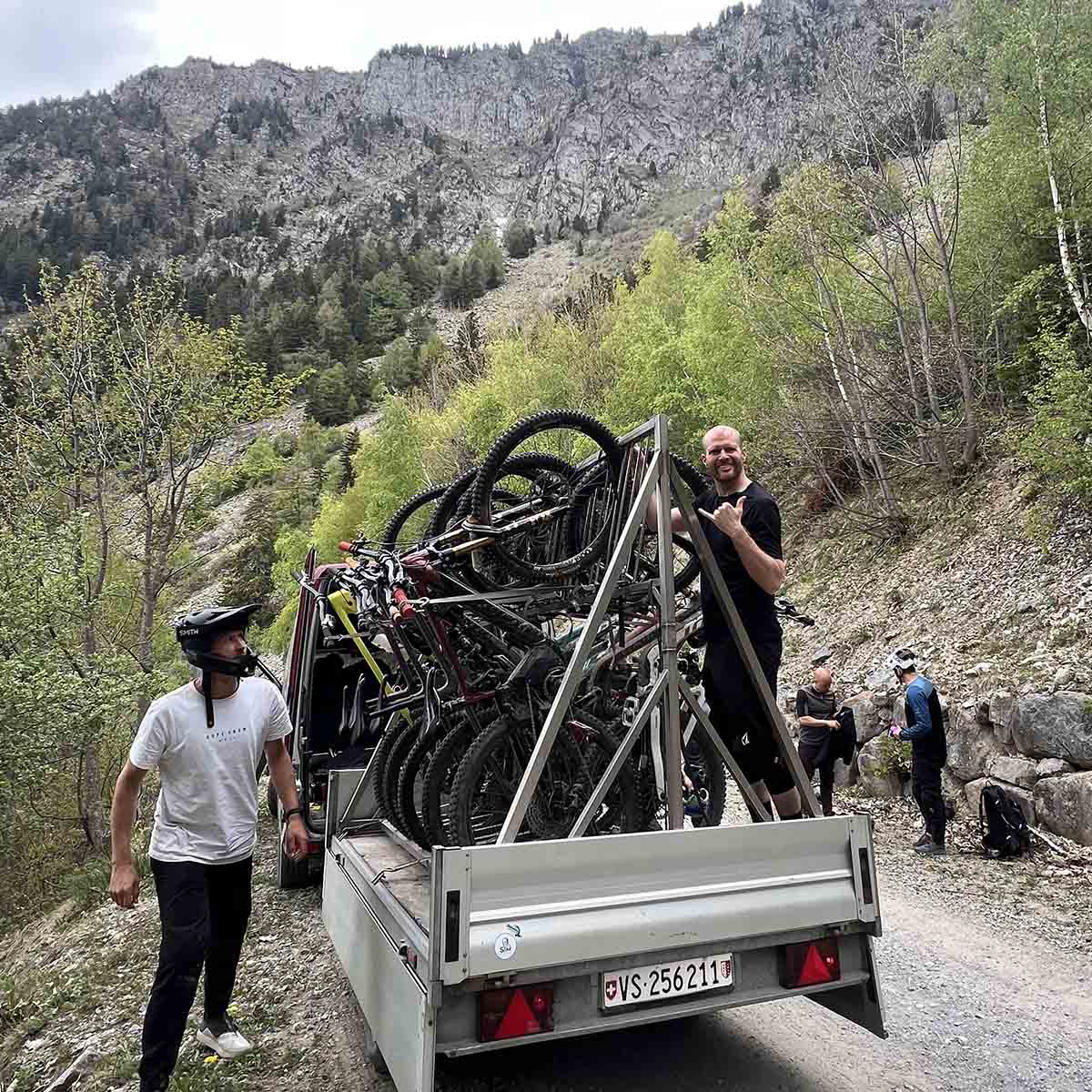
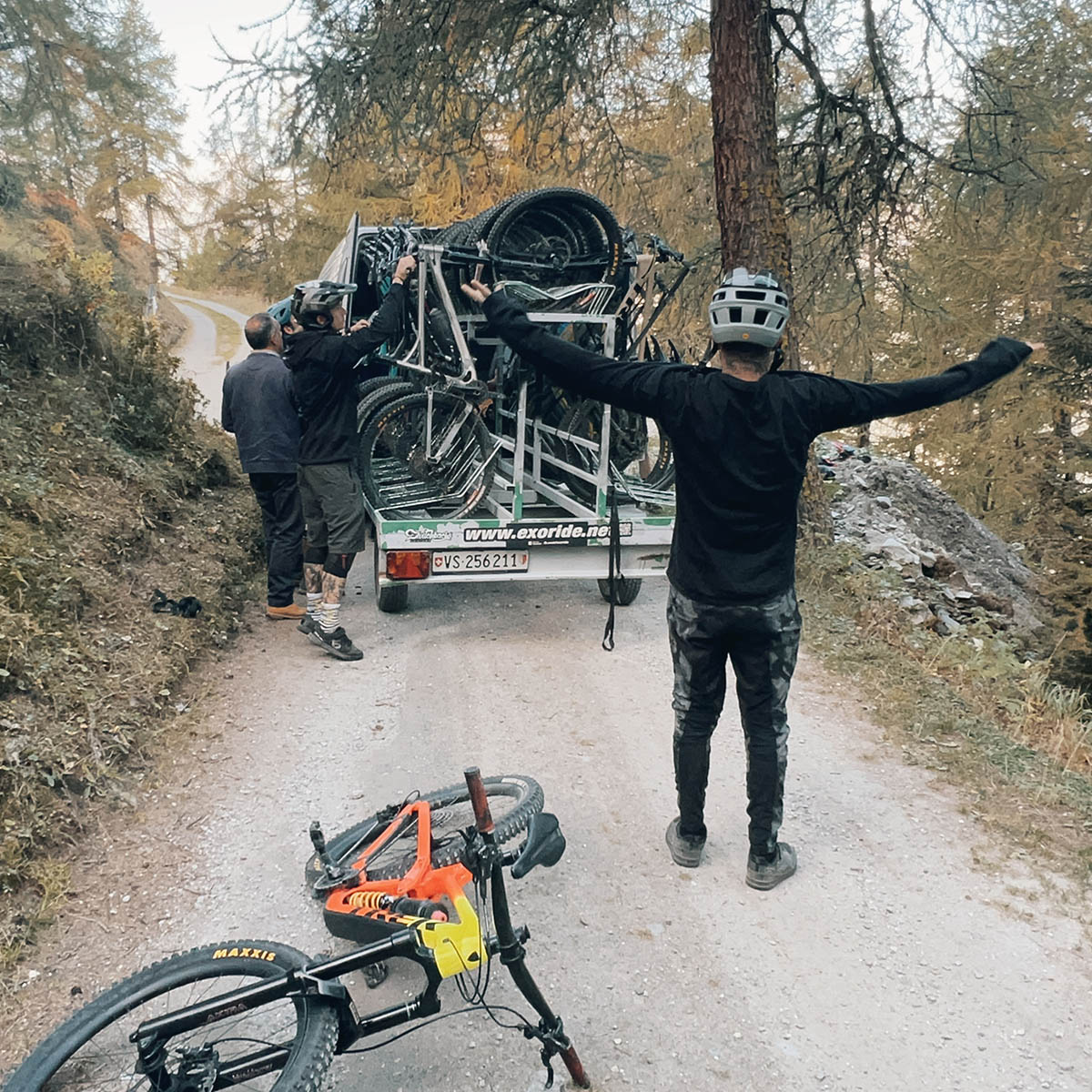
There is not one van, there are two, each with its trailer: one carries eleven bikes, the other fifteen. Twenty-six riders in all, and above all two possible group sizes, from the small group of friends to the big day out.
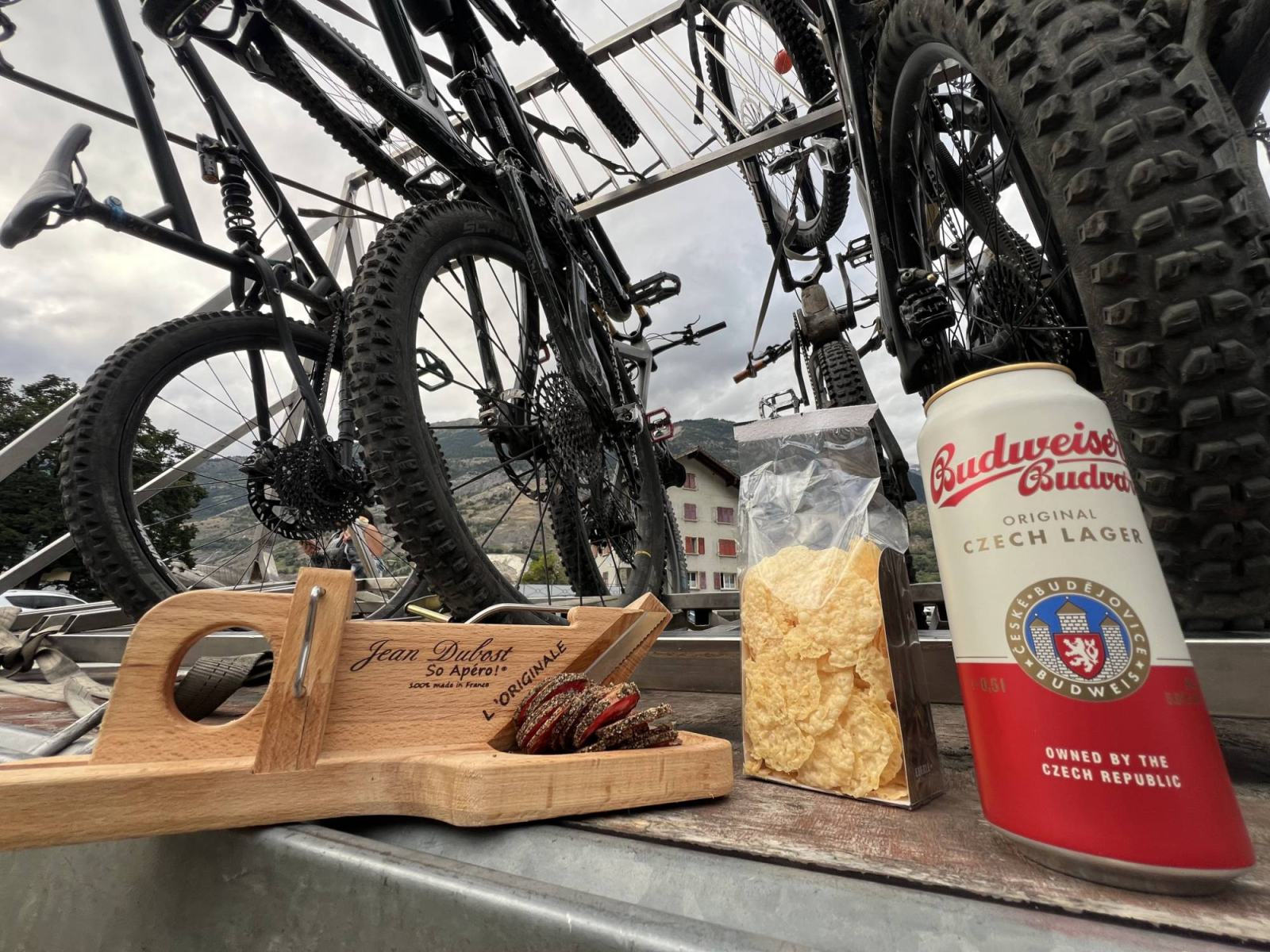
On each trailer, every bike has its own rack and its own strap. It sounds like a detail. It is not. A bike rubbing against its neighbour for forty minutes of mountain road means scratched paint, a pinched cable, a bent rotor. A bike strapped on its own arrives at the top exactly as it left.
It is the first question anyone riding a bike worth several thousand francs asks themselves, and rightly so. The separate rack answers it before it is even asked.
The driver: because the guide has to ride with you
Second piece, often invisible in the stories: there is a driver.
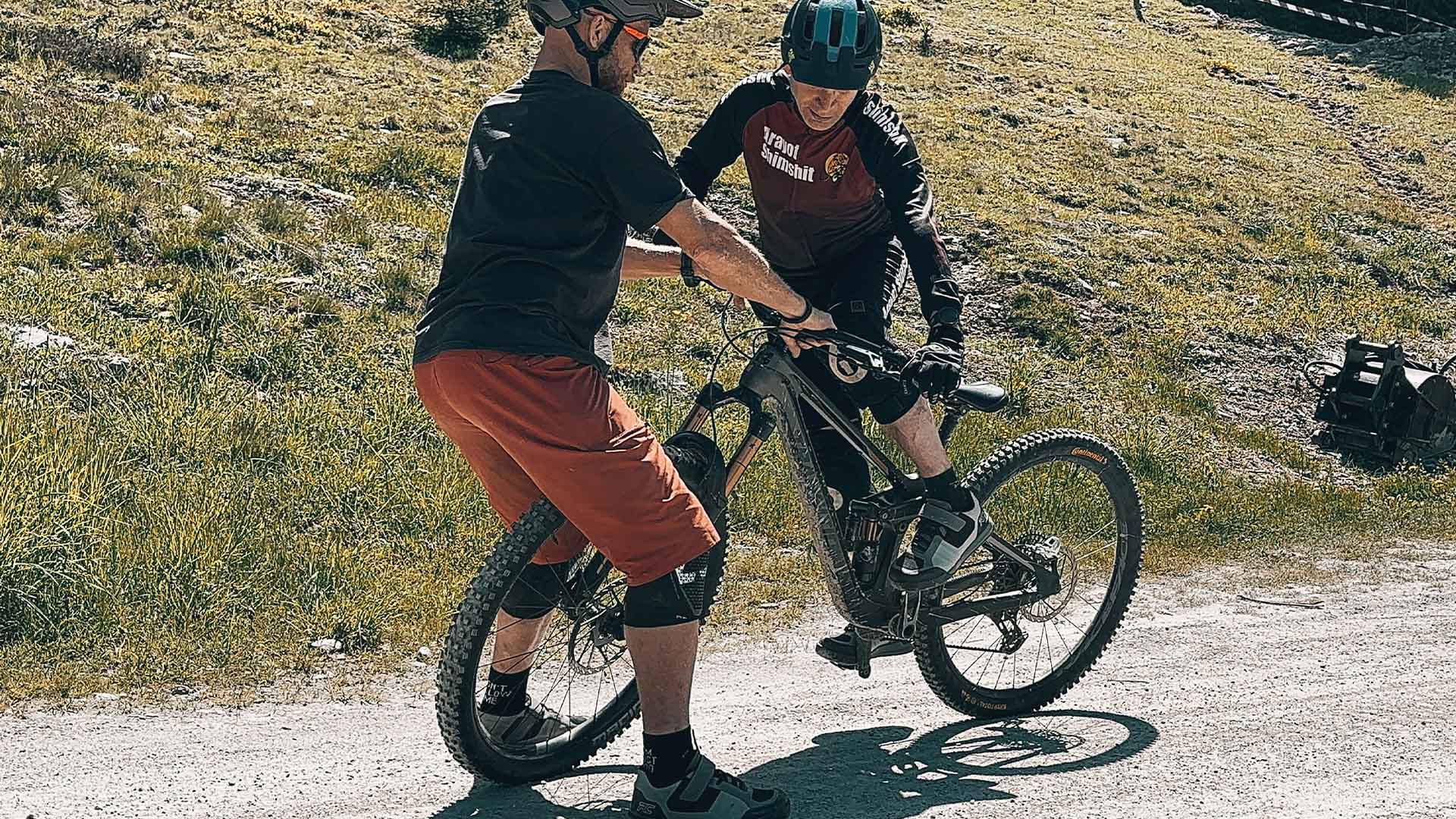
It is not a luxury, it is a matter of logic. If the guide drives the van, he is not with you on the way down. And that is where he earns his keep.
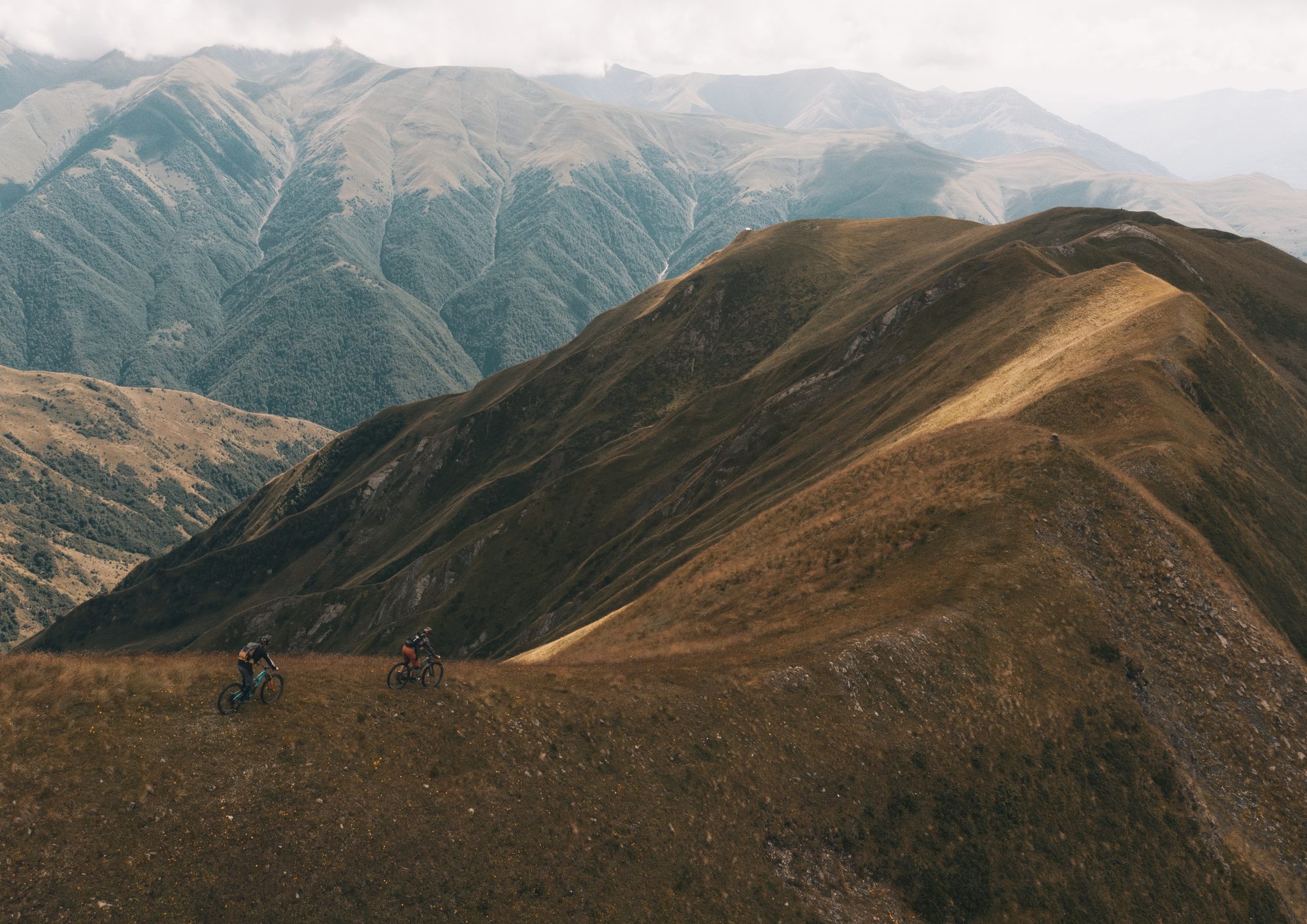
The driver makes the opposite journey to yours. He drops you at the top, comes back down by road while you come down by trail, and waits for you at the bottom of the run. You climb back into the van, he takes you up again, not necessarily to the same place: on towards the next trail of the day, on a different aspect if that is what the conditions ask for. And so on, five, six, eight times. All that time, the guide is riding with you.
It is that shuttle dance, invisible from the saddle, that lets a day string descents together without stringing waits together.
Riders notice, as it happens. In the reviews it comes back in the same words: "thanks too to the driver, discreet but just as friendly, and who takes good care of our bikes". He is discreet because he is good at his job.
The spare bike: the freehub that gives up on the third descent
Third piece, and the one that surprises people most.
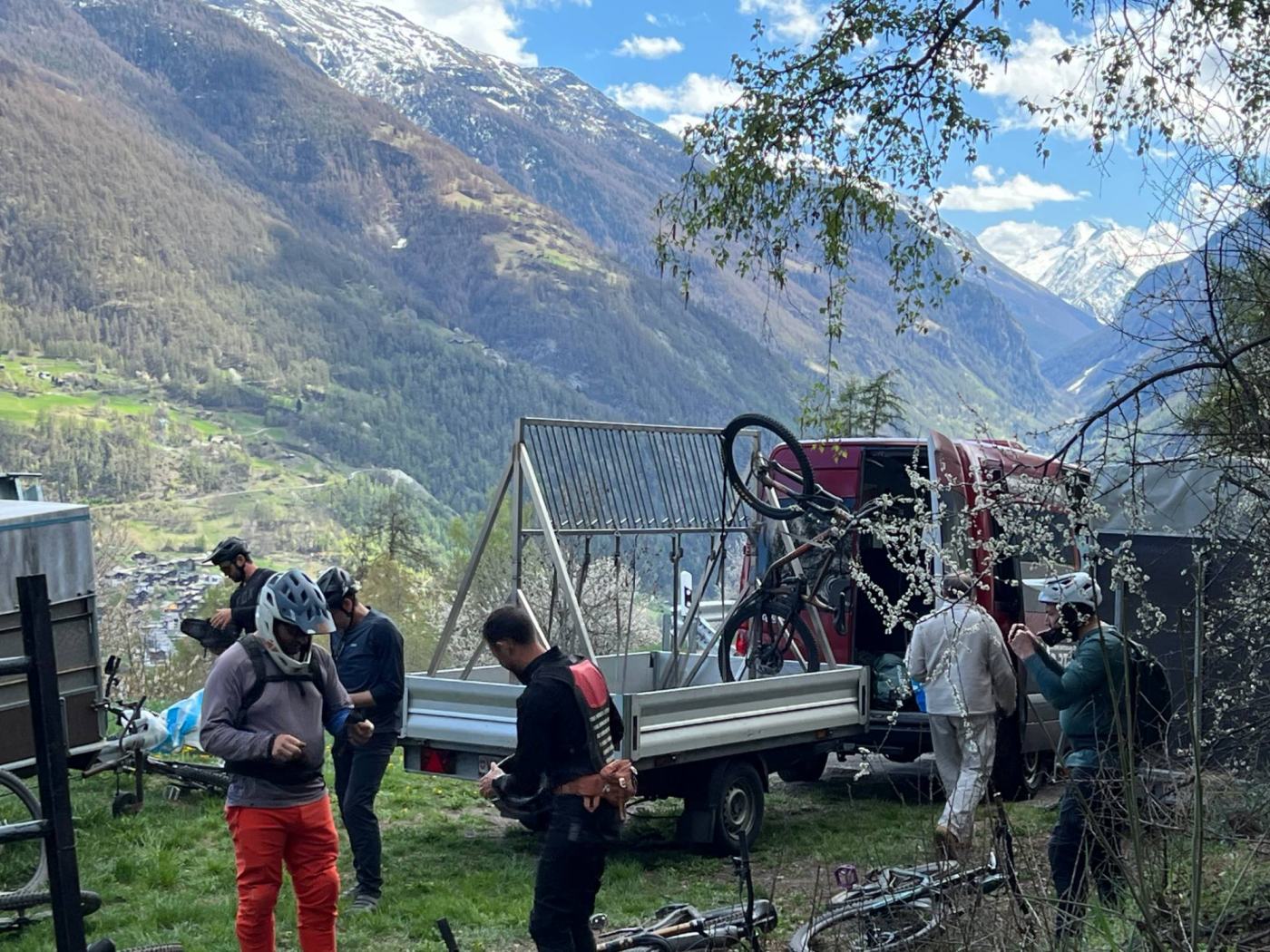
There is a spare bike in the van. Not because bikes break often, but because on the day yours does break, on the third descent, forty minutes from the nearest shop, you have absolutely no wish to finish the day sitting on a bench. A rider who has taken shuttles in a lot of countries put it plainly: "there is even a spare bike in the shuttle".
The spare bike rarely gets used. That is precisely why it is there.
Mechanical support: the day your bike does not feel like it
Next to the spare bike there is the toolbox, and above all someone who knows how to use it.
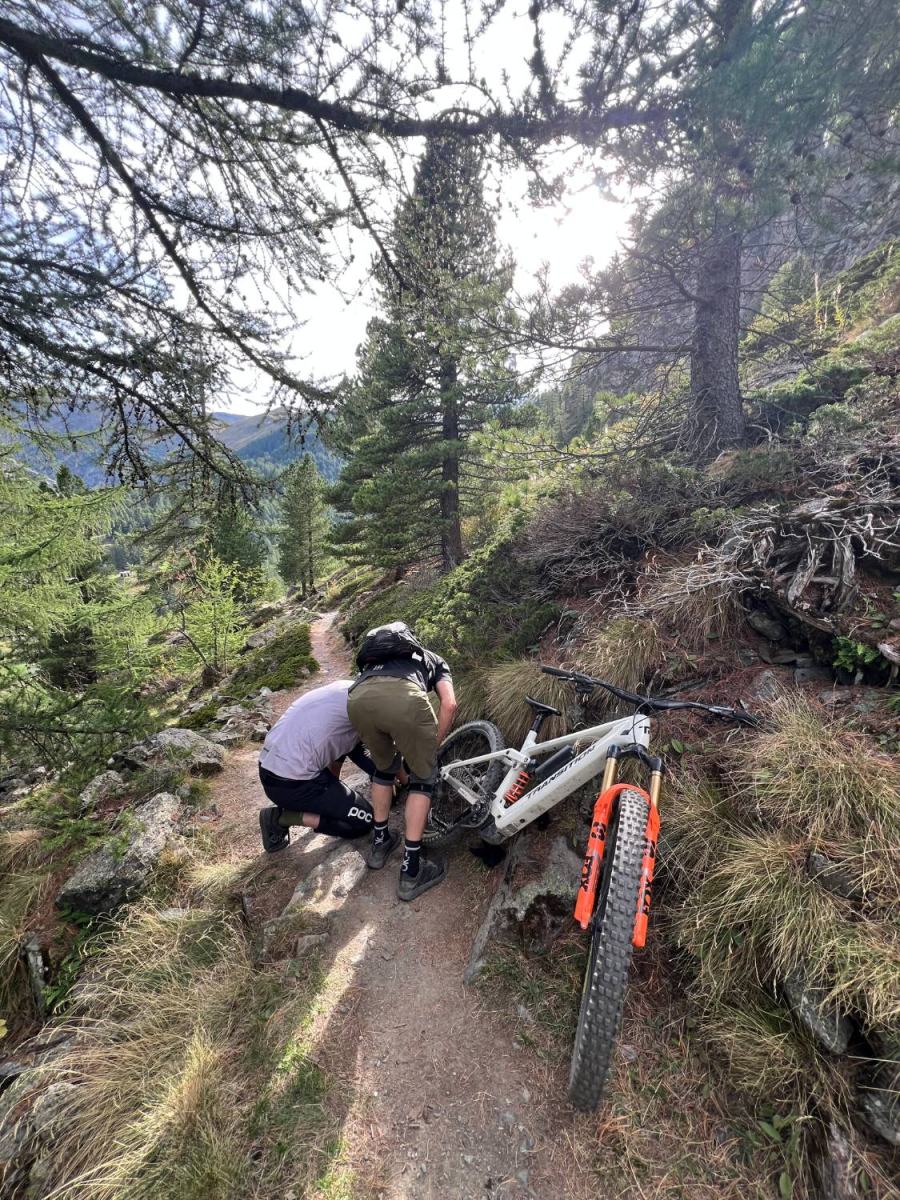
A brake bleed, a derailleur that will not shift any more, a wheel to true: that gets sorted between two runs, not when you get back. And when it has to be, it gets sorted on the trail itself, crouched in the rocks, while the rest of the group waits five minutes. One customer summed it up with some humour in her review, thanking us for "invaluable mechanical help on a day when my bike did not feel like working". The bike came round in the end.
The guide: certified, and not on his own
Fourth piece, the most important one.
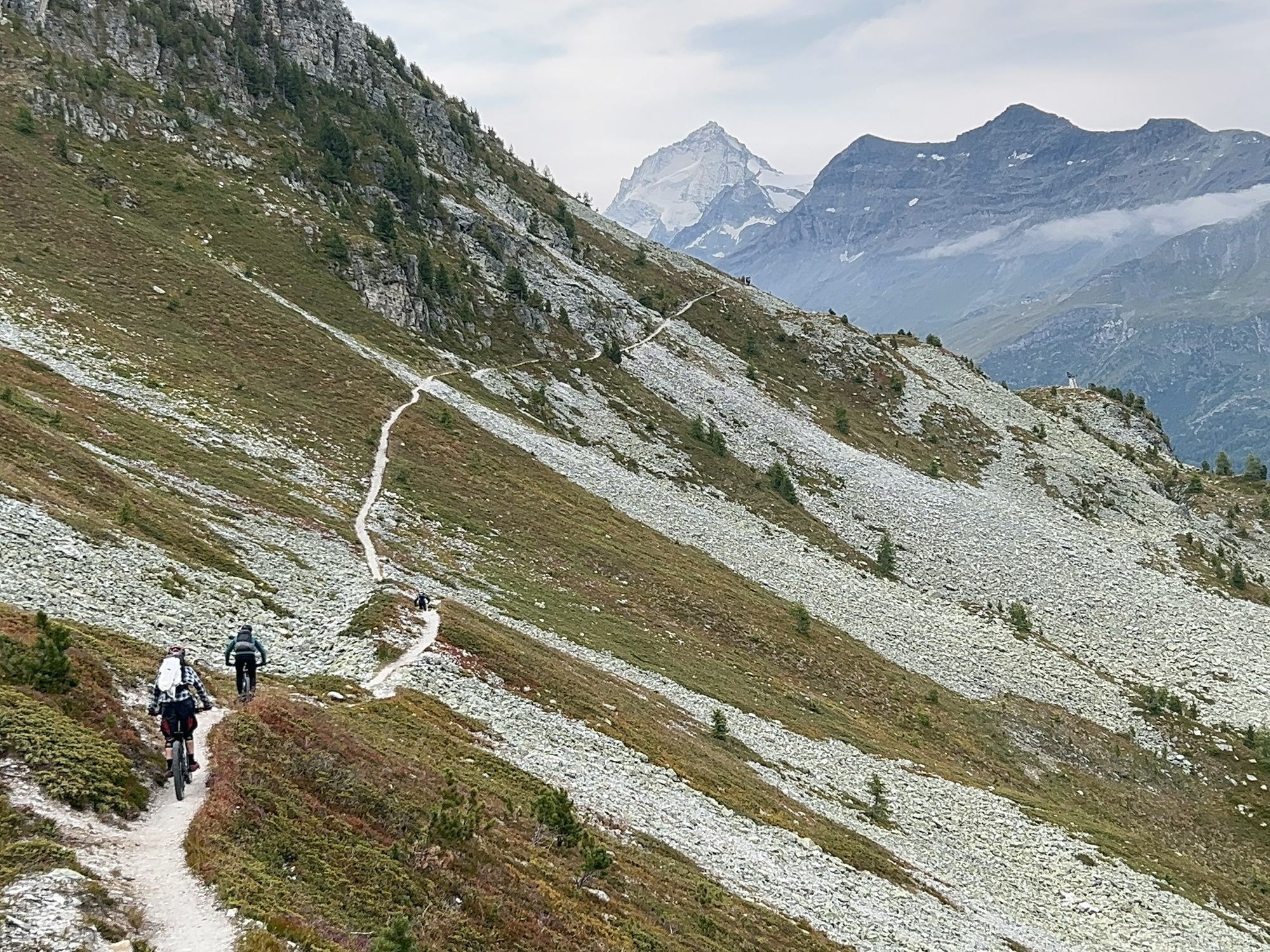
The guide is Swiss Cycling certified. That means training, safety rules and responsibility. It also means he knows the trails as something other than a GPS track: he knows where the awkward section is before you get to it, and he tells you. "Always a little heads-up for the tricky sections", writes one rider. That is exactly it.
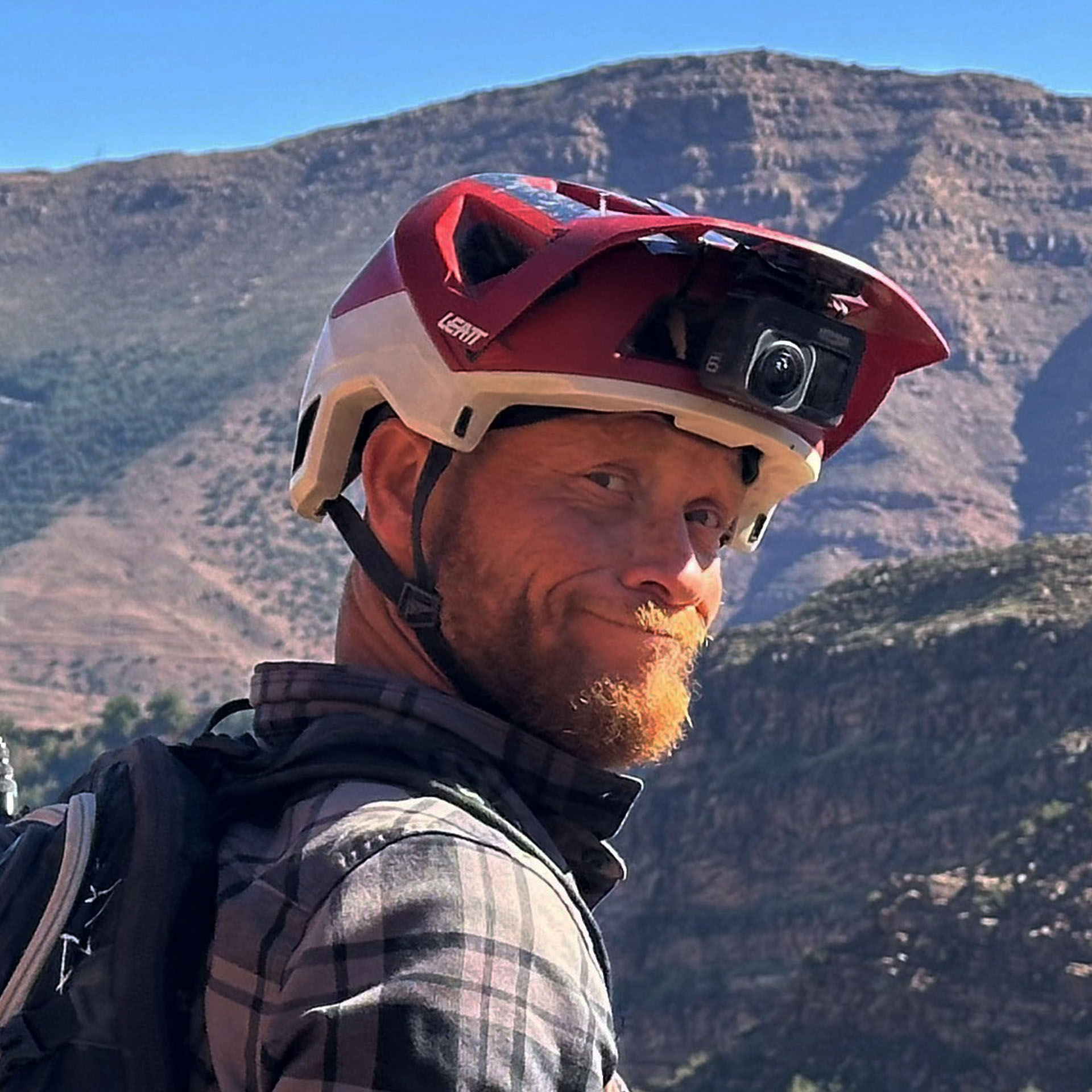
And I am not on my own. Our guides are certified too, and speak French, English and German. I coordinate them, and I am out on the ground most of the time. This is not one man and a van, it is a team.
The grades: an honest number beats a fine speech
Every outing carries two grades out of four, one technical, one physical. They are not decoration.
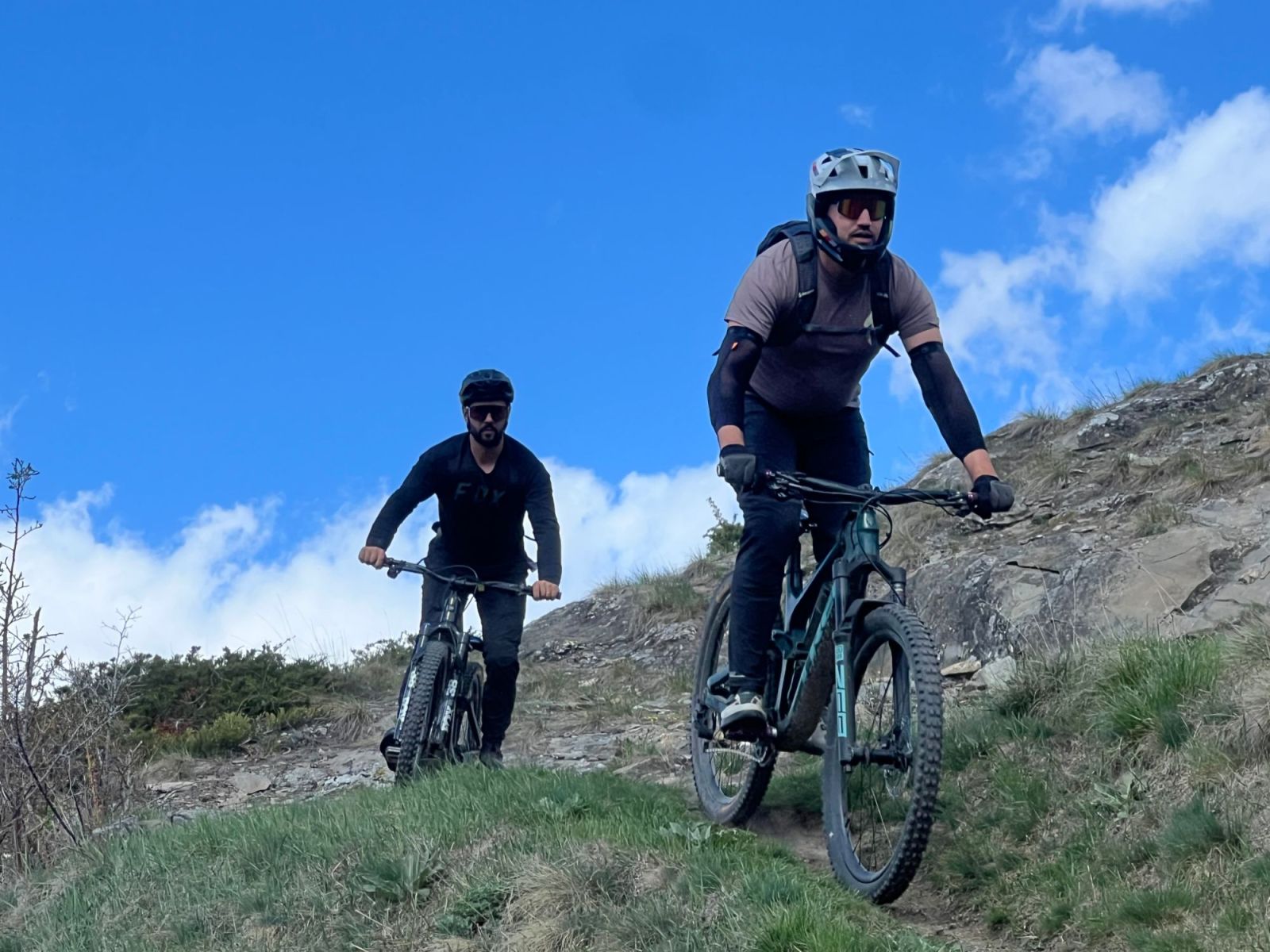
They are there so that the group works. An outing graded 3 for technique is no place for a beginner, and that is not selection, it is protection: theirs, and that of the group that would be waiting for them at every corner. When the grade announced matches the real thing, the day is good for everyone. One customer noted it soberly: "the level matches the description". That is the finest compliment you can pay a grading scale.
The spot: fixed in advance, with a plan B when the mountain insists
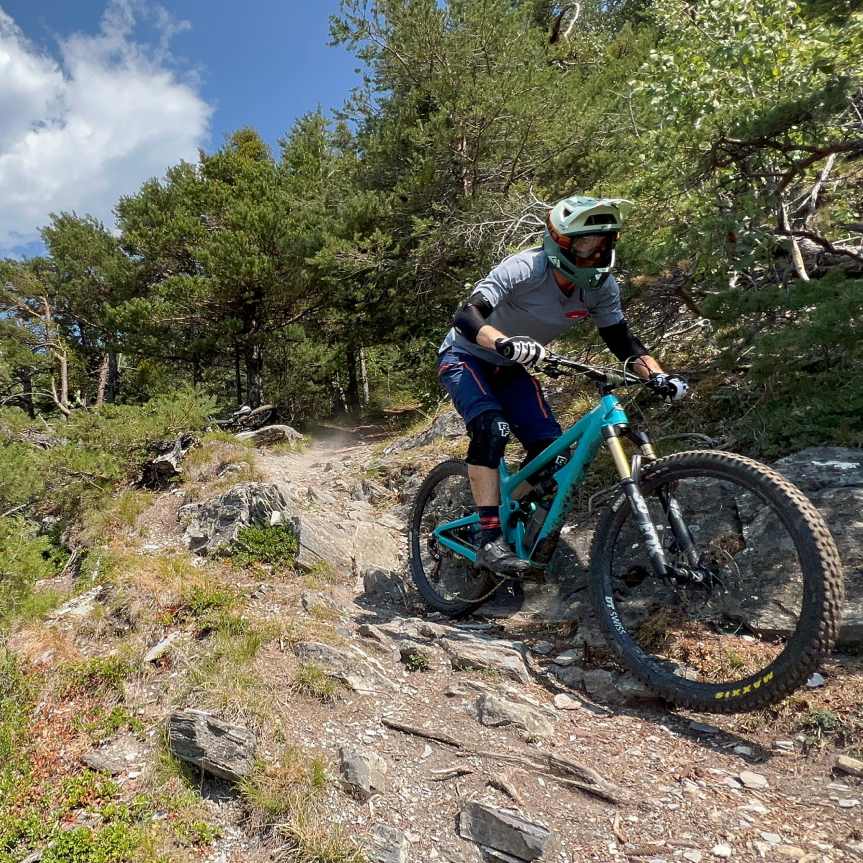
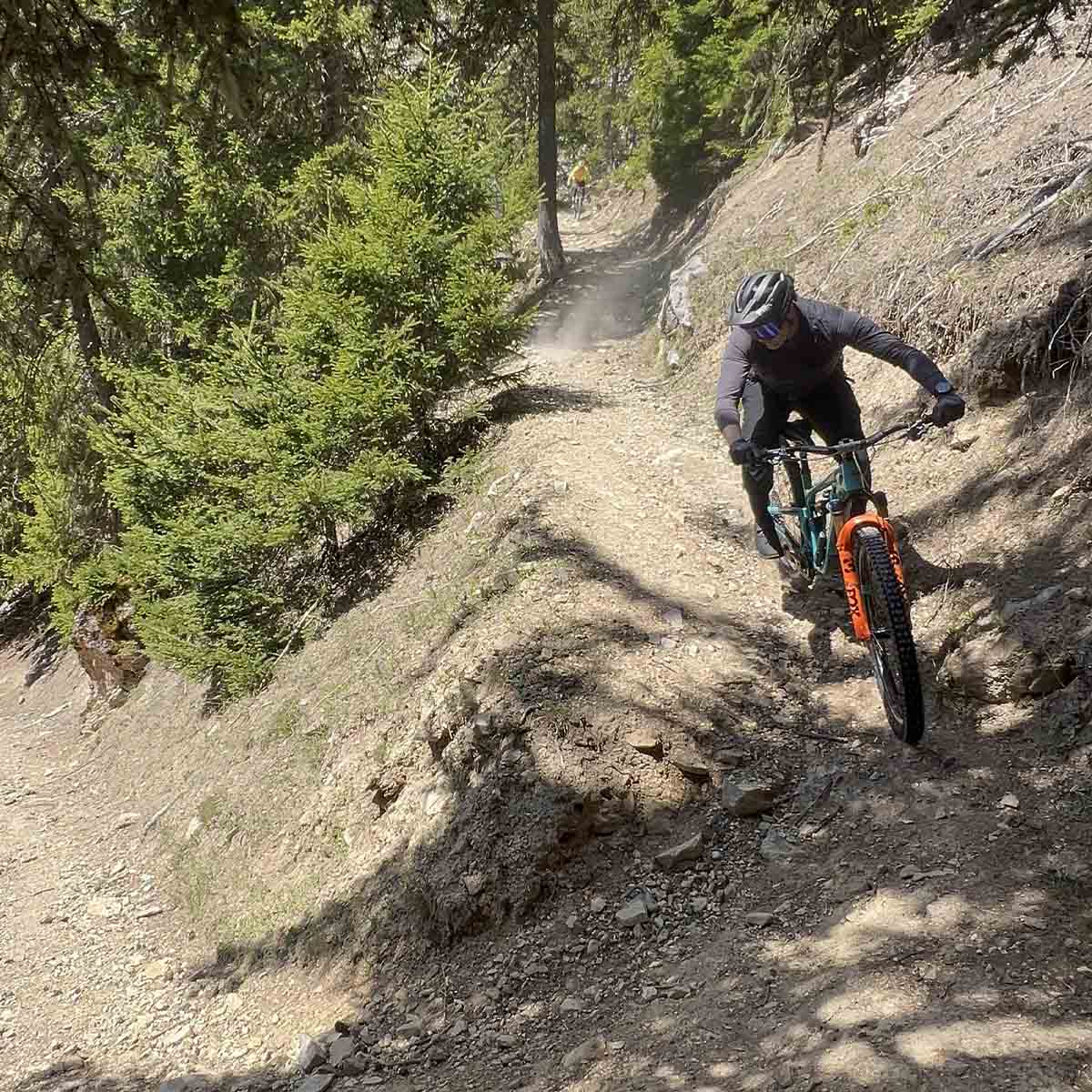
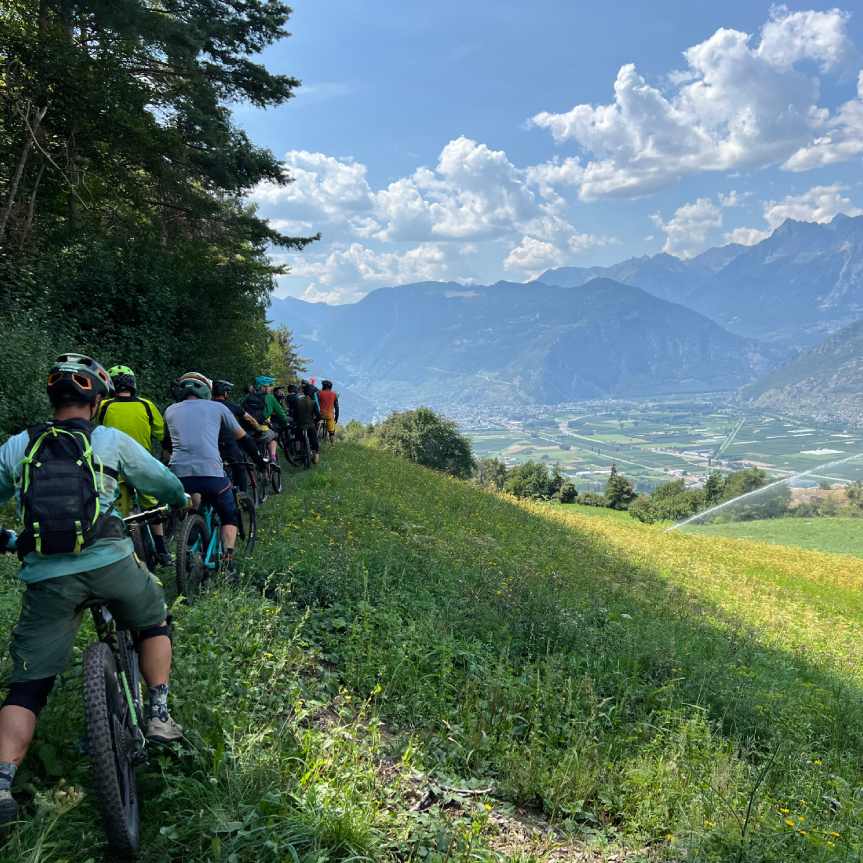
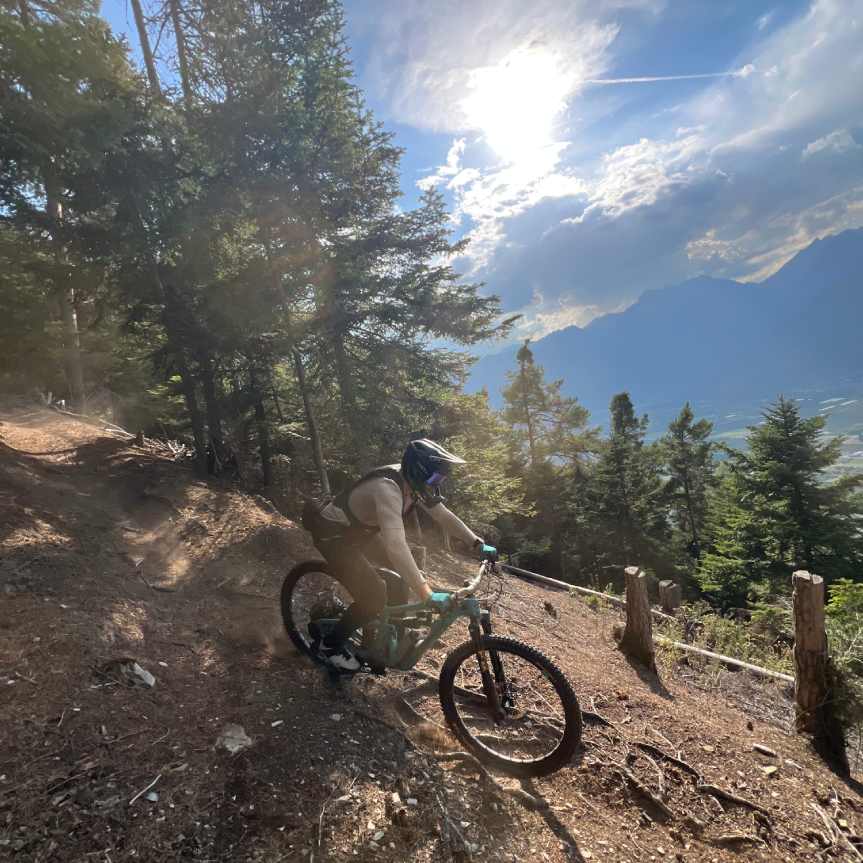
Contrary to what you might think, the valley for your day is known in advance. You know where you are going when you book.
What is professional is not improvising, it is having a plan B ready for the day the weather or some exceptional circumstance forces one. Valais has enough valleys for us to find a dry aspect when the one we had planned is not. A rider lived through it and wrote it down: Chris and his team "handle fickle weather by moving to another area to find better conditions". It does not happen often. But on that day it makes all the difference between a day saved and a day lost.
The photos: you ride, we watch
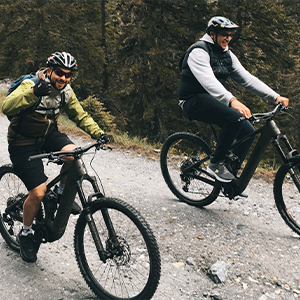
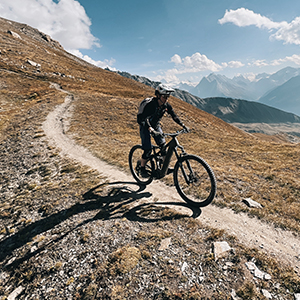
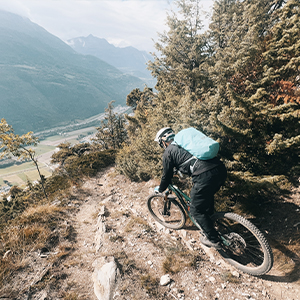
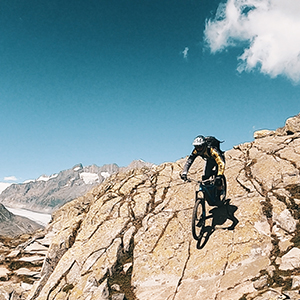
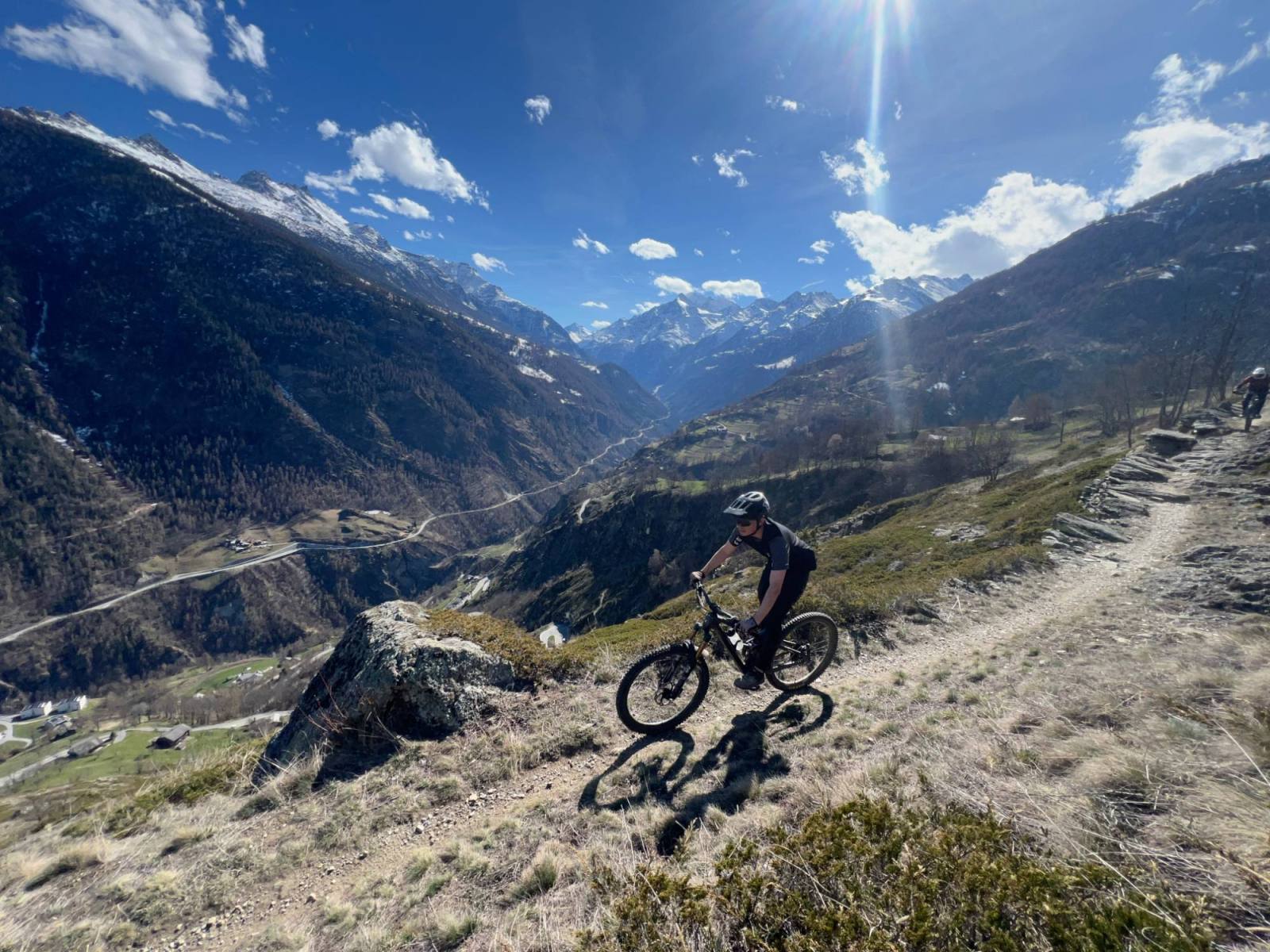
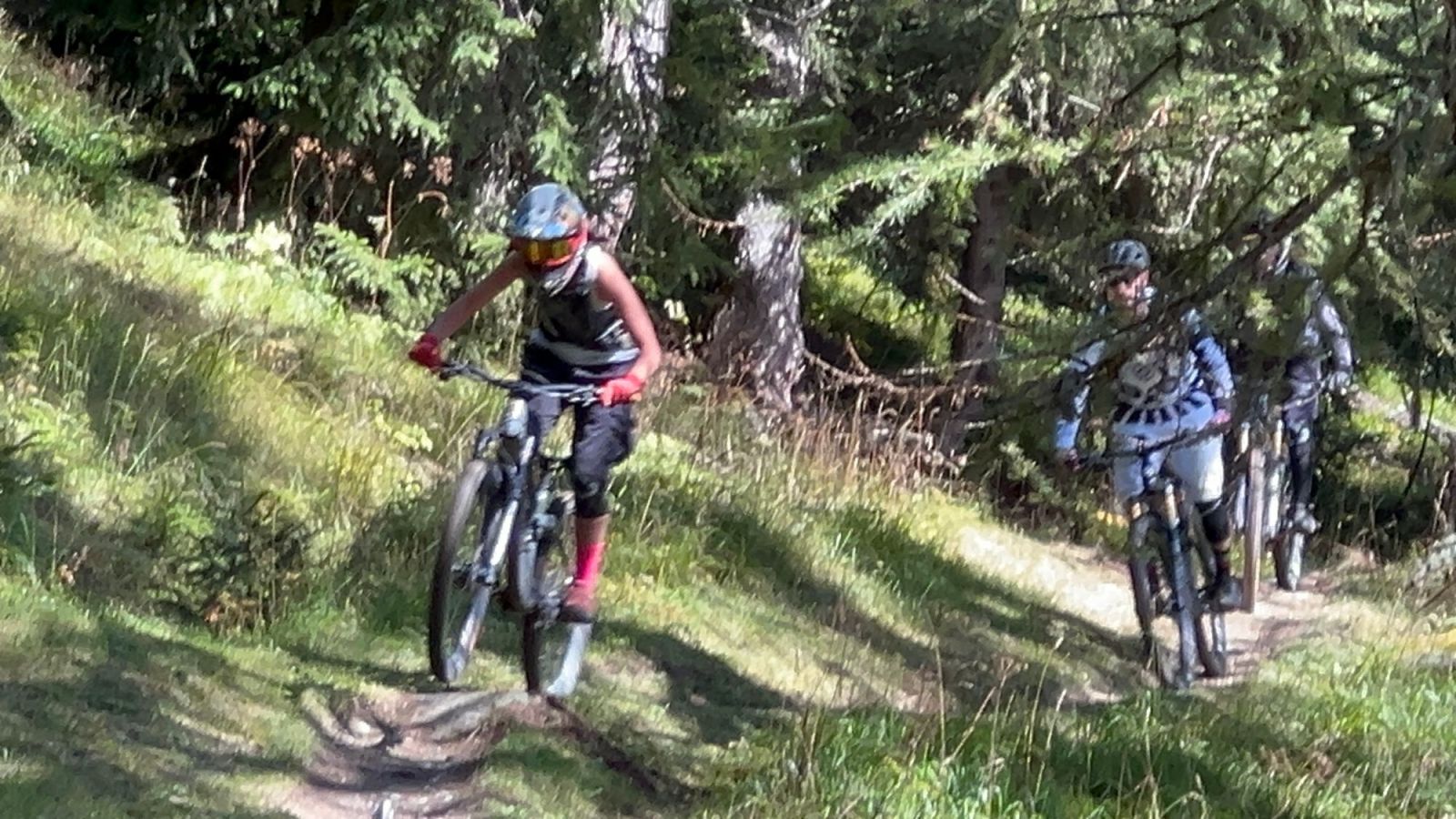
An appreciated detail, often forgotten: while you are coming down, someone is photographing you.
These are not studio shots, they are photographs of your day, taken by someone who knows where to stand in the corner. You go home with images of yourself you could never have made, because nobody photographs themselves mid-descent.
The trails: what a shuttle owes them
Last piece, and the least visible of all.
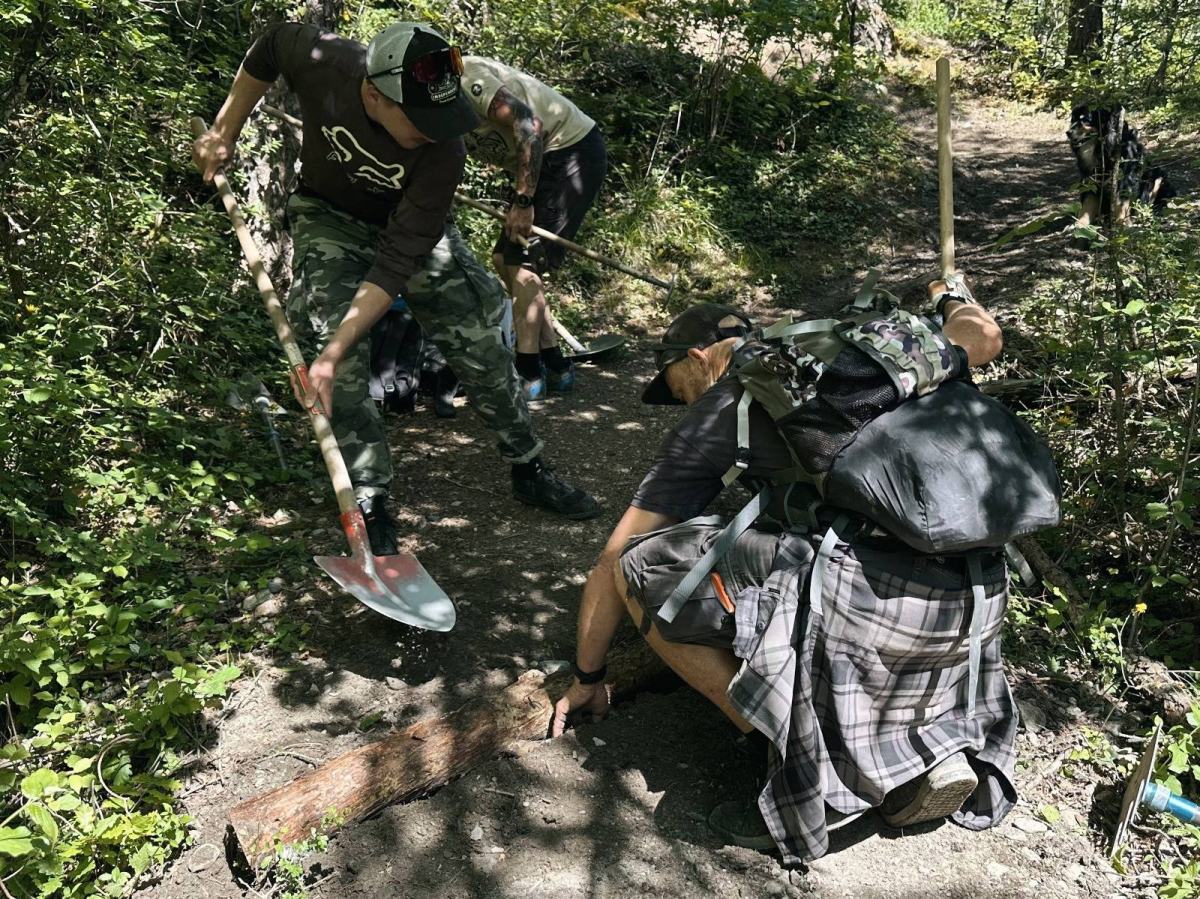
A shuttle brings a lot of riders onto mountain trails. Those trails do not maintain themselves: storms gouge them, vegetation closes them in, traffic widens them. Every year, with others, I spend dozens of volunteer hours putting them back in order, and I am involved in ProVTT Valais, which works on mountain bike access to trails and on the dialogue with those who share them with us.
A shuttle that takes without giving back wears out the ground it lives on. A shuttle that maintains, that stays off fragile trails at the wrong time of year, that teaches riders not to skid, that one can last.
What it costs, and why
A guided day is CHF 95 per person. A self-guided day, the van and the driver without the guide, is CHF 45.
And if you come up often, there is the Exo'Pass: ten guided days for CHF 760, two of them free. That puts the day at CHF 76, with everything above included. The credits are personal and valid for two seasons: you are not obliged to use them all this year.
The same rider who noticed the spare bike wrote the sentence I like best: "I have taken shuttles in many countries, and this Swiss experience is genuinely good value for that level of service". I could not put it better, and I would not say it about myself.
Everything above, the two vans and their trailers, the driver, the spare bike, the mechanical support, the guide, the grades, the plan B, the photos, the trails, that is what is inside those CHF 95. The mate with a van is offering you the lift. It is not the same thing, and it is not the same price.
Frequently asked questions
How is my bike carried during the shuttle?
On one of the two trailers, of eleven or fifteen places, each bike takes its own rack and is strapped separately. No contact between bikes on the way up.
What happens if my bike breaks during the day?
Mechanical support sorts most problems between two runs, and on the trail itself when it has to. If the failure is serious, a spare bike is on board so you can finish the day.
Does the guide ride with the group?
Yes, that is the point of the guided option. A dedicated driver drives the van, which frees the guide to ride with you on every descent.
What is the Exo'Pass?
A personal pass of ten guided shuttle days for CHF 760, two of them free, which works out at CHF 76 a day. The credits are valid for two seasons: you come up when you like, without going through the checkout every time.
What is the difference between self-guided and a guided day?
Self-guided, at CHF 45, gives you the van and the driver, and you ride on your own. Guided, at CHF 95, adds a Swiss Cycling certified guide, mechanical support, the spare bike and the photographs of the day.
Going further
This page covers what is on board. The rest of the shuttle side is split across four articles: which area to ride and when, guided or self-guided, the winter Solstice days, and how to survive 5,000 metres of descent. The Ride and Shoot format is the one with a photographer on the trail.